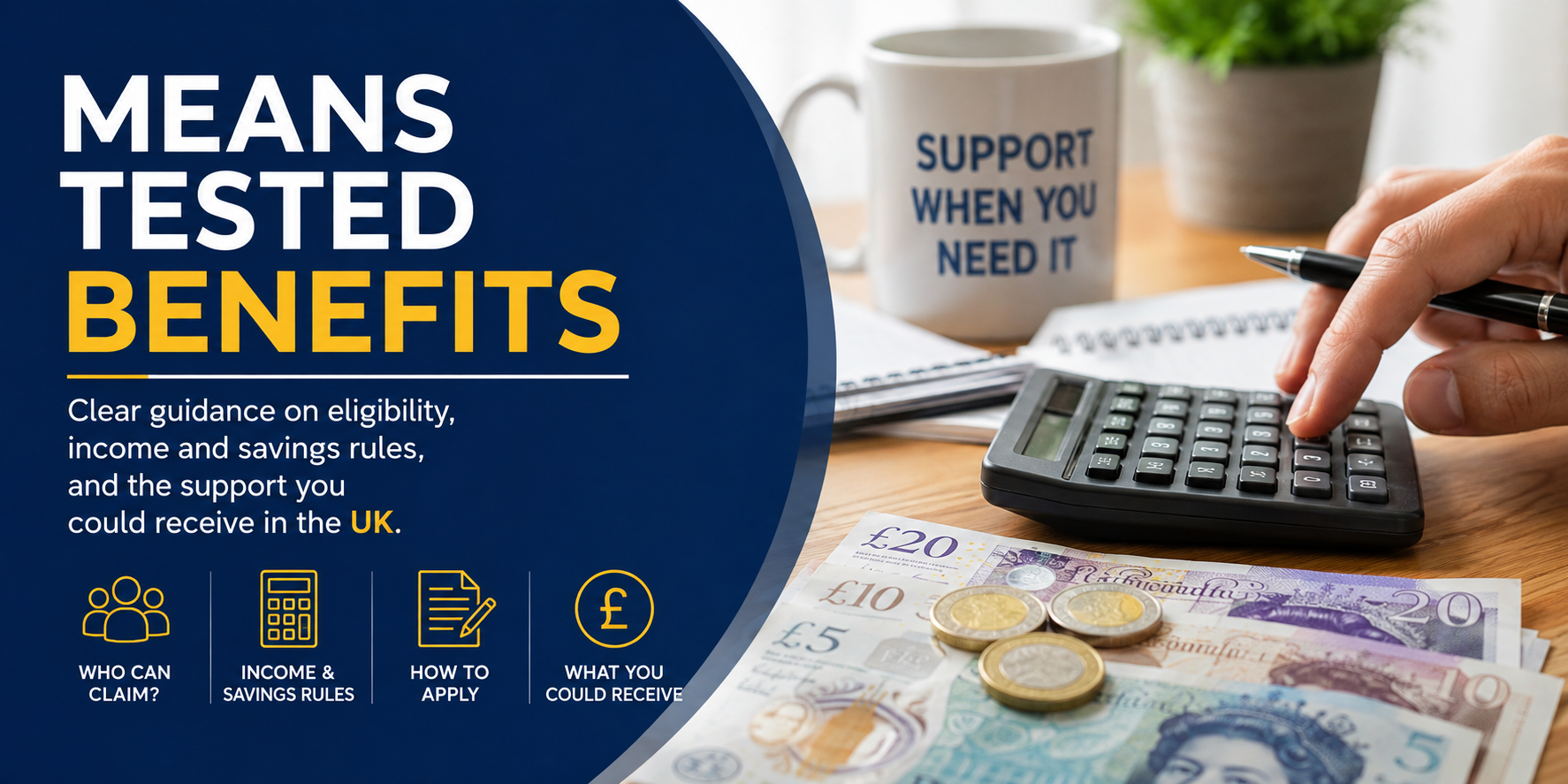
Means Tested Benefits Explained

Means Tested Benefits

Understanding Means Tested Benefits can make a significant difference if you are struggling with your finances or wondering what support may be available to you. Many people miss out on financial help simply because they are unsure how the system works or assume they will not qualify.

Means Tested Benefits are designed to help people whose income and savings fall below certain limits. Unlike benefits based on National Insurance contributions, these benefits look at your financial circumstances before deciding whether you qualify and how much you could receive.

They provide essential financial support for millions of people across the United Kingdom, including those who are unemployed, working on low incomes, disabled, caring for someone, raising children or receiving a pension.

This guide explains everything you need to know about Means Tested Benefits in clear, straightforward language. You will learn who can claim, how income and savings affect entitlement, how to apply and the common mistakes that can reduce or delay your payments.


Quick Answer

What are Means Tested Benefits?

Means Tested Benefits are benefits where the Government looks at your income, savings and, in many cases, your household circumstances before deciding whether you qualify and how much you receive.

If your income increases or your savings rise above certain limits, your benefit entitlement may reduce or stop altogether.


What Is Means Tested Benefits?

What are Means Tested Benefits?

Means Tested Benefits are financial support payments intended for people who have limited financial resources.

Rather than automatically paying everyone who meets a particular condition, the Government assesses your financial situation.

The assessment may consider:

  • Your earnings
  • Pension income
  • Other benefits
  • Savings and investments
  • Your partner’s income
  • Household circumstances
  • Housing costs
  • Number of children
  • Disability related needs

Every benefit has its own rules, although many use similar financial assessments.

Examples of Means Tested Benefits

Benefit Means Tested
Universal Credit Yes
Pension Credit Yes
Housing Benefit for eligible claimants Yes
Income Related Employment and Support Allowance Yes
Income Support Yes
Council Tax Reduction Usually yes
Working Tax Credit existing claims Yes
Child Tax Credit existing claims Yes

Some benefits, including Personal Independence Payment, Attendance Allowance and Child Benefit, are generally not Means Tested.


Who Can Claim Means Tested Benefits?

Who qualifies for Means Tested Benefits?

Anyone whose financial circumstances meet the qualifying rules may be able to claim Means Tested Benefits.

You may qualify if you are:

  • Working with a low income
  • Unemployed
  • Looking for work
  • Unable to work because of illness
  • Disabled
  • A carer
  • A parent with dependent children
  • A pensioner with a low income
  • Renting your home
  • Paying eligible housing costs

Each benefit has separate eligibility rules, so qualifying for one does not automatically guarantee entitlement to another.


Eligibility Requirements

What are the eligibility requirements for Means Tested Benefits?

Eligibility depends on several factors.

These commonly include:

Income

Your earnings and other income are assessed.

Savings

Many benefits have savings limits.

Residency

You normally need to live in the United Kingdom and satisfy residence rules.

Immigration Status

Some immigration categories affect entitlement.

Household Circumstances

The Government may consider:

  • Whether you are single or living with a partner
  • Number of children
  • Caring responsibilities
  • Disability
  • Housing arrangements

Work Status

Some benefits require you to look for work while others are available if you cannot work.


Income Rules

How does income affect Means Tested Benefits?

Income plays a major role in determining entitlement.

The Government may assess:

  • Employment income
  • Self employed income
  • Pension income
  • Rental income
  • Maintenance payments in some situations
  • Certain other benefits

Some income is ignored or only partly counted depending on the benefit.

Example

Income Situation Possible Outcome
No income Higher entitlement may apply
Low earnings Partial benefit may be available
Moderate earnings Reduced award may apply
Higher earnings Benefit may stop depending on rules

Universal Credit, for example, gradually reduces as earnings increase rather than stopping immediately in many cases.


Savings Rules

How do savings affect Means Tested Benefits?

Savings can affect whether you qualify.

Different benefits apply different rules, but many use similar thresholds.

For several Means Tested Benefits:

Savings Level Typical Effect
Lower savings Usually no reduction
Moderate savings May reduce entitlement
Higher savings May prevent entitlement

Your savings may include:

  • Bank accounts
  • Building society accounts
  • Investments
  • Premium Bonds
  • Some property other than your main home

Your main home is normally ignored when calculating savings for most benefits.


How Much Could You Receive?

How much do Means Tested Benefits pay?

There is no single payment amount.

The amount depends on factors including:

  • Your age
  • Income
  • Savings
  • Rent
  • Household size
  • Children
  • Disability
  • Caring responsibilities
  • Work status

Some people receive only a small amount while others receive substantial financial support including help towards housing costs.

Universal Credit, for example, combines several types of financial support into one monthly payment.


How To Apply

How do you apply for Means Tested Benefits?

The application process depends on which benefit you are claiming.

Most applications can now be completed online.

The usual steps are:

  1. Check your eligibility.
  2. Gather supporting documents.
  3. Complete the application.
  4. Attend any required interview.
  5. Provide additional evidence if requested.
  6. Wait for a decision.

Processing times vary depending on the benefit and individual circumstances.


What Documents Will You Need?

Which documents are needed?

You may be asked to provide:

  • Proof of identity
  • National Insurance number
  • Payslips
  • Bank statements
  • Savings information
  • Tenancy agreement
  • Mortgage information where relevant
  • Childcare costs
  • Pension information
  • Medical evidence where applicable
  • Immigration documents if required

Providing complete information early can help avoid delays.


Common Mistakes To Avoid

What mistakes should you avoid?

Many applications are delayed because important information is missing.

Common mistakes include:

  • Forgetting to report savings
  • Giving incorrect income details
  • Not reporting changes in circumstances
  • Missing appointments
  • Failing to provide requested documents
  • Assuming you do not qualify without checking
  • Waiting too long before making a claim

Keeping your information accurate helps prevent overpayments and underpayments.


Examples And Real Life Scenarios

How do Means Tested Benefits work in real life?

Example One

Situation Outcome
Sarah works part time with two children and pays rent She may qualify for Universal Credit and help with housing costs depending on her income.

Example Two

Situation Outcome
David recently retired with a small pension He may qualify for Pension Credit if his income is below the qualifying level.

Example Three

Situation Outcome
Emma becomes unemployed after redundancy She may qualify for Universal Credit while searching for work.

Example Four

Situation Outcome
John has significant savings His savings may reduce or prevent entitlement to some Means Tested Benefits depending on the amount and the specific benefit.

Frequently Asked Questions

Can I receive Means Tested Benefits if I work?

Yes. Many working people receive Means Tested Benefits because their earnings are low.

Are Means Tested Benefits taxable?

Most Means Tested Benefits are not taxable, although individual circumstances can vary.

Do my partner’s earnings count?

Usually yes. Most Means Tested Benefits assess household income.

Will my savings affect my claim?

Yes. Savings can reduce or prevent entitlement depending on the benefit.

Can I receive more than one Means Tested Benefit?

Yes. Some benefits can be claimed together if you meet the rules.

Can students claim Means Tested Benefits?

Some students may qualify depending on their circumstances.

Do I need to report changes?

Yes. Changes in income, savings, work, address or household members should normally be reported promptly.

Can self employed people claim?

Yes. Self employed people may qualify if they meet the relevant rules.

Can pensioners receive Means Tested Benefits?

Yes. Pension Credit is a common Means Tested Benefit for pensioners with lower incomes.

What happens if my income increases?

Your award may reduce or stop depending on the benefit and your new financial circumstances.


Related Benefits And Support Available

What other financial support may be available?

Alongside Means Tested Benefits, you may also qualify for other help.

Possible support includes:

Support Means Tested
Universal Credit Yes
Pension Credit Yes
Council Tax Reduction Usually yes
Housing Benefit for eligible claimants Yes
Personal Independence Payment No
Attendance Allowance No
Carer’s Allowance Not fully means tested although earnings rules apply
Child Benefit Generally no

Depending on your circumstances, you may also be eligible for:

  • Free school meals
  • Healthy Start
  • NHS help with health costs
  • Household Support Fund where available through your local council
  • Warm Home Discount if you meet the qualifying conditions
  • Social tariffs for broadband and utilities offered by some providers

Useful Government Resources

Where can you find official information?

Information reviewed against current UK Government guidance and official sources.

Useful official resources include:

  • GOV.UK guidance on Universal Credit
  • GOV.UK information about Pension Credit
  • GOV.UK benefits calculators
  • Your local council for Council Tax Reduction and Housing Benefit where applicable
  • Citizens Advice for independent benefits guidance

Always ensure you are using the latest official guidance, as benefit rules and payment rates can change.


Conclusion

Means Tested Benefits play an important role in supporting individuals and families whose income and savings are limited. Although the rules can seem complicated at first, understanding how income, savings and household circumstances are assessed makes it much easier to identify the support you may be entitled to.

If your financial situation changes because of unemployment, illness, disability, caring responsibilities, retirement or reduced earnings, it is worth checking your entitlement as soon as possible. Many people are surprised to discover they qualify for help even if they are working or have some savings.

Keeping your information accurate, reporting changes promptly and providing the correct evidence will help your claim progress more smoothly and reduce the risk of delays or incorrect payments.

Benefits Advice UK provides free information to help people better understand the UK benefits system. Always check the latest Government guidance before making financial decisions.

imporatant_image

Important

Information on this site is based on official UK guidance.

About our information and sources
Inbox Background
Newsletter Image

Get the latest updates to your inbox

Sign up for our newsletter to receive updates when there are changes to Universal Credit.