Access to Work for Mobility Problems

Access to Work for Mobility Problems

Living with a mobility problem should never prevent you from building a successful career. Many people across the United Kingdom experience difficulties walking, standing, climbing stairs, using public transport or moving safely around a workplace. Fortunately, the Government’s Access to Work scheme exists to remove practical barriers that could otherwise make employment difficult.

Access to Work provides financial support towards additional workplace costs that arise because of a disability or long term health condition. It is designed to help people start work, stay in work or become self employed by funding practical support that employers are not legally required to provide.

Whether your mobility difficulties are caused by arthritis, multiple sclerosis, cerebral palsy, spinal injuries, muscular dystrophy, Parkinson’s disease, amputation, chronic pain, long term injury or another condition, Access to Work may be able to help.

This guide explains everything you need to know about Access to Work for Mobility Problems, including eligibility, what support is available, how to apply and the common mistakes to avoid.


Quick Answer

Can you get Access to Work for Mobility Problems?

Yes. If you have a disability or long term health condition that affects your mobility and creates extra challenges at work, you may qualify for Access to Work support. The scheme can pay towards specialist equipment, workplace adaptations, travel to work, support workers and other practical assistance needed to help you do your job.


What Is Access to Work for Mobility Problems?

What is Access to Work for Mobility Problems?

Access to Work for Mobility Problems is Government funded financial support that helps disabled people overcome workplace barriers caused by mobility difficulties.

Unlike disability benefits, Access to Work is not paid simply because someone has a medical condition. Instead, it helps cover additional costs that arise because of that condition while working.

Support is tailored to each individual after an assessment.

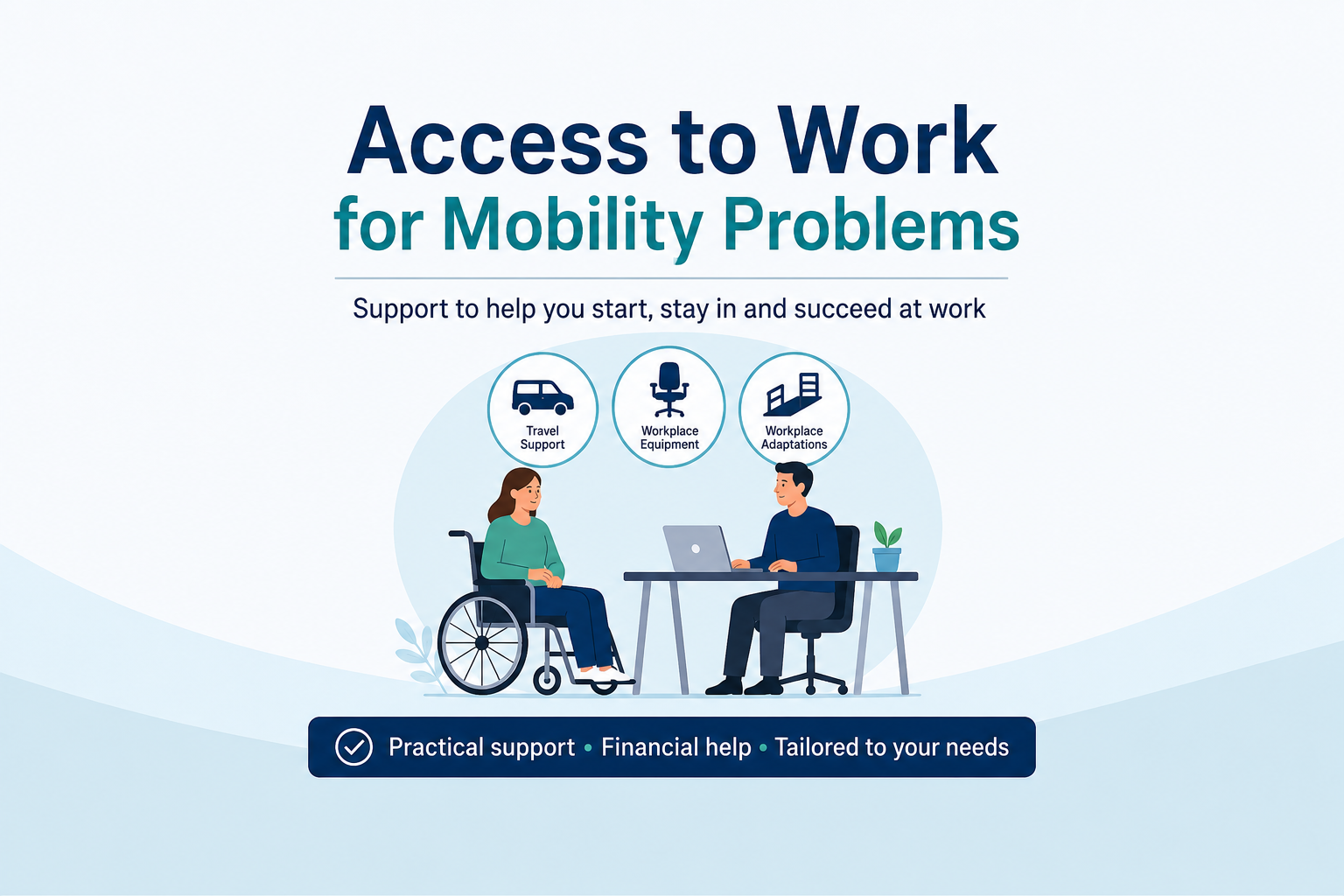
Typical support includes:

  • Taxi fares where public transport is unsuitable
  • Adapted vehicles
  • Parking support
  • Specialist seating
  • Ergonomic desks
  • Height adjustable workstations
  • Wheelchair accessible equipment
  • Ramps
  • Workplace adaptations
  • Support workers
  • Travel assistance

The aim is to help disabled people remain independent and successful in employment.


Who Can Claim Access to Work for Mobility Problems?

Who qualifies for Access to Work for Mobility Problems?

You may qualify if:

  • You are aged 16 or over.
  • You live in England, Scotland or Wales.
  • You have a disability or long term health condition.
  • Your mobility difficulties affect your ability to work.
  • You are in paid employment or about to start work.
  • You are self employed.
  • You have an apprenticeship.
  • You have a work trial.
  • You are attending a job interview.

Your mobility condition does not need to be visible.

Many hidden conditions can qualify if they significantly affect movement or travelling to work.

Examples include:

  • Rheumatoid arthritis
  • Osteoarthritis
  • Fibromyalgia
  • Chronic fatigue syndrome
  • Long term back conditions
  • Neurological disorders
  • Multiple sclerosis
  • Parkinson’s disease
  • Cerebral palsy
  • Spinal cord injuries
  • Limb loss
  • Muscular dystrophy

Eligibility Requirements

What are the eligibility requirements?

The main requirement is that your mobility problem creates additional barriers in doing your job.

You may qualify if you:

  • Cannot safely use public transport
  • Need specialist workplace equipment
  • Require adapted furniture
  • Need support getting around your workplace
  • Require assistance travelling for work
  • Need workplace modifications

Access to Work is available whether your disability started at birth or developed later in life.

Employment Types Covered

Employment Situation Eligible?
Full time employee Yes
Part time employee Yes
Self employed Yes
Apprentice Yes
Supported internship Yes
Work trial Yes
Job interview Yes
Civil servant Usually

Income Rules

Does your income affect Access to Work?

No.

Access to Work is not means tested.

Your:

  • Salary
  • Household income
  • Partner’s income
  • Pension income
  • Other earnings

do not normally affect whether you qualify.

The assessment focuses on your workplace needs rather than your financial circumstances.


Savings Rules

Do savings affect Access to Work?

No.

There are no personal savings limits for Access to Work.

Unlike some means tested benefits, your savings and investments are generally not considered when deciding whether you qualify.


How Much Could You Receive?

How much funding is available?

There is no standard payment because every award is based on individual needs.

Funding may cover:

Type of Support Examples
Travel support Taxi fares, adapted transport
Workplace equipment Specialist chairs, desks, mobility aids
Workplace adaptations Automatic doors, ramps, accessible layouts
Support workers Physical assistance at work
Communication support Where mobility conditions are combined with other disabilities
Specialist assessments Workplace assessments and recommendations

The amount awarded depends on:

  • Your job role
  • Your workplace
  • Your disability
  • The support required
  • The expected cost

Some employers may be asked to contribute towards certain costs depending on the circumstances, particularly for existing employees, although many types of support are fully funded.


How To Apply

How do you apply for Access to Work for Mobility Problems?

Applying is straightforward.

Step 1

Check that you meet the eligibility requirements.

Step 2

Gather information about:

  • Your employer
  • Your job role
  • Your disability
  • The difficulties you experience

Step 3

Complete the Access to Work application.

Applications can usually be made online or by telephone.

Step 4

Take part in an assessment if required.

An adviser may discuss:

  • Your workplace
  • Your mobility difficulties
  • Equipment needed
  • Travel arrangements
  • Practical solutions

Step 5

Receive a decision.

If approved, arrangements will be made for the agreed support.


What Documents Will You Need?

What information should you prepare?

Having the correct information ready can make the process smoother.

Useful documents include:

  • National Insurance number
  • Employer details
  • Job description
  • Contact details
  • Medical evidence if requested
  • Occupational health reports
  • Details of your mobility condition
  • Quotes for equipment where appropriate

Medical evidence is not always required immediately, but it may help support your application if requested.


Common Mistakes To Avoid

What mistakes should applicants avoid?

Many delays happen because important information is missing.

Avoid these common mistakes.

Waiting too long

Apply as soon as you know support is needed.

Assuming your employer must pay for everything

Access to Work exists to help with additional disability related costs.

Underestimating your needs

Explain every difficulty you experience.

Forgetting travel difficulties

Many awards include support for travelling to work.

Providing incomplete information

Give accurate and detailed information during your assessment.

Not reporting changes

Tell Access to Work if:

  • You change jobs.
  • Your condition changes.
  • Your employer changes.
  • Your workplace moves.
  • Your support needs change.

Examples And Real Life Scenarios

How can Access to Work help people with mobility problems?

Example One

Situation Outcome
An office worker with multiple sclerosis cannot comfortably sit for long periods. Access to Work funds an adjustable desk and specialist ergonomic chair.

Example Two

Situation Outcome
A retail employee cannot safely use buses because of severe arthritis. Taxi travel to work is funded where appropriate.

Example Three

Situation Outcome
A self employed consultant uses a wheelchair. Funding helps provide accessible office equipment and workplace adaptations.

Example Four

Situation Outcome
A new employee has a spinal injury. Access to Work contributes towards workplace modifications before employment begins.

Frequently Asked Questions

Can I receive Access to Work if I already claim Personal Independence Payment?

Yes. Access to Work is separate from Personal Independence Payment and receiving one does not prevent you from receiving the other if you meet the eligibility rules.

Do I need to be receiving disability benefits?

No. You do not have to receive disability benefits to qualify.

Can self employed people apply?

Yes. Self employed workers can qualify if they meet the eligibility criteria.

Can Access to Work pay for taxis?

Yes. Taxi travel may be funded where public transport is unsuitable because of your disability.

Does Access to Work pay cash directly to me?

Support arrangements vary depending on the type of award. Some costs may be reimbursed while other support may be arranged directly.

Can I apply before starting a new job?

Yes. You can apply when you have a confirmed job offer.

Will my employer know about my application?

Usually yes, particularly where workplace support or equipment is being arranged.

Can I keep my award if I change jobs?

Not always. You should inform Access to Work if your employment changes as your support may need reviewing.

Is there a waiting period?

Processing times vary depending on demand and the complexity of your support needs.

Can temporary mobility problems qualify?

The scheme generally supports people with disabilities or long term health conditions. Temporary conditions may not qualify unless they are expected to have a substantial and long term effect on your ability to work.

Can Access to Work fund workplace adaptations?

Yes. Workplace adaptations are one of the most common forms of support provided through the scheme.


Related Benefits And Support Available

What other support may be available?

Depending on your circumstances, you may also qualify for:

Benefit or Scheme Purpose
Personal Independence Payment Helps with extra costs of disability
Universal Credit Financial support for people on a low income
Employment and Support Allowance Support if your health affects your ability to work
Disability Living Allowance for children Helps families with disabled children
Blue Badge Scheme Parking concessions for eligible disabled people
Motability Scheme Lease a vehicle using eligible mobility benefits
Disabled Facilities Grant Home adaptations for disabled people
Carer’s Allowance Support for eligible carers

Remember that each scheme has its own eligibility rules.


Useful Government Resources

Where can you find official information?

Information reviewed against current UK Government guidance and official sources.

Useful official resources include:

  • GOV.UK guidance on Access to Work
  • Department for Work and Pensions information
  • Jobcentre Plus disability employment advisers
  • Disability Confident employer guidance
  • Advisory, Conciliation and Arbitration Service guidance on workplace adjustments
  • Equality Act 2010 guidance on reasonable adjustments

Always refer to the latest Government guidance, as eligibility rules and processes can change.


Conclusion

Access to Work for Mobility Problems is one of the most valuable employment support schemes available to disabled people in the United Kingdom. It helps remove practical barriers that might otherwise make work difficult by funding tailored support such as specialist equipment, workplace adaptations, travel assistance and support workers.

The scheme is not means tested, your savings do not normally affect eligibility and support is based on your individual workplace needs rather than your income. Whether you are starting your first job, returning to work after illness, changing careers or running your own business, Access to Work can provide practical assistance that enables you to work with greater confidence and independence.

Applying early, providing accurate information and clearly explaining how your mobility condition affects your work can help ensure you receive the support that best meets your needs.

Benefits Advice UK provides free information to help people better understand the UK benefits system. Always check the latest Government guidance before making financial decisions.

imporatant_image

Important

Information on this site is based on official UK guidance.

About our information and sources
Inbox Background
Newsletter Image

Get the latest updates to your inbox

Sign up for our newsletter to receive updates when there are changes to Universal Credit.