
Knowing how to write a CV that gets interviews is one of the most valuable skills for any UK job seeker.
A strong CV helps employers understand your skills, experience and potential within seconds. It should clearly show why you are the right person for the role while making it easy for recruiters and applicant tracking systems to find the information they need.
Whether you are leaving school, changing careers, returning to work after a break or claiming Universal Credit, a well written CV can significantly improve your chances of securing interviews.
A CV that gets interviews is:
The best CV answers one simple question for employers.
Why should we interview you?
Your CV is often the first impression an employer has of you.
Recruiters can receive hundreds of applications for a single vacancy. Many spend less than a minute reviewing each CV before deciding whether to continue reading.
A professional CV makes it easier for recruiters to recognise your strengths quickly.
Every UK CV should include the following sections.
| Section | Why it Matters |
|---|---|
| Name and contact details | Allows employers to contact you |
| Personal profile | Introduces your experience |
| Key skills | Highlights relevant abilities |
| Employment history | Shows work experience |
| Education | Demonstrates qualifications |
| Training and certificates | Adds credibility |
| Volunteering | Shows transferable skills |
| References | Available upon request is acceptable |
Include:
Avoid including:
Your personal profile should summarise who you are and what you can offer in three or four sentences.
Example:
Highly motivated customer service professional with five years of retail experience. Skilled at building customer relationships, solving problems and working in busy environments. Seeking a new opportunity to develop my career within a growing organisation.
Keep this section tailored to every application.
A personal profile is a short introduction at the top of your CV explaining your experience, skills and career goals. It helps employers quickly understand your suitability for a role.
Choose skills that match the vacancy.
Examples include:
Always match your wording with the job description where appropriate.
Employers want evidence of success, not simply a list of duties.
Instead of writing:
“Answered customer enquiries.”
Write:
“Resolved customer enquiries quickly while maintaining excellent customer satisfaction.”
Instead of:
“Worked in sales.”
Write:
“Exceeded monthly sales targets through excellent customer relationships.”
Achievements demonstrate value.
List your most recent role first.
Include:
If you have little experience, include:
Everything counts if it demonstrates transferable skills.
List your qualifications in reverse chronological order.
Include:
Never send the same CV to every employer.
Read the job description carefully.
Identify:
Then naturally include relevant examples throughout your CV.
This improves your chances with both recruiters and applicant tracking systems.
Many employers now use Applicant Tracking Systems, often called ATS software.
These systems scan CVs before a recruiter even sees them.
They search for:
A simple CV layout performs better than one with complex graphics or tables.
Applicant Tracking Systems scan CVs for keywords and relevant experience before passing suitable applications to recruiters. Tailoring your CV to each vacancy improves your chances of passing the initial screening.
Avoid:
Always proofread before submitting.
Before applying, ask yourself:
☐ Have I tailored the CV?
☐ Is it no longer than two pages?
☐ Have I removed spelling mistakes?
☐ Does my profile match the role?
☐ Have I highlighted achievements?
☐ Are my contact details correct?
☐ Have I included relevant keywords?
☐ Is the formatting easy to read?
☐ Have I saved it as a PDF if requested?
☐ Would I interview myself after reading it?
Everyone starts somewhere.
Focus on transferable skills gained through:
Employers value enthusiasm and willingness to learn.
If you receive Universal Credit, your Work Coach can provide valuable support throughout your job search.
Support may include:
Engage regularly with your Work Coach and keep your Jobcentre appointments.
Several programmes can help.
| Service | How it Helps |
|---|---|
| National Careers Service | Careers advice, CV support and training |
| Jobcentre Plus | Job search support and vacancies |
| Universal Credit Work Coach | Personal employment support |
| Access to Work | Funding for workplace adjustments |
| Skills Bootcamps | Free training in selected industries |
| Apprenticeships | Earn while you learn |
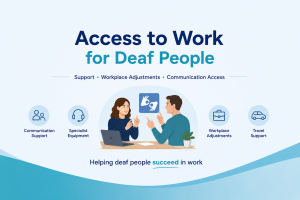
Access to Work helps disabled people and those with health conditions start or stay in employment.
Support may include:
You can usually apply once you have a job offer or are self employed.
These organisations may be able to help.
Many offer free employment guidance and confidence building support.
Helpful resources include:
These websites provide trusted information and current vacancies.
A good CV opens the door.
Preparation helps you secure the job.
Before every interview:
Confidence comes through preparation.
Yes, where appropriate.
Wait until you receive an offer.
Research average salaries.
Remain polite and professional.
Focus on the value you bring rather than simply asking for more money.
Most successful people experience rejection.
Every application improves your experience.
Remember:
Persistence often leads to success.
Searching for work can feel challenging.
Remember that your worth is not defined by one application.
Set realistic daily goals.
Take regular breaks.
Exercise where possible.
Talk to friends or family.
Celebrate progress, even if it is simply completing another application.
Confidence grows through action.
Most CVs should be one or two pages depending on your experience.
No. Tailor your CV to each vacancy.
Only if they demonstrate relevant skills or add value.
Choose a professional font such as Arial or Calibri.
You can simply write “References available upon request.”
Yes. Your Work Coach can often provide practical CV guidance and employment support.
PDF is usually preferred unless the employer requests otherwise.
Yes. Many verify employment history and qualifications.
Yes. Briefly explain genuine gaps where appropriate.
Yes. A tailored cover letter can strengthen your application.
Yes. Jobcentre Plus, the National Careers Service and many charities offer free support.
✓ Tailored for the role
✓ Clear layout
✓ Strong personal profile
✓ Relevant skills
✓ Achievement focused
✓ Error free
✓ Professional email address
✓ Correct contact details
✓ Appropriate keywords
✓ Saved in the requested format
Learning how to write a CV that gets interviews can transform your job search.
A well written CV gives employers confidence that you have the skills, experience and attitude they are looking for. By tailoring your CV to each vacancy, highlighting your achievements and keeping the layout simple, you can greatly improve your chances of securing interviews.
If you receive Universal Credit, remember that your Work Coach, Jobcentre Plus and government employment programmes are there to support you. You do not have to manage your job search alone.
Continue exploring the Work & Job Support section on Benefits Advice UK for more practical guidance on interviews, job applications, employment support and career development. Bookmark Benefits Advice UK so you always have trusted advice whenever you need help with your journey back into work.

Information on this site is based on official UK guidance.
About our information and sources


Sign up for our newsletter to receive updates when there are changes to Universal Credit.