
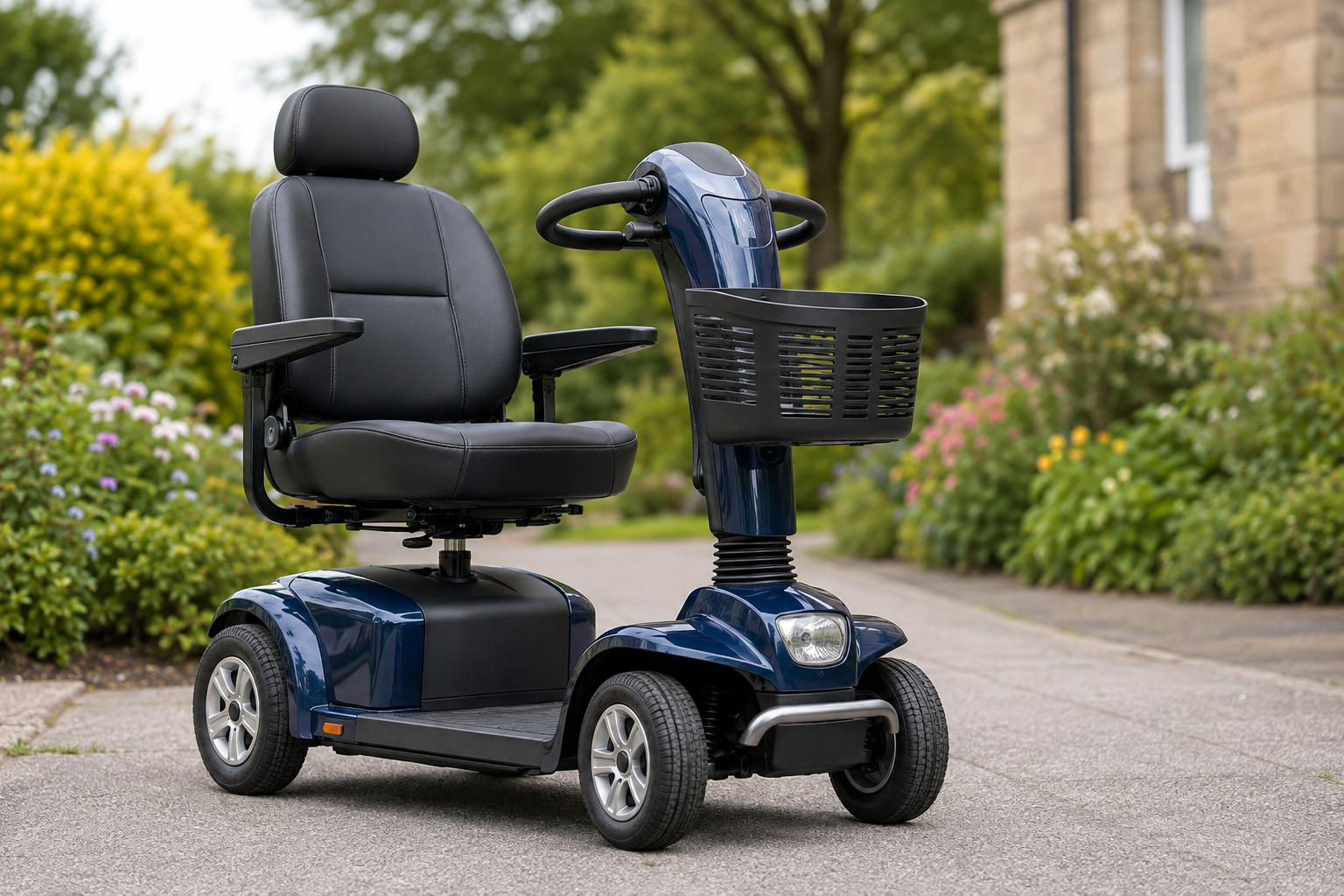
Living with a disability or long term health condition can make getting around difficult. A mobility scooter can provide greater independence, improve confidence and make everyday activities much easier.
Many people search online to find out how to get a scooter on PIP, but there is often confusion about whether Personal Independence Payment pays for a scooter directly. The answer depends on your PIP award and the options available to you.
This guide explains everything you need to know, including who qualifies, how the Motability Scheme works, what grants may be available, alternative funding options and the common mistakes to avoid.
Yes. You may be able to get a mobility scooter if you receive the enhanced rate of the mobility component of Personal Independence Payment (PIP) and choose to join the Motability Scheme.
If you do not qualify for the Motability Scheme, you may still be able to obtain a scooter through charities, local authority support, NHS services in limited circumstances, grants or by purchasing one privately.
Getting a scooter on PIP usually means using your enhanced mobility component of Personal Independence Payment to lease a mobility scooter through the Motability Scheme.
It does not mean that the Department for Work and Pensions provides a free scooter automatically.
Instead, your mobility payment can be exchanged to lease an approved mobility scooter from Motability.
Depending on your circumstances, other organisations may also help fund or provide a scooter.
| Method | Description |
|---|---|
| Motability Scheme | Lease a scooter using your enhanced PIP mobility payment |
| Charity grants | Financial help towards buying a scooter |
| Local authority support | Assistance may be available in some areas |
| Private purchase | Buy outright or through finance |
| Second hand purchase | Lower cost alternative |
The main route is through the Motability Scheme.
Generally, you must receive:
People receiving the standard mobility rate cannot normally lease a scooter through Motability.
However, they may qualify for:
To use PIP for a mobility scooter through Motability you usually need:
The scooter remains part of the lease rather than becoming your property immediately.
Many lease packages include:
This can make leasing more affordable than buying privately.
No.
PIP is not means tested.
Your earnings, pension or other income do not affect whether you qualify for PIP or the Motability Scheme.
Eligibility depends on:
| Income Situation | Effect |
|---|---|
| Working full time | No direct effect |
| Receiving pension | No direct effect |
| Receiving Universal Credit | No direct effect |
| Savings income | No direct effect |
No.
Unlike some means tested benefits, Personal Independence Payment does not have savings limits.
Whether you have:
your savings alone do not affect your PIP entitlement.
If you lease through Motability, your enhanced mobility payment usually covers the lease cost.
Some scooters require:
Costs vary depending on:
| Scooter Type | Typical Cost Through Motability |
|---|---|
| Small portable scooter | Often available with no advance payment |
| Medium scooter | May require a modest advance payment |
| Larger road capable scooter | Higher advance payment may apply |
Because prices change regularly, always check current availability before choosing a model.
If you already receive Enhanced Rate Mobility PIP:
Confirm your PIP award.
Check that you qualify for the Motability Scheme.
Choose an authorised Motability dealer.
Compare available scooters.
Arrange a demonstration if possible.
Complete the Motability application.
Arrange delivery.
Your PIP mobility payment is then paid directly towards your lease.
You may be asked for:
Some dealers may also request additional identification during the application process.
Many people delay receiving the right support because of simple misunderstandings.
Common mistakes include:
Only people receiving the enhanced mobility component can normally use Motability.
Think carefully about:
Trying different models can help prevent choosing an unsuitable scooter.
Consider where you will safely store and charge the scooter.
Regular servicing helps keep the scooter reliable and safe.
| Situation | Outcome |
|---|---|
| Sarah receives Enhanced Mobility PIP | Leases a portable scooter through Motability |
| David receives Standard Mobility PIP | Applies for charity funding instead |
| Maria buys privately | Uses personal savings and receives local grant support |
| Alan has changing mobility needs | Chooses a larger scooter after assessment |
These examples are illustrative and individual circumstances will differ.
Not automatically. If you qualify for Motability, your mobility payment can fund a lease. Some charities may also provide grants.
Yes, for the Motability Scheme.
Under the Motability Scheme, the scooter is leased rather than owned.
Yes. Many people choose to purchase privately.
Yes. If you do not join Motability, your PIP payment continues to be paid directly to you.
Usually yes, depending on your lease agreement and changing needs.
Generally yes where appropriate and safe, although you should always follow the lease conditions and insurance requirements.
Your Motability lease may also end if you are no longer eligible. Support may be available during the transition depending on your circumstances.
Yes. Employment does not prevent you qualifying for PIP.
Yes. Receiving a mobility scooter does not usually prevent you claiming other benefits that you qualify for.
Depending on your circumstances you may also qualify for:
| Benefit or Support | Purpose |
|---|---|
| Universal Credit | Help with living costs |
| Attendance Allowance | Support for people over State Pension age with care needs |
| Employment and Support Allowance | Income support for some people unable to work |
| Carers Allowance | Support for eligible carers |
| Disabled Facilities Grant | Adaptations to your home |
| Blue Badge Scheme | Parking concessions |
| Vehicle tax exemption or reduction | Available in some qualifying circumstances |
| Local authority disability support | Equipment and community assistance |
The most reliable information is available from official Government and recognised organisations, including guidance on:
Always ensure you are reading the latest published guidance, as eligibility rules and payment rates can change.
This article has been prepared using current UK Government guidance on Personal Independence Payment, the qualifying conditions for the mobility component and the eligibility rules for accessing the Motability Scheme. Information has also been checked against official guidance relating to disability support and mobility assistance available across the United Kingdom.
Although every effort has been made to ensure accuracy, benefit rules, payment rates and eligibility criteria can change. Always refer to the latest official Government guidance before making decisions about your benefits or applying for support.
Understanding how to get a scooter on PIP can make a significant difference if you have mobility difficulties.
The key point to remember is that PIP does not automatically provide a free scooter. However, if you receive the enhanced rate of the mobility component, you may be able to lease a mobility scooter through the Motability Scheme, with insurance, servicing and maintenance often included.
If you do not qualify for Motability, there are still many alternative routes to explore, including disability charities, local authority support, grants and private purchase options. Taking time to compare your choices and seeking independent advice where needed can help you find the solution that best meets your mobility needs and lifestyle.
Benefits Advice UK provides free information to help people better understand the UK benefits system. Always check the latest Government guidance before making financial decisions.

Information on this site is based on official UK guidance.
About our information and sources


Sign up for our newsletter to receive updates when there are changes to Universal Credit.