How Much Can You Get from Access to Work

How Much Can You Get from Access to Work

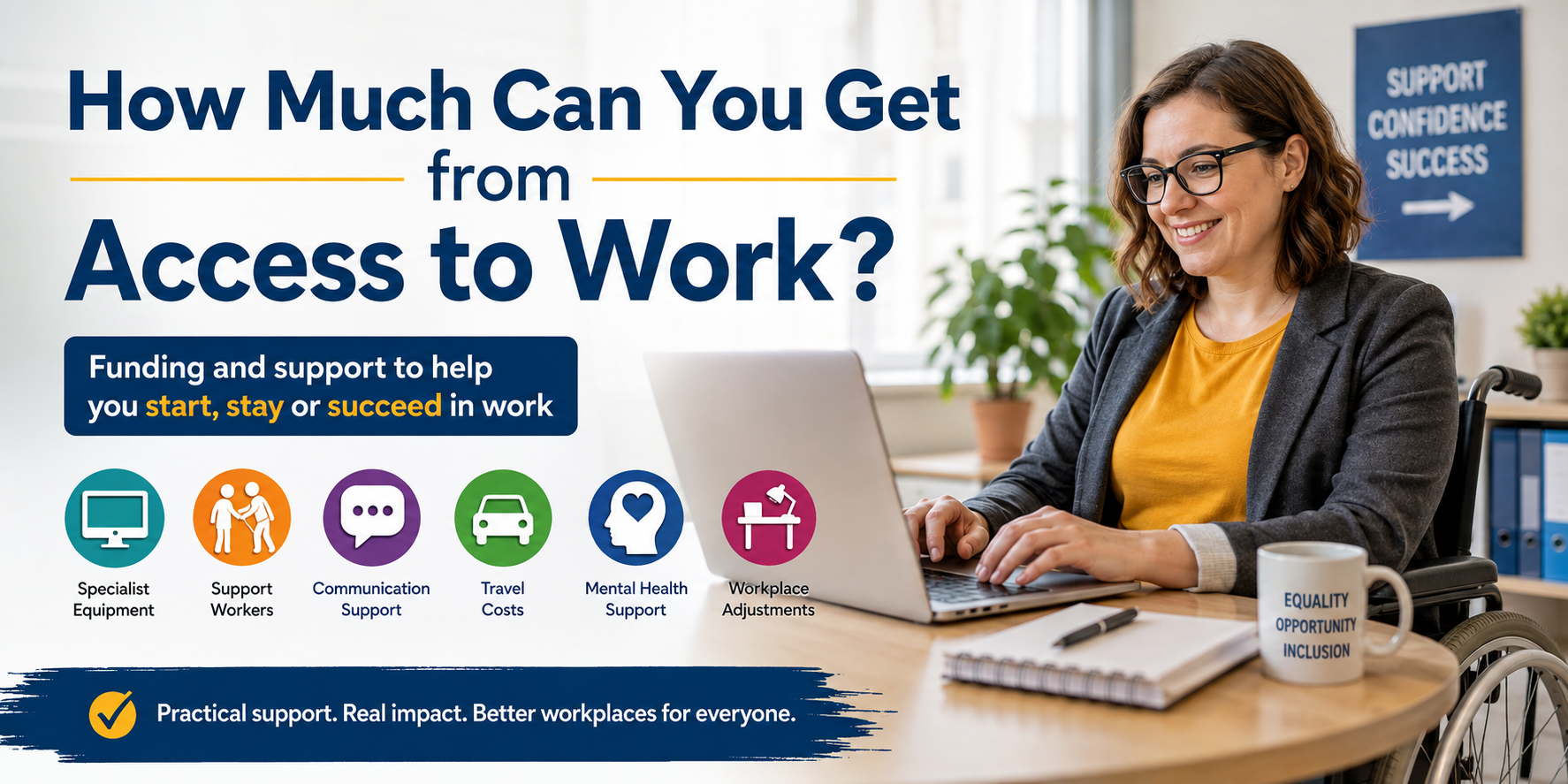
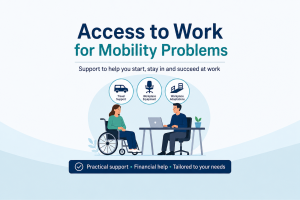
Access to Work is one of the most valuable Government support schemes available for disabled people and those with long term physical or mental health conditions who want to work. It can provide funding for specialist equipment, travel, support workers, communication assistance and workplace adjustments that help people start, stay in or return to employment.

Unlike many benefits, Access to Work is not paid as a weekly income. Instead, it provides financial support towards additional work related costs that arise because of a disability or health condition.

Many people wrongly assume they cannot work because of their condition when, in reality, Access to Work could remove many of the barriers preventing them from finding or keeping a job.

This guide explains exactly how much you can get from Access to Work, who qualifies, what the funding can pay for and how to make a successful application.


Quick Answer

How much can you get from Access to Work?

Access to Work does not pay a fixed amount. Instead, it can fund the reasonable extra costs you face because of your disability or health condition while working. The amount depends on your individual needs, the support required and your employment circumstances.

Funding may cover:

  • Specialist equipment
  • Support workers
  • Job coaches
  • Communication support
  • Adapted transport
  • Mental health support
  • Workplace adjustments

There is no standard payment because every award is individually assessed.


What Is How Much Can You Get from Access to Work?

What is Access to Work?

Access to Work is a Government grant that helps disabled people and people with health conditions overcome practical barriers in the workplace.

It is managed by the Department for Work and Pensions.

The funding is designed to help people:

  • Start work
  • Stay in work
  • Become self employed
  • Progress in their careers
  • Return after illness

The money is generally paid towards approved support rather than directly as extra income.


Who Can Claim How Much Can You Get from Access to Work?

Who qualifies for Access to Work?

You may qualify if you:

  • Are aged 16 or over
  • Live in England, Scotland or Wales
  • Have a disability or health condition that affects your ability to work
  • Are in paid employment
  • Are about to start work
  • Are self employed
  • Have a job interview
  • Participate in a work trial

Eligible health conditions include:

  • Physical disabilities
  • Mental health conditions
  • Learning disabilities
  • Autism
  • ADHD
  • Hearing impairment
  • Visual impairment
  • Long term illnesses
  • Neurological conditions

The condition does not have to be caused by work.


Eligibility Requirements

What are the eligibility rules?

To qualify you normally need to show that:

  • Your condition creates barriers at work
  • The support requested is necessary
  • The costs are additional because of your disability
  • The employer cannot reasonably provide all the support themselves

Each application is assessed individually.

You can apply if you are:

Employment Status May Qualify
Full time employee Yes
Part time employee Yes
Self employed Yes
Apprentice Yes
Starting a new job Yes
Work trial participant Yes
Interview candidate Yes

Income Rules

Does your income affect Access to Work?

No.

There is no means test based on your personal income.

Whether you earn a modest salary or a higher income, eligibility is based on your disability related support needs rather than your earnings.

This makes Access to Work different from many income related benefits.


Savings Rules

Do savings affect Access to Work?

No.

There are no savings limits for Access to Work.

Your personal savings or investments do not usually affect your eligibility.

The assessment focuses on the workplace support you need rather than your financial circumstances.


How Much Could You Receive?

How much funding does Access to Work provide?

There is no fixed grant amount.

Instead, funding is based on the reasonable cost of approved workplace support.

Depending on your circumstances, Access to Work may contribute towards:

Type of Support Examples
Specialist equipment Adapted keyboards, software, desks
Communication support British Sign Language interpreters
Support workers Readers, note takers, personal assistants
Job coaching Workplace coaching and mentoring
Mental health support Tailored workplace assistance
Travel costs Taxis where public transport is unsuitable
Adaptations Changes to equipment or workstations
Training Disability awareness linked to approved support

The overall level of funding depends on:

  • Individual needs
  • Type of support required
  • Cost of equipment
  • Employer contributions where applicable
  • Assessment recommendations

Many awards can amount to several thousands of pounds where specialist equipment or ongoing support is required.


What support is commonly funded?

Examples include:

Physical disabilities

  • Ergonomic chairs
  • Height adjustable desks
  • Voice recognition software
  • Wheelchair accessible equipment

Hearing impairment

  • Hearing loops
  • Sign language interpreters
  • Captioning services

Visual impairment

  • Screen reading software
  • Magnification equipment
  • Braille displays

Mental health conditions

  • Workplace coping strategies
  • Mental health support service
  • Specialist coaching

Neurodivergence

People with ADHD, autism or dyslexia may receive support such as:

  • Specialist coaching
  • Organisational software
  • Assistive technology
  • Workplace adjustments

How To Apply

How do you apply for Access to Work?

Applications can be made directly to the Government.

The process usually involves:

Step 1

Submit your application.

Step 2

Provide details about:

  • Your condition
  • Your employer
  • Your role
  • The difficulties you experience

Step 3

An adviser reviews your application.

Step 4

You may have a workplace assessment.

Step 5

A funding decision is made.

Step 6

Approved support is arranged.

Applying early can help ensure support is in place before you begin work or as soon as possible after starting.


What Documents Will You Need?

What information should you prepare?

Having the right information ready can make the application process smoother.

Useful documents include:

  • National Insurance number
  • Employer details
  • Job description
  • Details of your disability or health condition
  • Medical evidence where appropriate
  • Quotes for specialist equipment if requested
  • Details of workplace difficulties

Not every application requires medical evidence, but it can be helpful where the impact of your condition is not immediately clear.


Common Mistakes To Avoid

What mistakes can delay your application?

Many delays happen because applicants do not explain how their condition affects them at work.

Avoid:

  • Giving only your diagnosis without describing workplace difficulties
  • Applying too late
  • Leaving questions incomplete
  • Not providing supporting evidence when requested
  • Assuming your employer must pay for everything
  • Forgetting to explain why specific support is needed

The more clearly you explain your workplace challenges, the easier it is for advisers to assess your needs.


Examples And Real Life Scenarios

What does Access to Work look like in practice?

Scenario One

Sarah has severe hearing loss.

She receives funding for a British Sign Language interpreter during meetings and specialist communication equipment.

Outcome:

She can participate fully in team discussions.


Scenario Two

James has ADHD.

He receives specialist workplace coaching and organisational software.

Outcome:

His productivity improves and he remains successfully employed.


Scenario Three

Emma uses a wheelchair.

Access to Work funds adapted office equipment and taxi travel when public transport is not suitable.

Outcome:

She is able to travel safely and carry out her role effectively.


Scenario Four

David develops anxiety following illness.

He receives workplace mental health support and coaching.

Outcome:

He returns to work with greater confidence and reduced stress.


Frequently Asked Questions

Can Access to Work pay me cash?

Usually no. The grant normally pays towards approved workplace support and related costs.

Is Access to Work a benefit?

No. It is a Government grant rather than a welfare benefit.

Can I receive Access to Work and Personal Independence Payment?

Yes. Receiving Personal Independence Payment does not prevent you from applying for Access to Work.

Can self employed people apply?

Yes, provided they meet the eligibility requirements.

Does Access to Work affect Universal Credit?

No. Access to Work funding itself is not treated as earnings for Universal Credit purposes.

Does my employer have to contribute?

In some situations an employer may be expected to contribute towards certain costs, depending on the circumstances and current scheme rules.

Can I apply before starting work?

Yes. You can apply if you have a confirmed job offer or are about to start work.

Can Access to Work fund taxis?

Yes, where your disability means public transport is unsuitable and the travel is approved as part of your support package.

How long does an application take?

Times vary depending on demand and the complexity of your case.

Can funding be reviewed?

Yes. Awards may be reviewed if your job, workplace or support needs change.

Can students receive Access to Work?

Access to Work supports paid work rather than study. Different schemes may be available for education.


Related Benefits And Support Available

What other support could you claim?

Depending on your circumstances, you may also qualify for:

Benefit or Support Purpose
Personal Independence Payment Help with extra disability costs
Universal Credit Financial support if on a low income
Employment and Support Allowance Support for people with limited capability for work in some circumstances
Carers Allowance Support for eligible carers
Blue Badge Parking concessions
Motability Scheme Vehicle leasing for eligible people receiving qualifying mobility benefits
Disabled Students Allowance Support for eligible higher education students

You may be able to receive Access to Work alongside these forms of support if you meet the relevant eligibility rules.


Useful Government Resources

Where can you find official guidance?

Information reviewed against current UK Government guidance and official sources.

Useful official resources include:

  • GOV.UK Access to Work guidance
  • Department for Work and Pensions
  • Jobcentre Plus
  • Advisory, Conciliation and Arbitration Service for workplace rights
  • Equality Advisory and Support Service for equality related advice

Always use official Government guidance to check the latest eligibility criteria, application process and funding arrangements, as these can change over time.


Conclusion

Access to Work is one of the most effective forms of employment support available for disabled people and those with long term health conditions in the UK. Rather than providing a fixed cash payment, it offers tailored funding to remove workplace barriers that might otherwise make employment difficult or impossible.

The amount you can receive depends entirely on your individual circumstances and the support you need. Funding can cover specialist equipment, workplace adjustments, support workers, communication assistance, travel and mental health support, helping many people begin, continue or progress in work with greater confidence and independence.

Applying early, providing clear information about your workplace challenges and supplying any requested evidence can improve the likelihood of a smooth application process.

Benefits Advice UK provides free information to help people better understand the UK benefits system. Always check the latest Government guidance before making financial decisions.

imporatant_image

Important

Information on this site is based on official UK guidance.

About our information and sources
Inbox Background
Newsletter Image

Get the latest updates to your inbox

Sign up for our newsletter to receive updates when there are changes to Universal Credit.