Living with a disability or long term health condition can make everyday tasks around the home difficult. Simple activities such as getting into the bath, climbing stairs or entering your property may become challenging or even unsafe.
The Disabled Facilities Grant is designed to help eligible people pay for essential adaptations that make a home safer, more accessible and easier to live in. These changes can improve independence, reduce the risk of accidents and help people remain in their own homes for longer.
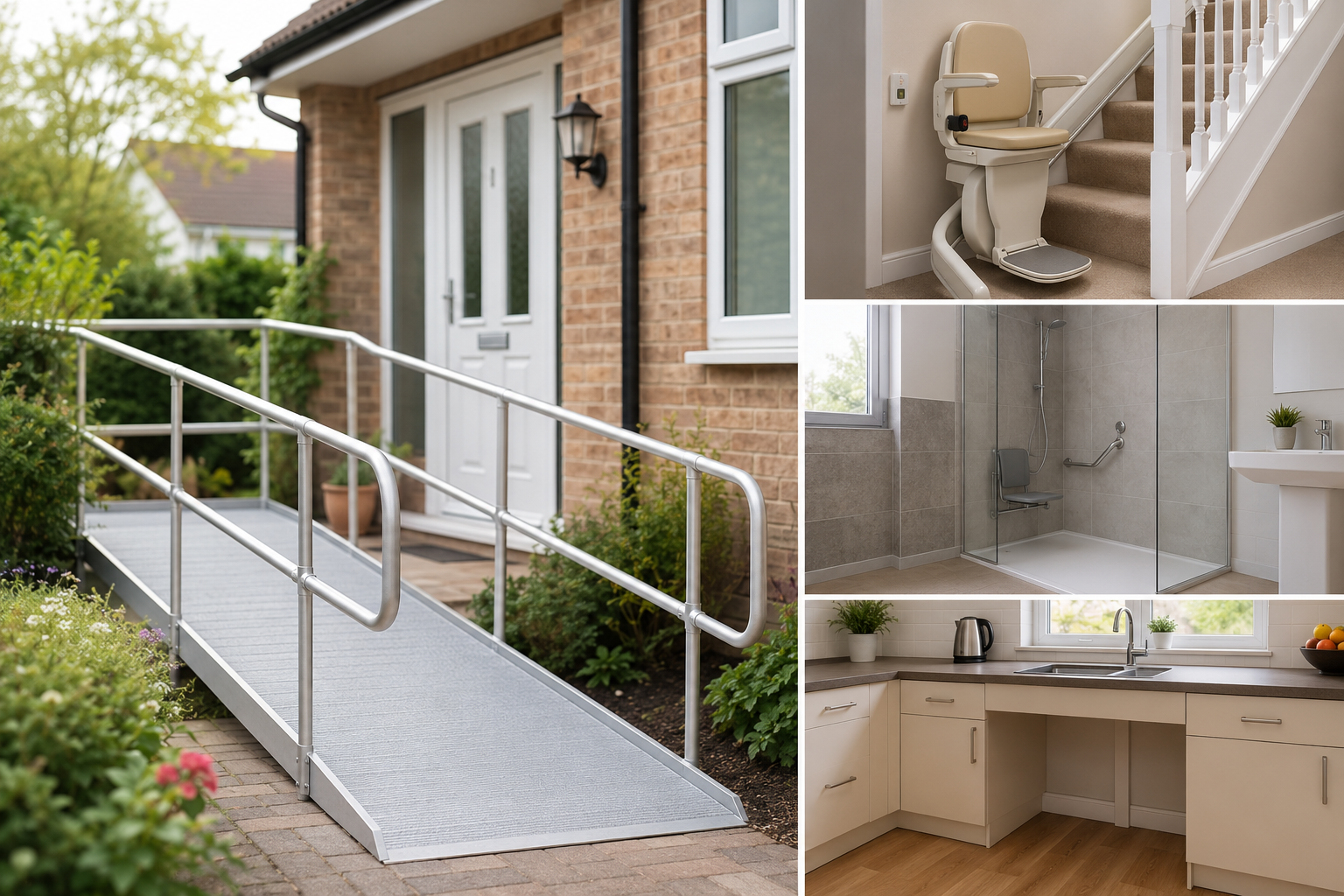
Many people are unaware that financial help is available for adaptations such as stairlifts, level access showers, ramps, widened doorways or home extensions for accessible bedrooms and bathrooms.
This guide explains everything you need to know about the Disabled Facilities Grant, including who qualifies, how much funding may be available, how applications work and what happens after approval.
The Disabled Facilities Grant is a Government funded grant administered by local councils that helps eligible disabled people pay for essential home adaptations.
The grant is intended to make a property suitable for someone with a disability so they can live safely and independently. Depending on where you live and your circumstances, the grant may pay some or all of the cost of approved adaptations.
The Disabled Facilities Grant helps fund major adaptations that are considered necessary and appropriate to meet a disabled person’s needs.
Examples include:
The council will usually arrange an assessment before deciding which adaptations are necessary.
| Home Adaptation | May Be Covered |
|---|---|
| Stairlift | Yes |
| Wheelchair ramp | Yes |
| Accessible shower | Yes |
| Door widening | Yes |
| Home extension | Sometimes |
| Kitchen adaptations | Yes |
| Ceiling hoist | Yes |
| General decorating | Usually No |
You may qualify if you or someone living in your home has a disability and requires adaptations to live more independently.
Applications can normally be made by:
The disabled person may be:
Receiving Personal Independence Payment, Disability Living Allowance or Attendance Allowance does not automatically guarantee entitlement, but these benefits often support evidence that adaptations are needed.
Your local council must generally be satisfied that:
An Occupational Therapist will usually assess your needs.
The assessment considers:
| Need | Possible Adaptation |
|---|---|
| Difficulty climbing stairs | Stairlift |
| Cannot use bath safely | Level access shower |
| Wheelchair user | Ramp and widened doors |
| Cannot reach kitchen surfaces | Adapted kitchen |
| Requires downstairs bedroom | Home extension |
Yes, in many adult applications there is a financial assessment known as a means test.
The council may consider:
Depending on the assessment:
Applications made on behalf of disabled children are generally not subject to the same means testing arrangements.
Savings can be considered during the financial assessment for adult applicants.
The council looks at your overall financial position when calculating whether you need to contribute towards the work.
However, each application is assessed individually and different circumstances may produce different outcomes.
If you are unsure, it is still worth applying because many applicants receive significant financial assistance.
The maximum grant available depends on where you live.
| Country | Maximum Grant |
|---|---|
| England | Up to £30,000 |
| Wales | Up to £36,000 |
| Northern Ireland | Different schemes apply |
| Scotland | Different assistance schemes apply |
If the approved work costs more than the maximum available grant, your council may discuss other funding options depending on local policies.
Some councils also provide discretionary assistance in addition to the standard grant.
Applications are normally made through your local council.
The process usually involves:
Contact your local council’s housing adaptations team.
Arrange an Occupational Therapist assessment.
Receive recommendations for adaptations.
Submit your application.
Provide supporting evidence.
The council assesses:
Approval is issued before work begins.
It is important not to start building work before receiving approval unless your council specifically advises otherwise.
Typical documents include:
Having these documents ready can speed up the application.
Many delays happen because applicants submit incomplete information or begin work before approval.
Avoid these common mistakes:
Sarah has multiple sclerosis and struggles climbing stairs.
Following an Occupational Therapist assessment, the council approves a stairlift and widened internal doorways. Most of the approved costs are covered by the Disabled Facilities Grant.
Outcome:
Sarah remains safely in her own home and avoids moving house.
David is a wheelchair user following a spinal injury.
His property requires:
The council approves the adaptations after confirming they are necessary and practical.
Outcome:
David can safely move around his home independently.
A family has a disabled child who requires specialist bathing facilities.
The council approves a level access shower and adapted bathroom.
Outcome:
Daily care becomes easier while improving the child’s safety.
Yes.
You should inform your local council if:
If adaptations have already been completed, some grants may include conditions about selling the property within a specified period, particularly for larger awards. Your council can explain whether these conditions apply.
| Situation | Likely Outcome |
|---|---|
| Homeowner requiring adaptations | May qualify |
| Private tenant | May qualify with landlord permission |
| Disabled child | May qualify without adult means testing |
| Adaptation not considered necessary | Application may be refused |
| Work started before approval | Funding could be affected |
Yes. Homeowners are one of the main groups eligible to apply.
Yes. Private tenants and many housing association tenants may qualify, usually with the landlord’s agreement where necessary.
No. Receiving disability benefits is not always required. Eligibility depends on your disability related needs rather than a specific benefit award.
No. Some applicants receive full funding while others may need to contribute depending on the financial assessment.
Times vary between councils depending on demand, assessments and the complexity of the adaptations.
Your council will explain its procedures. Some councils allow you to obtain quotations from approved contractors, while others have specific arrangements.
Yes. Where an extension is necessary and appropriate because of disability, it may be covered.
Yes. Parents or guardians can apply on behalf of disabled children.
Yes. Many tenants are eligible, although landlord consent may be required for structural alterations.
Most applicants do not repay the grant. However, for certain larger grants, councils may place conditions on repayment if the property is sold within a specified period. Your council will explain any conditions before work begins.
Yes. If your application is refused, ask your council for the reasons and whether there is a review or complaints process. You may also seek independent advice.
Depending on your circumstances, you may also qualify for additional financial help, including:
Claiming one type of support does not automatically entitle you to another, but many disabled people receive several forms of assistance together where they meet the eligibility criteria.
The most reliable source of information is your local council, which administers the Disabled Facilities Grant in England and Wales. You can also find detailed guidance on the UK Government website, including information about eligibility, the application process and home adaptations. If you live in Scotland or Northern Ireland, equivalent home adaptation schemes are available through different arrangements managed by the relevant national authorities.
This article has been reviewed against current UK Government guidance and official information available at the time of publication.
Although every effort has been made to ensure accuracy, grant rules, local authority policies and financial limits may change. Individual circumstances are also assessed on a case by case basis.
Always check the latest guidance from your local council and official Government sources before making decisions about your application.
The Disabled Facilities Grant can make a life changing difference for disabled people and their families by helping to fund essential home adaptations that improve safety, accessibility and independence.
Whether you need a stairlift, accessible bathroom, wheelchair access or more substantial structural work, the grant could significantly reduce the financial burden of adapting your home.
Applying may seem daunting, but understanding the eligibility rules, preparing the right documents and following the correct application process can improve your chances of success.
If you think you or a family member could benefit from home adaptations, contact your local council as early as possible to begin the assessment process.
Benefits Advice UK provides free information to help people better understand the UK benefits system. Always check the latest Government guidance before making financial decisions.
Information on this site is based on official UK guidance.
About our information and sources
Sign up for our newsletter to receive updates when there are changes to Universal Credit.