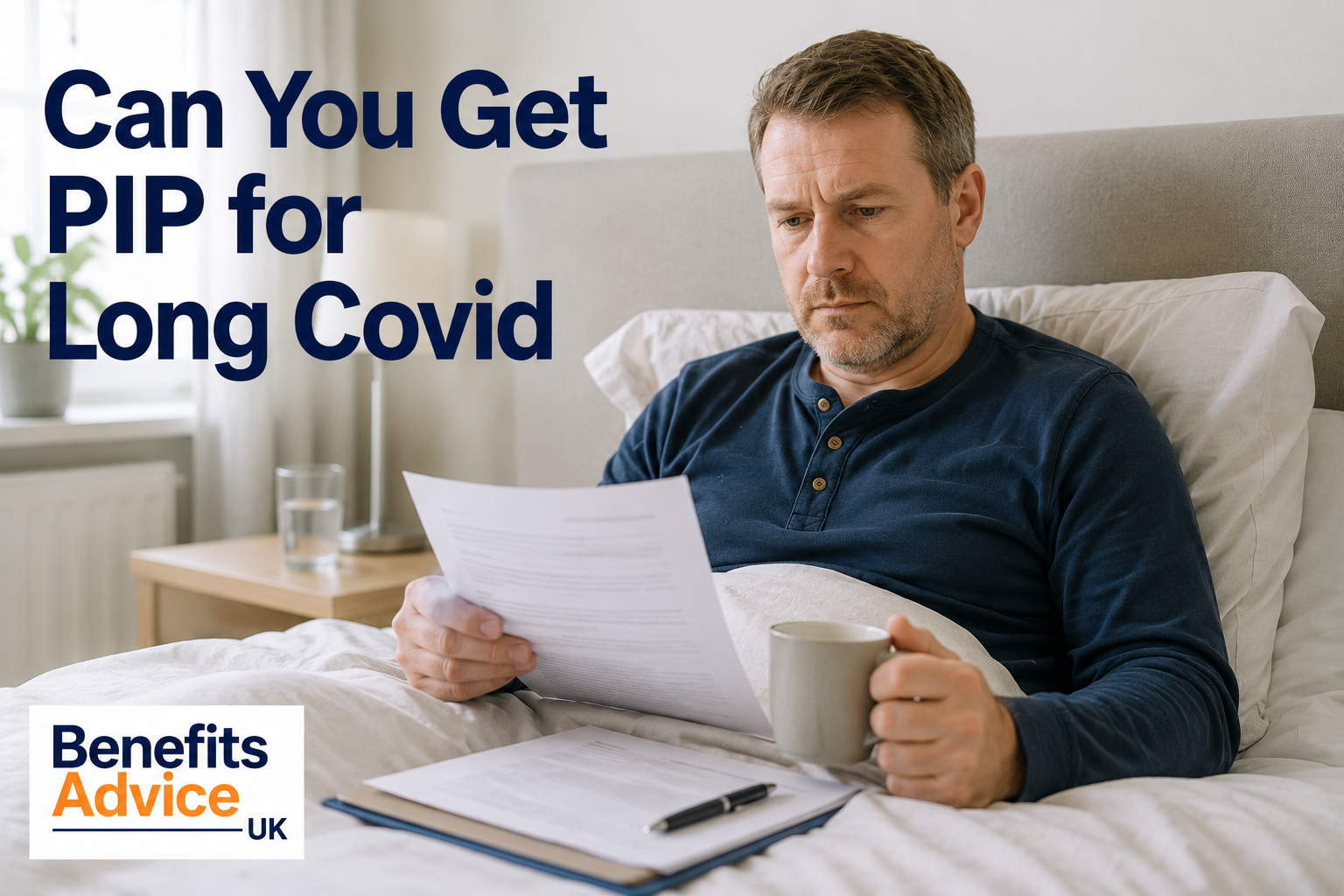
Long Covid has changed everyday life for many people across the UK. While some people recover within weeks, others continue to experience symptoms that affect their ability to work, care for themselves and live independently for months or even years.
If you are struggling with ongoing symptoms, you may be wondering whether financial support is available through Personal Independence Payment, commonly known as PIP.
The good news is that Long Covid itself does not prevent you from claiming PIP. Instead, the Department for Work and Pensions looks at how your symptoms affect your daily living and mobility rather than the name of your medical condition.
This guide explains everything you need to know, including who may qualify, how much you could receive, how to apply and how to improve your chances of making a successful claim.
Yes. You can receive PIP for Long Covid if your symptoms have significantly affected your ability to carry out everyday activities or move around, and those difficulties have lasted for at least three months and are expected to continue for at least another nine months.
PIP is not awarded because you have Long Covid. It is awarded because of the impact your symptoms have on your daily life.
Claiming PIP for Long Covid means applying for financial support because ongoing symptoms make everyday tasks difficult.
Long Covid can affect many different parts of the body, including:
Some people experience only one symptom, while others experience several at the same time.
PIP looks at how these symptoms affect your ability to:
Anyone aged 16 or over who has reached the qualifying period and has daily living or mobility difficulties because of Long Covid may be eligible.
You do not need to be employed or unemployed.
You may qualify if you are:
Your employment status does not determine whether you receive PIP.
To qualify for PIP, your difficulties must:
The assessment focuses on functional ability rather than diagnosis.
| Symptom | Possible impact |
|---|---|
| Severe fatigue | Unable to prepare meals safely |
| Brain fog | Difficulty managing money or medication |
| Breathlessness | Limited walking ability |
| Memory problems | Difficulty following instructions |
| Dizziness | Increased falls risk |
| Muscle weakness | Difficulty washing or dressing |
No.
PIP is not means tested.
This means your income does not affect whether you qualify.
You can receive PIP whether you:
No.
Unlike some other benefits, PIP has no savings limit.
You could have:
| Savings | Effect on PIP |
|---|---|
| £500 | None |
| £5,000 | None |
| £20,000 | None |
| £100,000 | None |
Savings are ignored when assessing PIP entitlement.
The amount depends on how your condition affects your daily living and mobility.
There are two components.
| Component | Standard Rate | Enhanced Rate |
|---|---|---|
| Daily Living | £73.90 per week | £110.40 per week |
| Mobility | £29.20 per week | £77.05 per week |
You may receive:
The amount awarded depends on the points scored during the assessment.
Applying involves several stages.
Start your claim with the Department for Work and Pensions.
Complete the “How your disability affects you” form.
Describe:
Provide supporting medical evidence.
Attend an assessment if required.
This may take place:
Wait for the decision.
The strongest claims include detailed evidence.
Useful documents include:
A symptom diary covering several weeks can help demonstrate how your condition varies.
Many people unintentionally weaken their application.
Avoid these common mistakes.
PIP assesses how symptoms affect daily life.
Many people describe what they can do on a good day rather than what happens most of the time.
Medical evidence strengthens your claim.
Brain fog, anxiety and cognitive problems can all be relevant.
Answer every question fully.
If your symptoms change from day to day, explain how often bad days occur.
Sarah experiences severe fatigue after walking for five minutes.
She cannot cook safely because she becomes exhausted and forgets to turn appliances off.
She may qualify for Daily Living and Mobility components.
Michael works from home but experiences brain fog, dizziness and breathlessness.
Although he remains employed, he requires help with shopping, preparing meals and managing medication.
Working does not prevent him from receiving PIP.
Linda developed Long Covid eighteen months ago.
She now struggles to walk more than fifty metres without stopping.
She may qualify for the Enhanced Mobility rate depending on her assessment.
| Benefit | Means Tested | Based on Health | Based on Income |
|---|---|---|---|
| Personal Independence Payment | No | Yes | No |
| Universal Credit | Yes | Sometimes | Yes |
| Employment and Support Allowance | Sometimes | Yes | Depends on type |
| Attendance Allowance | No | Yes | No |
Yes. Long Covid can qualify if it significantly affects your ability to carry out daily living or mobility activities.
No. A diagnosis helps, but PIP looks at how your symptoms affect your daily life.
Yes. Many people work and still receive PIP.
Your difficulties must usually have lasted for at least three months and be expected to continue for at least another nine months.
Possibly. Many applicants attend a telephone, video or face to face assessment.
It can if the fatigue substantially limits your daily activities.
Yes. Problems with memory, concentration and decision making may be relevant.
No. You may receive both benefits if you meet the qualifying conditions.
You should report significant changes that could affect your entitlement.
Yes. You can request a Mandatory Reconsideration and then appeal to an independent tribunal if necessary.
Times vary depending on demand, evidence and whether an assessment is required. Many claims take several months from application to decision.
Depending on your circumstances, you may also qualify for:
Some people may qualify for more than one type of support at the same time.
Information reviewed against current UK Government guidance and official sources.
Useful official resources include:
Always use official Government guidance when making decisions about your benefits.
| Question | Answer |
|---|---|
| Can Long Covid qualify for PIP? | Yes, if symptoms affect daily living or mobility |
| Does income matter? | No |
| Do savings matter? | No |
| Can you work and receive PIP? | Yes |
| Is a diagnosis enough? | No, functional impact is assessed |
| Can you appeal a refusal? | Yes |
Long Covid can have a profound effect on everyday life, and for many people those challenges continue long after the initial infection. While there is no automatic entitlement to Personal Independence Payment simply because you have Long Covid, you may qualify if your symptoms make it difficult to carry out everyday activities or move around safely.
The most successful applications clearly explain how your condition affects your daily life, are supported by relevant medical evidence and describe the help you need on most days rather than focusing solely on your diagnosis.
If you think you may be entitled to PIP, take time to gather evidence, complete your application carefully and explain the full impact of your symptoms. If your claim is unsuccessful, remember that you have the right to challenge the decision through the appeals process.
Benefits Advice UK provides free information to help people better understand the UK benefits system. Always check the latest Government guidance before making financial decisions.
Information on this site is based on official UK guidance.
About our information and sources
Sign up for our newsletter to receive updates when there are changes to Universal Credit.