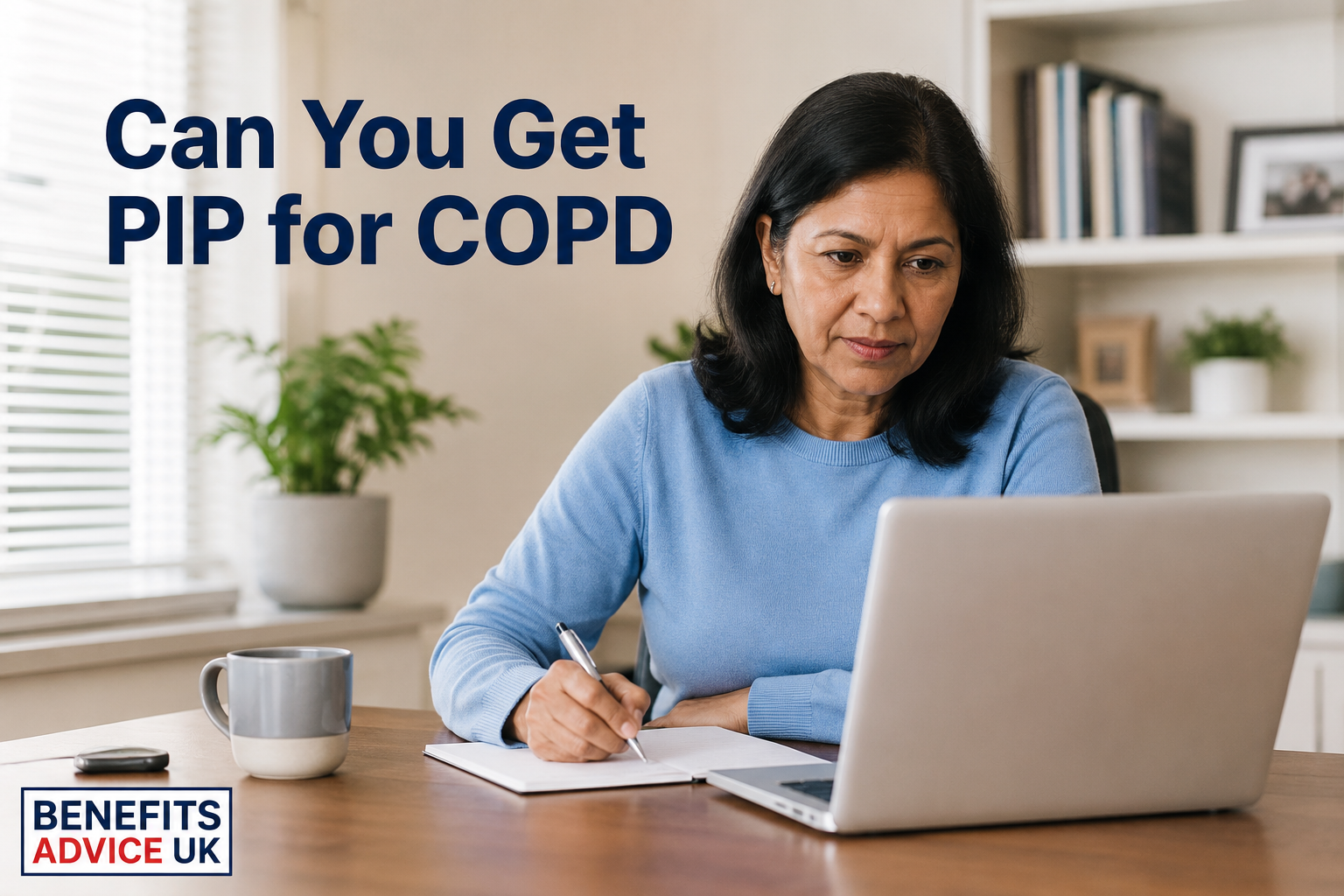
Can You Get PIP for COPD in 2026?

Can You Get PIP for COPD?

Living with Chronic Obstructive Pulmonary Disease, commonly known as COPD, can make everyday activities increasingly difficult. Simple tasks such as walking, climbing stairs, getting dressed or preparing meals may leave you breathless and exhausted. Many people wonder whether these difficulties could make them eligible for Personal Independence Payment, often called PIP.

The good news is that COPD can qualify for PIP. However, receiving an award depends on how your condition affects your daily life and ability to get around rather than the diagnosis itself.

This guide explains everything you need to know about claiming PIP for COPD, including eligibility, payments, evidence, common mistakes and how to maximise your chances of a successful claim.


Quick Answer

Can You Get PIP for COPD?

Yes. You can get PIP for COPD if your condition causes significant difficulties with everyday living or mobility and you score enough points during the assessment.

PIP is not awarded simply because you have COPD. Instead, the Department for Work and Pensions assesses how your symptoms affect your ability to carry out daily activities safely, repeatedly, to an acceptable standard and within a reasonable amount of time.


What Is PIP for COPD?

What is Personal Independence Payment?

Personal Independence Payment is a non means tested benefit that helps people aged 16 to State Pension age with the extra costs of living with a long term health condition or disability.

COPD is one of many conditions that may qualify if it limits your daily life.

Unlike some benefits, PIP is based on how your condition affects you rather than your income, employment status or diagnosis.

PIP is made up of two separate components.

Component Purpose
Daily Living Helps with everyday tasks such as washing, dressing, preparing food and managing treatment
Mobility Helps if walking or planning journeys is difficult because of your condition

You may receive:

  • Daily Living only
  • Mobility only
  • Both components
  • Neither component if you do not score enough points

Who Can Claim PIP for COPD?

Who qualifies for PIP with COPD?

You may qualify if:

  • You are aged 16 or over.
  • You have not yet reached State Pension age when making your first claim.
  • Your COPD has caused difficulties for at least three months.
  • Your condition is expected to continue for at least another nine months.
  • You usually live in England, Wales or Northern Ireland and meet the residency rules.
  • You score enough points during the PIP assessment.

Many people with mild COPD do not qualify, while others with moderate or severe COPD receive ongoing awards because their symptoms significantly affect everyday life.


Eligibility Requirements

How does COPD qualify for PIP?

The assessment focuses on functional ability rather than medical diagnosis.

The assessor looks at activities including:

Preparing food

Breathlessness may make standing at a cooker difficult or unsafe.

Eating and drinking

Some people become exhausted while preparing or eating meals.

Washing and bathing

Steam, bending and standing can trigger severe breathlessness.

Dressing

Putting on socks or shoes may require frequent rests.

Managing medication

Many people use inhalers, nebulisers or oxygen therapy several times each day.

Communicating

Advanced COPD may affect speech due to breathlessness.

Moving around

Walking even short distances may require regular stopping.

Planning journeys

Some people become anxious about travelling because of breathlessness or reliance on oxygen equipment.


The PIP reliability criteria

Every activity is assessed on whether you can complete it:

  • Safely
  • Repeatedly
  • To an acceptable standard
  • Within a reasonable time

For example, you may technically be able to climb stairs, but if it leaves you unable to do anything else for hours afterwards, the activity may not count as being completed reliably.

This is particularly relevant for COPD claims.


Income Rules

Does your income affect PIP?

No.

PIP is completely separate from your income.

You can qualify whether you:

  • Work full time
  • Work part time
  • Are unemployed
  • Receive a pension
  • Have savings
  • Own your own home

Income does not reduce your PIP payments.

Income Source Affects PIP?
Employment No
Pension No
Universal Credit No
Private income No

Savings Rules

Do savings affect PIP?

No.

Unlike some benefits, there is no savings limit.

You can have:

  • £100
  • £10,000
  • £50,000
  • More than £100,000

Savings do not prevent you receiving PIP.


How Much Could You Receive?

How much is PIP for COPD?

The amount depends on which components you qualify for.

Component Standard Rate Enhanced Rate
Daily Living Higher payment than basic support Maximum Daily Living award
Mobility Standard Mobility award Highest Mobility award

Your award depends entirely on the number of points scored during your assessment.

Daily Living points

Points Award
8 to 11 Standard Daily Living
12 or more Enhanced Daily Living

Mobility points

Points Award
8 to 11 Standard Mobility
12 or more Enhanced Mobility

Payments are normally made every four weeks directly into your bank account.


How To Apply

How do you apply for PIP with COPD?

Applying involves several stages.

Step 1

Start your claim with the Department for Work and Pensions.

Step 2

Complete the PIP questionnaire.

Describe how COPD affects your daily life rather than simply naming your condition.

Step 3

Provide supporting evidence.

Step 4

Attend an assessment if required.

Many assessments now take place by telephone or video, although face to face assessments are still used where appropriate.

Step 5

Receive a decision letter explaining whether your claim has been successful.


What Documents Will You Need?

What evidence helps a COPD claim?

Strong medical evidence increases the likelihood of success.

Useful evidence includes:

  • GP records
  • Hospital letters
  • Respiratory consultant reports
  • Lung function test results
  • Oxygen therapy records
  • Prescription history
  • Occupational therapy assessments
  • Pulmonary rehabilitation reports
  • Care plans
  • Statements from carers or family members

A diary showing how COPD affects you over several weeks can also be valuable.


What Does the Assessor Want to Know?

What questions are asked during a PIP assessment?

The assessor is interested in your typical day.

You may be asked:

  • How far can you walk before stopping?
  • Do you need help washing?
  • Can you prepare meals safely?
  • How often do you use inhalers?
  • Do you need oxygen?
  • How often do you become breathless?
  • Do you need someone with you when travelling?
  • How does fatigue affect you?

Always answer honestly based on your worst typical days rather than unusually good days.


Common Mistakes To Avoid

What mistakes reduce the chance of receiving PIP?

Many claims fail because applicants underestimate how much COPD affects them.

Common mistakes include:

  • Saying you can do something without explaining how difficult it is.
  • Forgetting to mention fatigue.
  • Not describing recovery time after activities.
  • Failing to explain breathlessness.
  • Not submitting medical evidence.
  • Describing only good days.
  • Leaving sections of the form blank.
  • Assuming the diagnosis alone is enough.

Examples And Real Life Scenarios

Example one

Margaret is 67 and has severe COPD.

She becomes breathless after walking around 25 metres and requires oxygen therapy during parts of the day.

She needs help bathing and preparing meals.

Outcome:

She scores enough points for Enhanced Daily Living and Enhanced Mobility.


Example two

David has moderate COPD.

He works three mornings each week but becomes breathless climbing stairs and needs frequent rests while preparing food.

Outcome:

He receives Standard Daily Living but does not qualify for Mobility because he can still walk reasonable distances.


Example three

Sarah has recently been diagnosed with mild COPD.

She occasionally uses an inhaler but manages all daily activities independently.

Outcome:

She is unlikely to qualify because her condition currently causes limited functional difficulties.


Can You Work While Receiving PIP?

Does having a job stop you receiving PIP?

No.

Many people work while claiming PIP.

The important question is not whether you have a job but whether COPD significantly affects your daily activities outside work.

Working does not automatically prevent an award.


What Happens If Your COPD Gets Worse?

Can your PIP award change?

Yes.

COPD is often progressive.

If your condition becomes significantly worse, you may ask the Department for Work and Pensions to review your award.

If your condition improves, you should also report relevant changes.


Related Benefits And Support Available

What other support could you receive?

Depending on your circumstances you may also qualify for:

Benefit Purpose
Universal Credit Help with living costs if you have a low income
Employment and Support Allowance Financial support if illness limits your ability to work
Attendance Allowance Support for people over State Pension age with care needs
Carer’s Allowance Support for someone providing regular care
Council Tax Reduction Help towards Council Tax bills
Disabled Facilities Grant Assistance with home adaptations
Blue Badge Parking concessions for eligible disabled people
Warm Home Discount Help with winter electricity costs where eligible

Some people with COPD may also qualify for support with prescription costs, travel to hospital appointments or local authority care services depending on their circumstances.


Frequently Asked Questions

Can mild COPD qualify for PIP?

Yes, but only if it causes enough difficulties with daily living or mobility to score the required number of points.

Is COPD automatically classed as a disability?

COPD can amount to a disability under equality legislation if it has a substantial and long term effect on normal daily activities, but this does not automatically mean you qualify for PIP.

Can I receive PIP and Universal Credit together?

Yes. Many people receive both benefits at the same time.

Can I claim PIP if I still work?

Yes. Employment does not prevent you receiving PIP.

How long does a PIP decision take?

Times vary depending on demand and whether further evidence is required.

Will I need a medical assessment?

Many applicants do. Assessments may be carried out by telephone, video or face to face where appropriate.

Can oxygen therapy help my claim?

Yes. Evidence of oxygen therapy can support your claim if it demonstrates how COPD affects your daily life.

What if my claim is refused?

You can ask for a Mandatory Reconsideration and, if necessary, appeal to an independent tribunal.

Can COPD qualify for the Mobility component?

Yes. If walking is significantly limited because of breathlessness or fatigue, you may qualify.

Does age affect PIP eligibility?

You must normally claim before reaching State Pension age, although existing awards can continue beyond that age subject to the relevant rules.


Useful Government Resources

Where can you find official guidance?

Information reviewed against current UK Government guidance and official sources.

Useful official resources include:

  • GOV.UK Personal Independence Payment guidance
  • Department for Work and Pensions
  • NHS information about COPD
  • Citizens Advice
  • MoneyHelper

Always refer to official guidance for the latest eligibility criteria, payment rates and application procedures.


Conclusion

COPD can have a major impact on everyday life, from walking short distances to preparing meals or managing personal care. If your condition limits your ability to carry out daily activities or affects your mobility, you may be entitled to Personal Independence Payment.

Remember that PIP is awarded according to how your COPD affects your daily life rather than the name or severity of your diagnosis alone. Providing detailed answers, strong medical evidence and examples from your daily routine can significantly strengthen your claim.

Whether you are newly diagnosed or have been living with COPD for many years, understanding the assessment process and your rights can help you make a more informed application.

Benefits Advice UK provides free information to help people better understand the UK benefits system. Always check the latest Government guidance before making financial decisions.

imporatant_image

Important

Information on this site is based on official UK guidance.

About our information and sources
Inbox Background
Newsletter Image

Get the latest updates to your inbox

Sign up for our newsletter to receive updates when there are changes to Universal Credit.