Back pain can affect every part of daily life. From getting dressed in the morning to travelling to work or preparing a meal, persistent pain can make ordinary tasks difficult or even impossible. Many people assume Personal Independence Payment, commonly known as PIP, is only available for severe physical disabilities. In reality, people with long term back pain may qualify if their condition affects their ability to carry out everyday activities or move around safely.
This guide explains who may qualify, how PIP is assessed, how much you could receive, what evidence helps your claim and the mistakes that often lead to unsuccessful applications.
Yes. You can receive Personal Independence Payment for back pain if your condition has caused difficulties with daily living or mobility for at least three months and is expected to continue for at least another nine months. Your award is based on how your condition affects your daily life rather than the medical diagnosis itself.
Someone with chronic back pain, slipped discs, spinal arthritis, spinal injuries, sciatica or degenerative spinal conditions could qualify if they meet the assessment criteria.
| Question | Answer |
|---|---|
| Is back pain enough to claim PIP? | Yes, if it significantly affects daily living or mobility. |
| Does income matter? | No. |
| Do savings affect PIP? | No. |
| Is PIP taxable? | No. |
| Can you work and receive PIP? | Yes. |
Personal Independence Payment is a benefit designed to help people aged 16 or over who have a long term illness, disability or health condition that affects everyday life.
Unlike some other benefits, PIP is not awarded because you have a particular medical diagnosis. Instead, it looks at how your condition limits your ability to complete specific activities.
The assessment considers whether you can complete activities:
These principles are particularly important for people living with chronic back pain, where symptoms often vary from day to day.
No.
Back pain alone does not guarantee an award.
Instead, the Department for Work and Pensions considers how your condition affects your independence.
Examples include:
Many successful claims involve conditions such as:
You could qualify if:
Back pain can affect people of every age, including those who continue working.
Receiving PIP does not depend on whether you are employed.
PIP has two separate components.
This looks at activities including:
This considers:
You score points depending on the level of help required.
| Daily Activity | Possible Effect of Back Pain |
|---|---|
| Cooking | Cannot stand long enough to prepare meals |
| Washing | Needs assistance getting into the bath |
| Dressing | Unable to bend to put on shoes or socks |
| Toilet needs | Pain makes sitting and standing difficult |
| Medication | Requires help managing pain treatment |
No.
Your income has no effect on entitlement.
You can receive PIP whether you:
No.
Unlike some other benefits, there is no savings limit for PIP.
Whether you have no savings or substantial savings, your eligibility depends only on how your condition affects your daily life.
PIP consists of two separate components.
| Component | Standard Rate | Enhanced Rate |
|---|---|---|
| Daily Living | Paid if lower assessment threshold is met | Higher payment for greater needs |
| Mobility | Paid if lower mobility threshold is met | Higher payment for severe mobility difficulties |
If you qualify for both enhanced rates, you receive both payments together.
Payment rates are reviewed periodically by the Government.
The assessor will ask about your typical day.
Examples include:
Be honest about your worst days as well as your better days.
If your symptoms fluctuate, explain how often this happens.
The process usually follows these steps.
The questionnaire gives you the opportunity to explain exactly how back pain affects everyday life.
Many people underestimate the impact of pain and provide answers that are too brief.
The strongest applications include evidence from several sources.
Useful evidence includes:
You may also include:
| Medical Condition | May Qualify for PIP |
|---|---|
| Sciatica | Yes |
| Degenerative disc disease | Yes |
| Osteoarthritis | Yes |
| Ankylosing spondylitis | Yes |
| Slipped disc | Yes |
| Spinal stenosis | Yes |
| Chronic mechanical back pain | Yes |
| Spinal injury | Yes |
Remember that the diagnosis alone does not determine entitlement.
The impact on daily living remains the key factor.
Common mistakes include:
A detailed explanation is usually more helpful than a short answer.
Sarah has chronic lower back pain caused by degenerative disc disease.
She cannot stand long enough to cook, needs help putting on shoes and cannot walk more than around one hundred metres without severe pain.
She receives both Daily Living and Mobility components.
David experiences sciatica following spinal surgery.
Although he still works part time, he cannot drive for long periods and requires assistance bathing.
His employment does not prevent him receiving PIP because the assessment looks at everyday living rather than employment status.
Amira has severe ankylosing spondylitis.
Morning stiffness means she needs help dressing and struggles to leave home independently.
Her medical evidence clearly demonstrates the ongoing impact of her condition.
No.
Many people continue working while receiving PIP.
The assessment considers:
Working does not automatically mean you are not disabled.
However, your work activities should be consistent with the information you provide during your assessment.
Yes.
You should inform the Department for Work and Pensions if your condition:
Changes may affect future entitlement.
Depending on your circumstances, you may also qualify for:
| Benefit or Support | Purpose |
|---|---|
| Universal Credit | Help with living costs |
| Employment and Support Allowance | Support if your ability to work is limited |
| Attendance Allowance | Support for older people with care needs |
| Carer’s Allowance | Financial support for eligible carers |
| Disabled Facilities Grant | Home adaptations |
| Council Tax Reduction | Help with council tax |
| Blue Badge | Parking concessions |
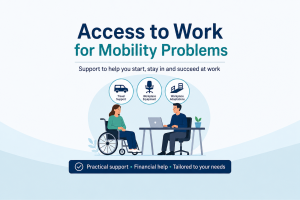
| Access to Work | Workplace support |
Receiving PIP can sometimes increase entitlement to other benefits.
Information reviewed against current UK Government guidance and official sources.
Useful resources include:
Always use official Government guidance when making decisions about benefit claims.
Yes. Chronic back pain can qualify if it affects your ability to complete daily activities or move around safely.
Yes. A slipped disc may qualify where symptoms significantly affect daily living or mobility.
Yes. Spinal arthritis can qualify if it causes long term functional difficulties.
Yes. Many people with severe sciatica receive PIP where mobility or daily activities are affected.
No. Medical evidence is helpful, but there is no requirement to provide an MRI scan.
Yes. Employment does not prevent you receiving PIP.
Processing times vary depending on demand, assessments and evidence gathering.
Receiving PIP does not reduce your Universal Credit payment. In some cases it may increase the amount you receive through additional elements.
You can ask for a Mandatory Reconsideration and, if necessary, appeal to an independent tribunal.
Yes. If anxiety or depression linked to your condition affects daily living, this can also be considered during the assessment.
Yes. Assessments consider how your condition affects you on the majority of days rather than only your best days.
Yes. If ongoing symptoms continue to affect your daily life and mobility after surgery, you may still qualify.
Back pain can have a profound effect on independence, mobility and quality of life. While having a diagnosis alone is not enough to receive Personal Independence Payment, many people with chronic back conditions successfully claim because their symptoms make everyday activities difficult or unsafe.
The key to a successful application is providing clear explanations of how your condition affects you, supported by strong medical evidence wherever possible. Focus on the practical impact of your symptoms rather than simply naming your diagnosis, and be honest about the help you need on both good days and bad.
Benefits Advice UK provides free information to help people better understand the UK benefits system. Always check the latest Government guidance before making financial decisions.
Information on this site is based on official UK guidance.
About our information and sources
Sign up for our newsletter to receive updates when there are changes to Universal Credit.