Finding and keeping a job can present extra challenges if you have a disability, long term health condition or mental health condition. The UK Government’s Access to Work scheme exists to remove many of those barriers by providing financial support that helps people start work, stay in work or become self employed.
This guide explains everything you need to know about the scheme, including who qualifies, how much support may be available, how to apply and what happens after your application.
Whether you are beginning a new job, returning to employment after illness or looking to grow your business as a self employed person, understanding Access to Work could make a significant difference.
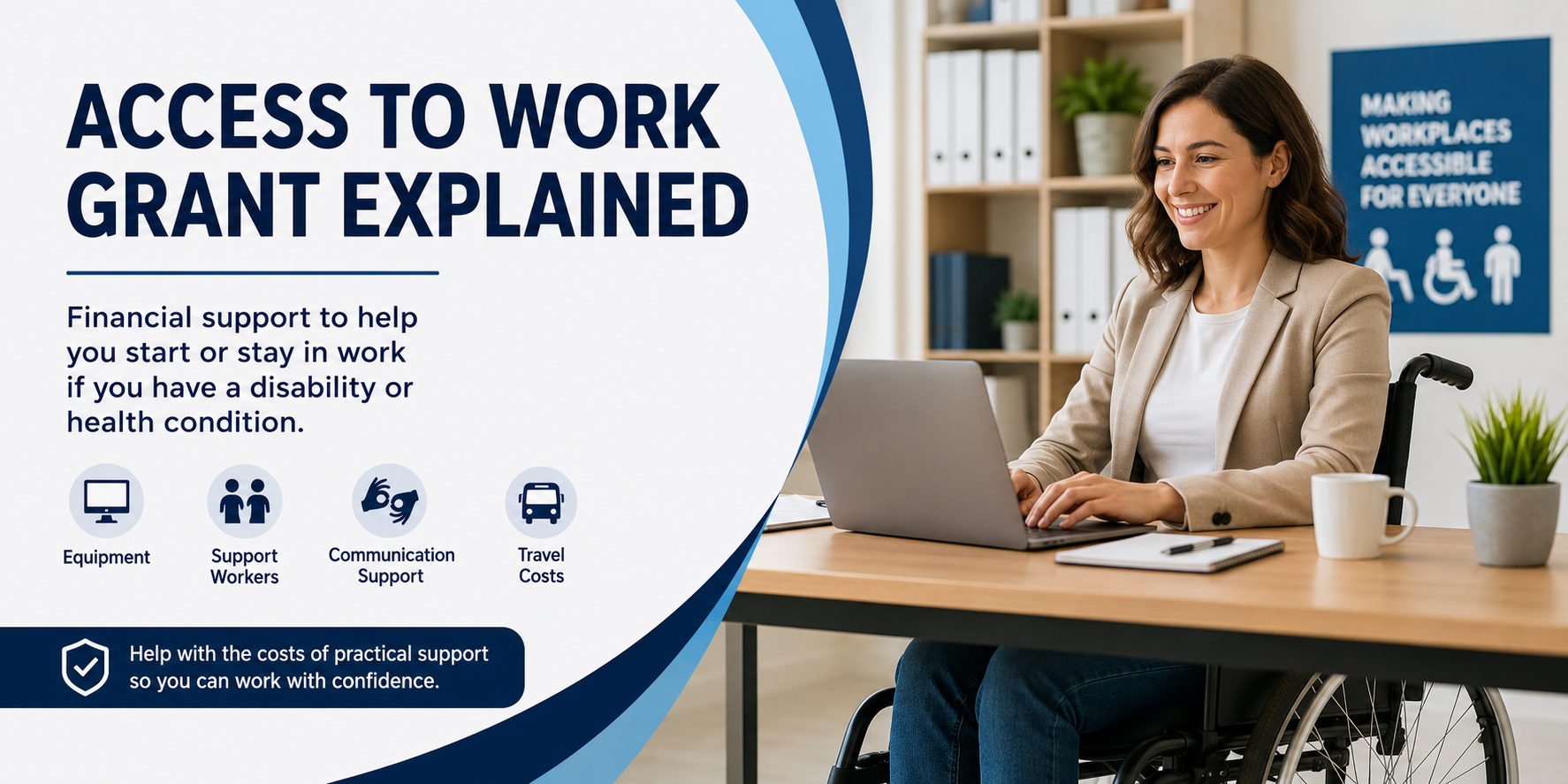
Access to Work is a Government grant that helps pay for practical support needed because of a disability or health condition so that you can start work, remain employed or become self employed.
The grant does not affect your benefits and does not need to be repaid. The amount awarded depends on your individual circumstances and the support you need rather than your income or savings.
Access to Work is a Government funded programme designed to remove workplace barriers for disabled people and those with physical or mental health conditions.
Rather than paying money directly as an income replacement benefit, the scheme provides funding towards equipment, specialist support and workplace adjustments.
Support may include:
The aim is to give disabled people equal opportunities in employment.
You may qualify if all of the following apply.
You:
You can usually apply whether you work:
The scheme covers a wide range of conditions including:
| Health Condition | May Qualify? |
|---|---|
| Mobility impairments | Yes |
| Visual impairment | Yes |
| Hearing impairment | Yes |
| Learning disabilities | Yes |
| Autism | Yes |
| ADHD | Yes |
| Mental health conditions | Yes |
| Long term illnesses | Yes |
| Neurological conditions | Yes |
Eligibility depends on how your condition affects your work rather than the name of the condition itself.
To qualify, you generally need:
Following your application, an adviser may discuss:
An assessment is often arranged where specialist advice is required.
No.
Unlike many benefits, Access to Work is not means tested.
This means your:
do not normally affect eligibility.
The grant is based on your workplace support needs rather than financial circumstances.
No.
There is no savings limit.
Whether you have:
these factors do not normally affect your application.
There is no standard payment amount.
Each award is individually assessed.
Funding depends upon:
Support can range from a few hundred pounds for equipment to many thousands of pounds for ongoing workplace assistance where justified.
Examples include:
| Support Needed | Example Funding |
|---|---|
| Ergonomic chair | Equipment costs |
| Specialist software | Purchase and installation |
| Voice recognition software | Full or partial funding |
| Taxi travel | Travel costs where eligible |
| BSL interpreter | Communication support |
| Job coach | Ongoing workplace support |
| Mental health support | Tailored assistance |
| Support worker | Funding based on assessed need |
Some employers may be asked to contribute towards certain costs, particularly for established employees, although this depends on the circumstances and the type of support being provided.
Applications are normally made directly to the Department for Work and Pensions.
The process usually involves:
Complete an application online or by telephone.
Provide information about:
Discuss your needs with an adviser.
An assessment may be arranged.
A decision is made.
Support is agreed and funding arrangements are put in place.
Processing times vary depending on demand and the complexity of your application.
Having information ready can speed up the process.
You may need:
Not everyone will need every document.
Access to Work can provide a wide range of practical help.
Where public transport is unsuitable because of your disability, the scheme may help with additional travel costs.
Examples include:
Once your application has been assessed:
If your circumstances change, you should notify the scheme as your award may need reviewing.
Examples include:
Avoid these common issues.
Providing detailed information from the beginning often leads to a smoother application.
Sarah has severe arthritis and starts office work.
She receives funding for:
This allows her to work comfortably without worsening her condition.
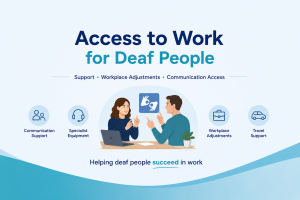
David is deaf and begins employment with a marketing agency.
Access to Work funds:
He is able to participate fully in team discussions.
Aisha has severe anxiety and depression.
She receives:
This enables her to remain in employment and build confidence.
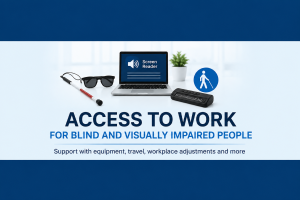
Michael has a visual impairment.
Support includes:
He performs the same role as colleagues with appropriate adjustments.
| Scheme | Purpose | Means Tested |
|---|---|---|
| Access to Work | Workplace support | No |
| Personal Independence Payment | Daily living and mobility support | No |
| Universal Credit | Living costs | Yes depending on circumstances |
| Employment and Support Allowance | Income support for some people unable to work | Depends on type claimed |
| Carer’s Allowance | Support for unpaid carers | Earnings rules apply |
Yes. Receiving Personal Independence Payment does not prevent you from receiving Access to Work.
Yes. If you have accepted a job offer, you can usually apply before your first day.
Yes. Self employed workers can qualify if they meet the eligibility criteria.
No. It is not treated as taxable income for the individual receiving support.
No. Access to Work does not normally affect Universal Credit entitlement.
Not always. However, advisers may request medical or occupational information if needed.
Yes. If you work remotely, support may still be available where appropriate.
The scheme mainly supports people in paid work. Different schemes may apply to students, although apprentices may qualify.
Awards vary depending on circumstances and may be reviewed periodically.
You can ask for the decision to be reconsidered if you believe it is incorrect or your circumstances were not fully understood.
You should inform Access to Work as your support may need to be reassessed.
Depending on your circumstances, you may also qualify for:
Receiving one form of support does not automatically guarantee entitlement to another, as each scheme has its own rules.
Information reviewed against current UK Government guidance and official sources.
Useful resources include:
Always refer to official Government guidance for the latest eligibility rules, application procedures and policy updates, as these can change over time.
Access to Work is one of the UK’s most valuable employment support schemes for disabled people and those with long term physical or mental health conditions. Rather than replacing income, it helps remove practical barriers that might otherwise prevent someone from finding or keeping a job.
The scheme is not based on your income or savings, does not usually affect your benefits and offers personalised support based on your individual needs. Whether you require specialist equipment, communication support, mental health assistance, travel funding or workplace adjustments, Access to Work can help create a more accessible and inclusive working environment.
Applying as early as possible, providing accurate information and clearly explaining how your condition affects your work can improve the application process and help ensure you receive the right support.
Benefits Advice UK provides free information to help people better understand the UK benefits system. Always check the latest Government guidance before making financial decisions.
Information on this site is based on official UK guidance.
About our information and sources
Sign up for our newsletter to receive updates when there are changes to Universal Credit.