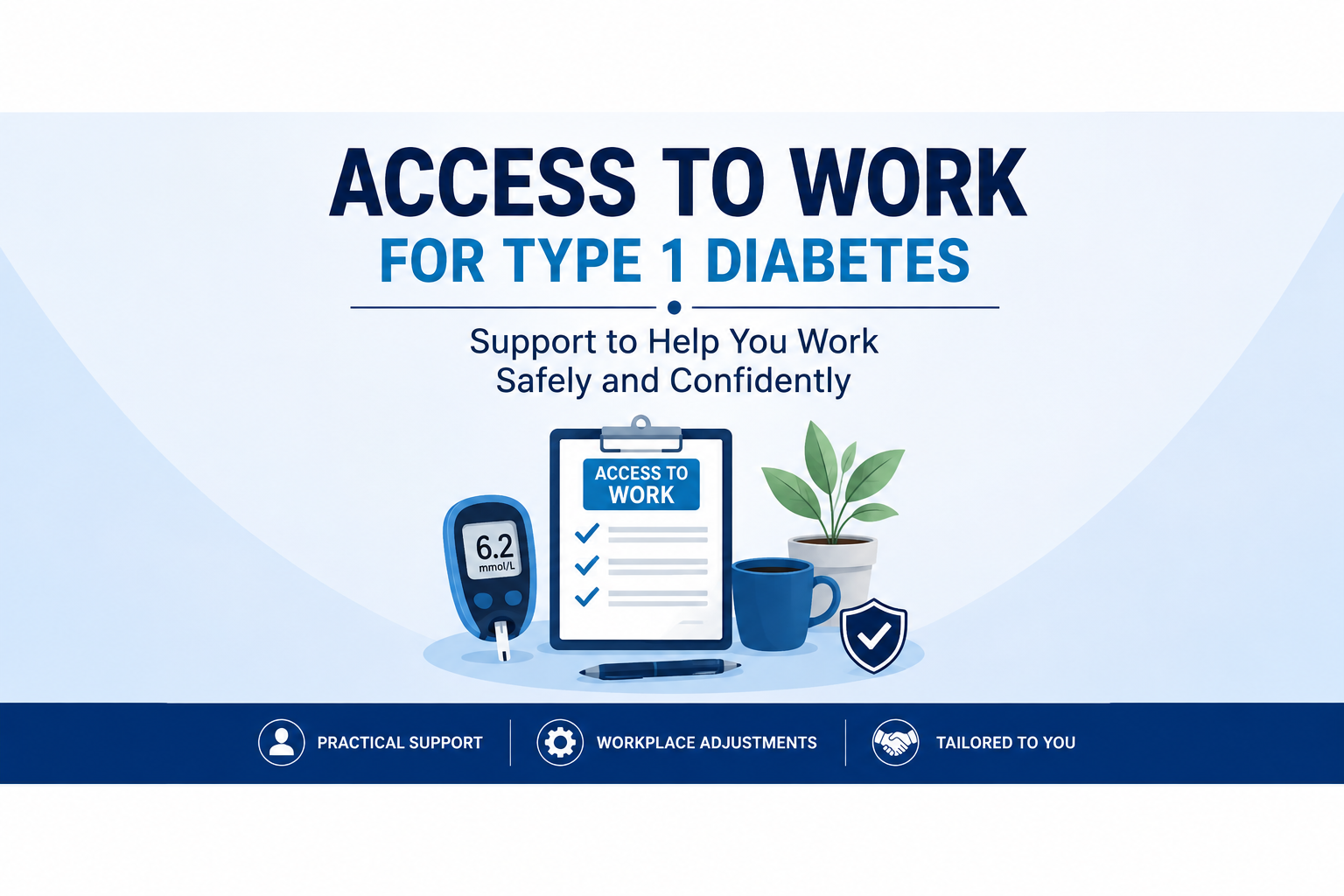
Access to Work for Type 1 Diabetes

Access to Work for Type 1 Diabetes

Living with Type 1 Diabetes can present challenges at work that many people never see. Managing blood glucose levels, monitoring insulin, dealing with unexpected hypoglycaemia or hyperglycaemia, attending medical appointments and balancing shift work can all affect your working day.

The good news is that the UK Government’s Access to Work scheme may provide practical and financial support to help you stay in work, return to work or start a new job if your condition creates barriers in the workplace.

This guide explains everything you need to know about Access to Work for Type 1 Diabetes, including who qualifies, what support is available, how much funding may be available and how to make a successful application.

Quick Answer

Can you get Access to Work for Type 1 Diabetes?

Yes. If your Type 1 Diabetes causes substantial difficulties carrying out your job because of your disability or long term health condition, you may qualify for Access to Work. The scheme can help pay for practical workplace support that goes beyond the reasonable adjustments your employer is legally expected to provide.


What Is Access to Work for Type 1 Diabetes?

What is Access to Work for Type 1 Diabetes?

Access to Work is a Government funded grant designed to remove workplace barriers for disabled people and people with long term health conditions.

Type 1 Diabetes is considered a long term medical condition. While not everyone with Type 1 Diabetes will qualify, many people whose condition significantly affects their ability to work may be eligible.

The grant is not paid directly to you as income. Instead, it helps fund workplace support that allows you to perform your job safely and effectively.

Support is tailored to your individual circumstances.

Examples include:

  • Specialist equipment
  • Disability awareness training
  • Support workers where appropriate
  • Travel support if public transport cannot be used safely
  • Communication support
  • Workplace assessments
  • Adaptations that reduce workplace barriers

Every application is assessed individually.


Who Can Claim Access to Work for Type 1 Diabetes?

Who qualifies?

You may qualify if you:

  • Are aged 16 or over
  • Live and work in England, Scotland or Wales
  • Have a disability or long term health condition such as Type 1 Diabetes
  • Are in paid employment, self employed, starting work, attending certain work placements or interviews
  • Need support beyond what your employer must reasonably provide

You do not have to receive Personal Independence Payment or any other disability benefit to apply.

Many successful applicants have never claimed disability benefits.


Eligibility Requirements

What are the eligibility rules?

Eligibility depends on how your Type 1 Diabetes affects your ability to do your job rather than simply having the diagnosis.

An adviser will consider:

  • Whether your condition creates barriers at work
  • Whether specialist support is needed
  • Whether the support is reasonable
  • Whether the support is beyond the employer’s legal responsibilities

Examples where support may be appropriate include:

Workplace Challenge Possible Support
Frequent hypoglycaemia Flexible working arrangements and workplace assessment
Difficulty travelling safely Taxi funding in certain circumstances
Need for medical equipment Specialist workplace adaptations
Shift work affecting diabetes management Workplace adjustments and assessment
Safety critical role Practical support to reduce workplace risks

Income Rules

Does income affect Access to Work?

No.

Access to Work is not means tested.

Your:

  • Salary
  • Household income
  • Partner’s earnings
  • Pension income

do not normally affect your eligibility.

The decision is based on your work related support needs rather than your financial circumstances.


Savings Rules

Do savings affect Access to Work?

No.

There is no savings limit.

Whether you have no savings or substantial savings, this does not normally affect whether you qualify for Access to Work.


How Much Could You Receive?

How much funding is available?

There is no standard payment.

Instead, Access to Work pays towards approved workplace support.

Funding depends on:

  • Your individual needs
  • The type of support required
  • Whether you are employed or self employed
  • The cost of recommended adjustments

Support may include:

Type of Support What May Be Funded
Workplace assessment Professional assessment of your workplace needs
Equipment Specialist equipment where appropriate
Travel costs Alternative travel arrangements if required
Support worker Practical workplace assistance
Mental health support Where diabetes related mental health difficulties affect work

The Government sets an annual maximum amount of support available under the scheme, although most awards are considerably below this limit.


How To Apply

How do you apply?

Applications are made directly to the Department for Work and Pensions.

The process usually involves:

  1. Completing an online application or applying by telephone.
  2. Explaining how your Type 1 Diabetes affects your work.
  3. Providing details of your employer.
  4. Discussing your support needs with an adviser.
  5. Receiving an assessment where necessary.
  6. Receiving a decision.

Applications can often be completed before starting a new job.

Applying early can reduce delays.


What Documents Will You Need?

What information should you prepare?

You may be asked for:

  • National Insurance number
  • Contact details
  • Employer information
  • Job description
  • Details about your diabetes
  • Information about workplace difficulties
  • Quotes for specialist equipment where requested
  • Healthcare professional information if required

Medical evidence is not always requested immediately but may be needed if further information is required.


Common Mistakes To Avoid

What mistakes delay applications?

Avoid these common problems.

Only describing your medical condition

Explain how your diabetes affects your ability to carry out specific work tasks.

Assuming you must receive disability benefits

You do not need to receive PIP, Employment and Support Allowance or Universal Credit.

Applying too late

Apply before starting work if possible.

Forgetting travel difficulties

If travelling safely is affected by your diabetes, mention this.

Not discussing workplace barriers

Focus on practical challenges rather than simply listing symptoms.


Examples And Real Life Scenarios

Example One

Sarah works as a laboratory technician.

Her blood glucose can occasionally fall rapidly during long testing procedures.

Following an Access to Work assessment, adjustments are recommended to improve safety and allow additional flexibility for diabetes management.

Outcome:

Sarah remains safely employed with appropriate workplace support.


Example Two

James is self employed.

He regularly travels between client sites and experiences unpredictable hypoglycaemia.

Following assessment, support is agreed that helps reduce the impact of travel related difficulties.

Outcome:

James continues growing his business while managing his condition safely.


Example Three

Emily has recently secured her first graduate role.

She uses an insulin pump and continuous glucose monitor.

Her employer already provides reasonable adjustments, but additional specialist workplace support is recommended through Access to Work.

Outcome:

Emily starts work confidently with appropriate support in place.


Comparison Table

Situation Likely Outcome
Type 1 Diabetes causes no workplace difficulties May not qualify
Diabetes creates substantial work barriers May qualify
Employer adjustments solve all issues Access to Work may not be needed
Additional specialist support required Funding may be available

Frequently Asked Questions

Can I get Access to Work if I have Type 1 Diabetes?

Yes, if your condition creates significant workplace barriers and you need support beyond your employer’s reasonable adjustments.

Do I need Personal Independence Payment?

No.

Receiving PIP is not a requirement.

Is Access to Work taxable?

No.

It is a workplace support grant rather than taxable income.

Can self employed people apply?

Yes.

Self employed people can qualify if they meet the eligibility rules.

Can I apply before starting a job?

Yes.

Applications can be made before your employment begins.

Will my employer know I have applied?

Your employer is usually involved if funding or workplace adjustments are required.

Can Access to Work pay for insulin?

No.

The scheme is not intended to cover normal medical treatment or prescription costs.

Does everyone with Type 1 Diabetes qualify?

No.

Eligibility depends on how your condition affects your ability to work.

Can I receive Access to Work and Universal Credit?

Yes.

Receiving Universal Credit does not prevent you applying.

Can my award change?

Yes.

If your work or health circumstances change, your support may be reviewed.

Can Access to Work help with interviews?

Yes.

Support may be available for interviews if your disability creates barriers during the recruitment process.


Related Benefits And Support Available

If you have Type 1 Diabetes, you may also wish to check whether you qualify for:

  • Personal Independence Payment
  • Universal Credit
  • Employment and Support Allowance where applicable
  • Carer’s Allowance for eligible carers
  • Council Tax Reduction
  • Disabled Persons Railcard
  • Blue Badge Scheme where eligibility criteria are met
  • Motability Scheme if receiving the qualifying rate of the mobility component of Personal Independence Payment
  • NHS help with health costs where eligible

Each benefit has its own eligibility rules and should be claimed separately where appropriate.


Information Reviewed Against Current UK Government Guidance And Official Sources

This article has been reviewed against current UK Government guidance and official information relating to:

  • Access to Work
  • Disability employment support
  • Equality Act workplace responsibilities
  • Department for Work and Pensions guidance
  • Government information on workplace adjustments

Because Government policies and eligibility rules can change, you should always check the latest official guidance before making an application.


Useful Government Resources

The following official resources provide further information:

Resource What It Covers
GOV.UK Access to Work guidance Eligibility, applications and workplace support
Department for Work and Pensions Access to Work administration
NHS Information about living and working with Type 1 Diabetes
Equality Advisory and Support Service Workplace rights under equality legislation

Conclusion

Type 1 Diabetes should never prevent someone from pursuing a rewarding career. While many people successfully manage their condition without additional support, others may need practical workplace assistance to perform their role safely and confidently.

Access to Work exists to remove barriers, helping disabled people and those with long term health conditions remain in employment, start new roles or become self employed. Whether you need specialist equipment, workplace assessments, travel support or other practical assistance, the scheme can make a significant difference to your working life.

Remember that eligibility is based on how your Type 1 Diabetes affects your ability to work rather than the diagnosis alone. Even if you have never claimed disability benefits, you may still qualify for support if your condition creates substantial workplace challenges.

If you think Access to Work could help you, gather information about the difficulties you experience at work, speak to your employer where appropriate and submit an application as early as possible. Providing clear examples of how your condition affects your job can help ensure your application is assessed accurately.

Benefits Advice UK provides free information to help people better understand the UK benefits system. Always check the latest Government guidance before making financial decisions.

imporatant_image

Important

Information on this site is based on official UK guidance.

About our information and sources
Inbox Background
Newsletter Image

Get the latest updates to your inbox

Sign up for our newsletter to receive updates when there are changes to Universal Credit.