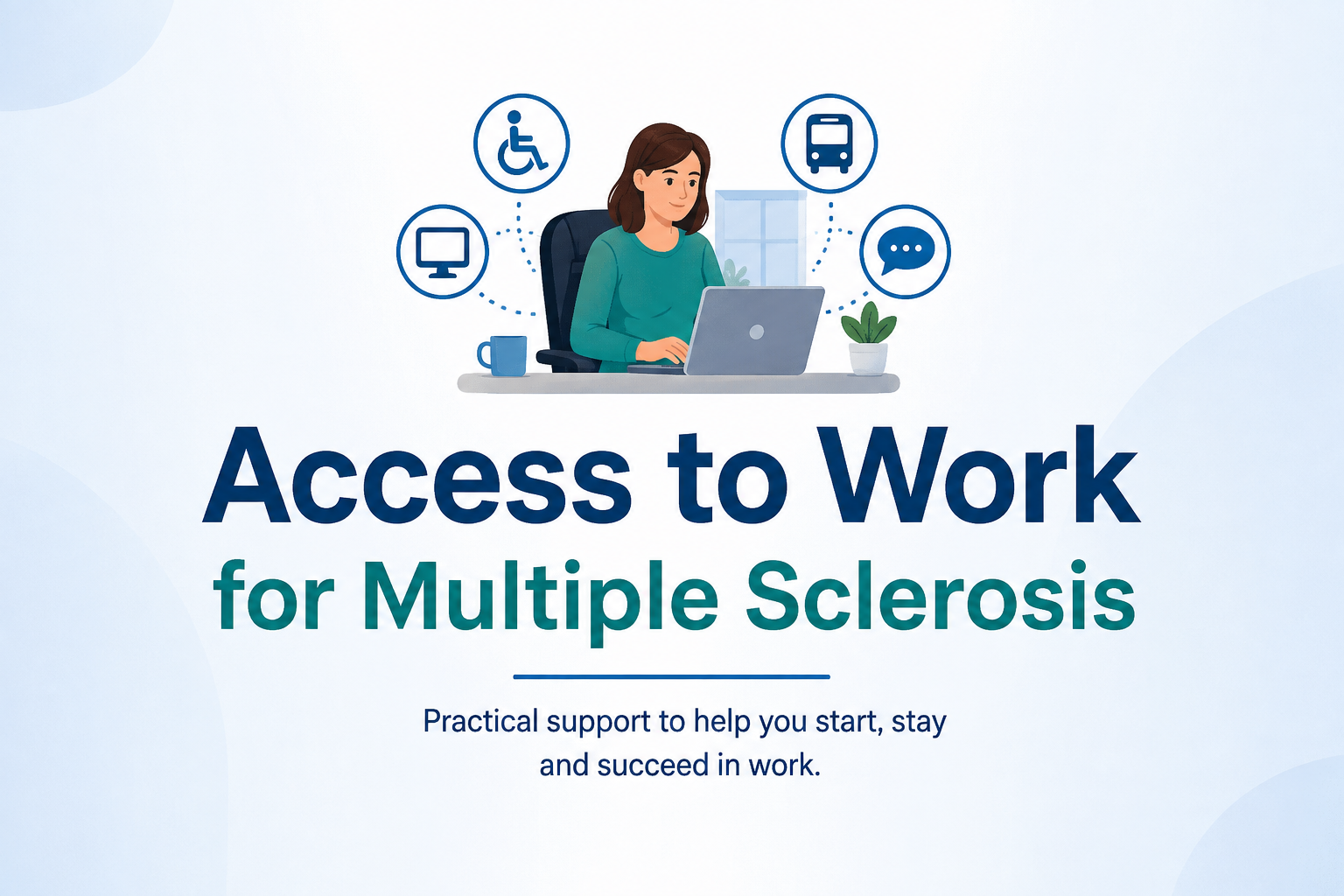
Access to Work for Multiple Sclerosis

Access to Work for Multiple Sclerosis

Living with Multiple Sclerosis (MS) can present unique challenges at work, but many people continue to enjoy successful and rewarding careers with the right support. If your condition affects how you carry out your job or travel to work, the Access to Work scheme may be able to provide practical help that enables you to remain in employment or start a new role.

This guide explains everything you need to know about Access to Work for Multiple Sclerosis, including who qualifies, what support is available, how much funding may be provided, how to apply and common mistakes to avoid.

Whether you are employed, self employed or about to start work, understanding your rights can make a significant difference to your working life.

Quick Answer

Can you get Access to Work for Multiple Sclerosis?

Yes. People with Multiple Sclerosis may qualify for Access to Work if their condition creates practical barriers in the workplace. The scheme does not provide benefit payments. Instead, it helps pay for practical workplace support such as specialist equipment, workplace adaptations, travel costs, support workers, job coaching and communication assistance. Eligibility depends on how your condition affects your ability to work rather than the diagnosis alone.


What Is Access to Work for Multiple Sclerosis?

What is Access to Work for Multiple Sclerosis?

Access to Work for Multiple Sclerosis is Government funded support designed to remove workplace barriers caused by MS.

Multiple Sclerosis affects everyone differently. Symptoms can include:

  • Fatigue
  • Mobility difficulties
  • Muscle weakness
  • Balance problems
  • Vision problems
  • Pain
  • Cognitive difficulties
  • Problems with concentration
  • Bladder issues
  • Sensitivity to heat

These symptoms may make certain aspects of work more difficult.

Access to Work can help employers and employees find practical solutions that enable someone with MS to continue working safely and effectively.

The support is personalised following an assessment of your individual circumstances.


Who Can Claim Access to Work for Multiple Sclerosis?

Who qualifies?

You may qualify if:

  • You live and work in England, Scotland or Wales.
  • You have Multiple Sclerosis that affects your ability to do your job.
  • You are aged 16 or over.
  • You have reached State Pension age only if you started the job before reaching that age.
  • You are in paid employment.
  • You are self employed.
  • You are about to start work.
  • You have a job interview.
  • You are on an apprenticeship.
  • You work from home.
  • You work part time or full time.

You do not need to receive Personal Independence Payment or any other disability benefit to qualify.

Eligibility is based on how your condition affects your work.


What Are the Eligibility Requirements?

What are the eligibility rules?

To receive support you must normally:

Requirement Details
Have a disability or health condition Multiple Sclerosis qualifies if it affects your work.
Be in paid work or starting work Includes employed and self employed people.
Need practical workplace support Support must be beyond reasonable adjustments an employer should provide.
Live in Great Britain England, Scotland or Wales.

An Access to Work adviser may discuss:

  • Your symptoms
  • Your job role
  • Your working environment
  • What adjustments already exist
  • What additional support would help

Support is based entirely on individual needs.


Are There Income Rules?

Does your income affect Access to Work?

No.

There are no income limits.

Unlike many means tested benefits, Access to Work does not take account of:

  • Earnings
  • Household income
  • Partner’s income
  • Tax credits
  • Universal Credit entitlement

Someone earning a high salary may qualify if they need workplace support because of Multiple Sclerosis.


Are There Savings Rules?

Do savings affect Access to Work?

No.

Your savings, investments and capital are not considered.

You do not need to disclose your bank balance when applying simply because of your financial circumstances.

Eligibility depends on workplace needs rather than personal finances.


How Much Could You Receive?

How much help can Access to Work provide?

There is no standard payment.

Instead, funding is based on the support you need.

Examples include:

Type of Support Examples
Specialist equipment Ergonomic desks, specialist chairs, adapted keyboards, voice recognition software
Workplace adaptations Accessible workstations and modifications
Travel support Taxi fares where public transport is unsuitable because of MS
Support workers Practical assistance during working hours
Job coaching Specialist workplace coaching
Mental health support Work related mental health services where appropriate
Communication support Assistance during meetings or training

Funding can sometimes cover substantial costs where specialist equipment or ongoing support is required.

The amount awarded depends on the assessment rather than the condition itself.


How Does Access to Work Help People With Multiple Sclerosis?

What support is available?

Support varies according to symptoms.

Someone with fatigue may receive:

  • Flexible working recommendations
  • Ergonomic furniture
  • Home working equipment

Someone with mobility difficulties may receive:

  • Taxi funding
  • Adapted parking arrangements
  • Specialist seating

Someone experiencing hand weakness may benefit from:

  • Speech recognition software
  • Alternative computer mice
  • Adaptive keyboards

Someone with cognitive symptoms may receive:

  • Memory aids
  • Planning software
  • Workplace coaching
  • Organisational support

Every package is individually tailored.


How To Apply

How do you apply for Access to Work for Multiple Sclerosis?

Applications are normally completed online or by telephone.

The process usually involves:

  1. Complete an application.
  2. Provide details of your employment.
  3. Explain how Multiple Sclerosis affects your work.
  4. Describe the support you believe would help.
  5. Attend an assessment if required.
  6. Receive a decision.
  7. Arrange approved support.

Many assessments take place remotely, although workplace visits may sometimes be arranged.


What Documents Will You Need?

What information should you prepare?

Having the right information can speed up your application.

Useful documents include:

  • National Insurance number
  • Employer details
  • Job description
  • Contact details
  • Workplace address
  • Information about your MS symptoms
  • Details of previous workplace adjustments
  • Quotes for specialist equipment if requested

Medical evidence is not always required immediately, although it may sometimes be requested.


What Happens After You Apply?

What should you expect?

After your application:

Stage What Happens
Initial review Your application is checked.
Adviser contact An adviser discusses your workplace needs.
Assessment A workplace assessment may be arranged.
Recommendation Suitable support is identified.
Decision Funding is approved where appropriate.
Implementation Equipment or support is arranged.

Some employers contribute towards certain costs depending on the circumstances.


Can Your Employer Still Make Reasonable Adjustments?

Does Access to Work replace an employer’s responsibilities?

No.

Employers remain responsible for making reasonable adjustments under equality legislation.

Examples include:

  • Flexible hours
  • Home working
  • Extra breaks
  • Adjusted duties
  • Changes to working patterns

Access to Work provides additional support where reasonable adjustments alone are not enough.

The two often work together.


Common Mistakes To Avoid

What mistakes should applicants avoid?

Many applications are delayed because important information is missing.

Avoid these common mistakes:

  • Waiting until work becomes impossible.
  • Underestimating your symptoms.
  • Forgetting to mention fatigue.
  • Failing to explain how symptoms change throughout the day.
  • Assuming you must receive another disability benefit.
  • Not discussing workplace difficulties honestly.
  • Waiting for your employer to make the application instead of applying yourself.

Providing detailed examples usually helps advisers understand your needs.


Examples And Real Life Scenarios

What does Access to Work look like in practice?

Situation Outcome
Office worker develops severe fatigue Ergonomic workstation, flexible working recommendations and specialist chair approved.
Sales representative cannot safely use public transport Taxi support approved for work journeys.
Self employed graphic designer develops hand weakness Voice recognition software and adaptive equipment funded.
Administrator experiences memory difficulties Specialist planning software and workplace coaching provided.

Every case is assessed individually.


What Happens If Your Circumstances Change?

Can your support change?

Yes.

If your condition changes you should inform Access to Work.

Examples include:

  • Starting a new job
  • Changing employer
  • Moving workplace
  • Increased mobility problems
  • Different working hours
  • New equipment requirements

Support can sometimes be reviewed and adjusted as your needs change.


Frequently Asked Questions

Can I get Access to Work if I have recently been diagnosed with Multiple Sclerosis?

Yes. A recent diagnosis does not prevent you applying if your condition affects your work.

Do I need Personal Independence Payment?

No. Access to Work is separate from Personal Independence Payment.

Is Access to Work means tested?

No. Income and savings are ignored.

Can self employed people apply?

Yes. Self employed workers can qualify if they meet the eligibility rules.

Can I receive help if I work from home?

Yes. Home workers can receive appropriate workplace support.

Does my employer apply for me?

Usually no. Applications are generally made by the employee or self employed person.

Can I apply before starting a new job?

Yes. People with a confirmed job offer can apply before beginning work.

Will Access to Work pay my wages?

No. It funds practical workplace support rather than salary payments.

Can I receive taxi funding?

Yes. If Multiple Sclerosis makes public transport unsuitable, travel support may be available following assessment.

Can my award be reviewed?

Yes. Support may be reviewed if your circumstances or workplace needs change.


Related Benefits And Support Available

People with Multiple Sclerosis may also wish to explore:

Benefit or Scheme Purpose
Personal Independence Payment Help with extra daily living and mobility costs for eligible people under State Pension age.
Universal Credit Financial support for people on a low income or out of work.
Employment and Support Allowance Support for some people whose health affects their ability to work.
Carer’s Allowance Financial support for eligible unpaid carers.
Blue Badge Scheme Parking concessions for eligible disabled people.
Motability Scheme Vehicle leasing for eligible recipients of qualifying mobility benefits.
Disabled Facilities Grant Help with adapting your home if eligible.

Depending on your circumstances, you may qualify for more than one form of support.


Useful Government Resources

Where can you find official information?

The most reliable sources include:

  • GOV.UK guidance on Access to Work
  • Department for Work and Pensions
  • Jobcentre Plus
  • NHS information about Multiple Sclerosis
  • Equality Advisory and Support Service
  • Citizens Advice

These organisations provide the latest information on eligibility, applications and workplace rights.


Information Reviewed Against Current UK Government Guidance And Official Sources

This article has been reviewed against current UK Government guidance and recognised official sources available at the time of writing.

Access to Work policy, funding arrangements and eligibility criteria can change. Individual awards are based on personal circumstances and workplace assessments. Always check the latest Government guidance before making an application.


Conclusion

Access to Work for Multiple Sclerosis can make a significant difference to your ability to start work, remain in employment or progress in your career. The scheme recognises that people with MS often face practical challenges that can be overcome with the right support, equipment and workplace adjustments.

The support available is tailored to your individual needs rather than your diagnosis alone. Whether you need specialist equipment, help with travel, workplace coaching or other practical assistance, applying early can help you stay productive, independent and confident at work.

If you think Multiple Sclerosis is affecting your working life, it is worth exploring Access to Work as soon as possible. Preparing clear information about your symptoms and the barriers you face will help ensure your application reflects your circumstances accurately.

Benefits Advice UK provides free information to help people better understand the UK benefits system. Always check the latest Government guidance before making financial decisions.

imporatant_image

Important

Information on this site is based on official UK guidance.

About our information and sources
Inbox Background
Newsletter Image

Get the latest updates to your inbox

Sign up for our newsletter to receive updates when there are changes to Universal Credit.