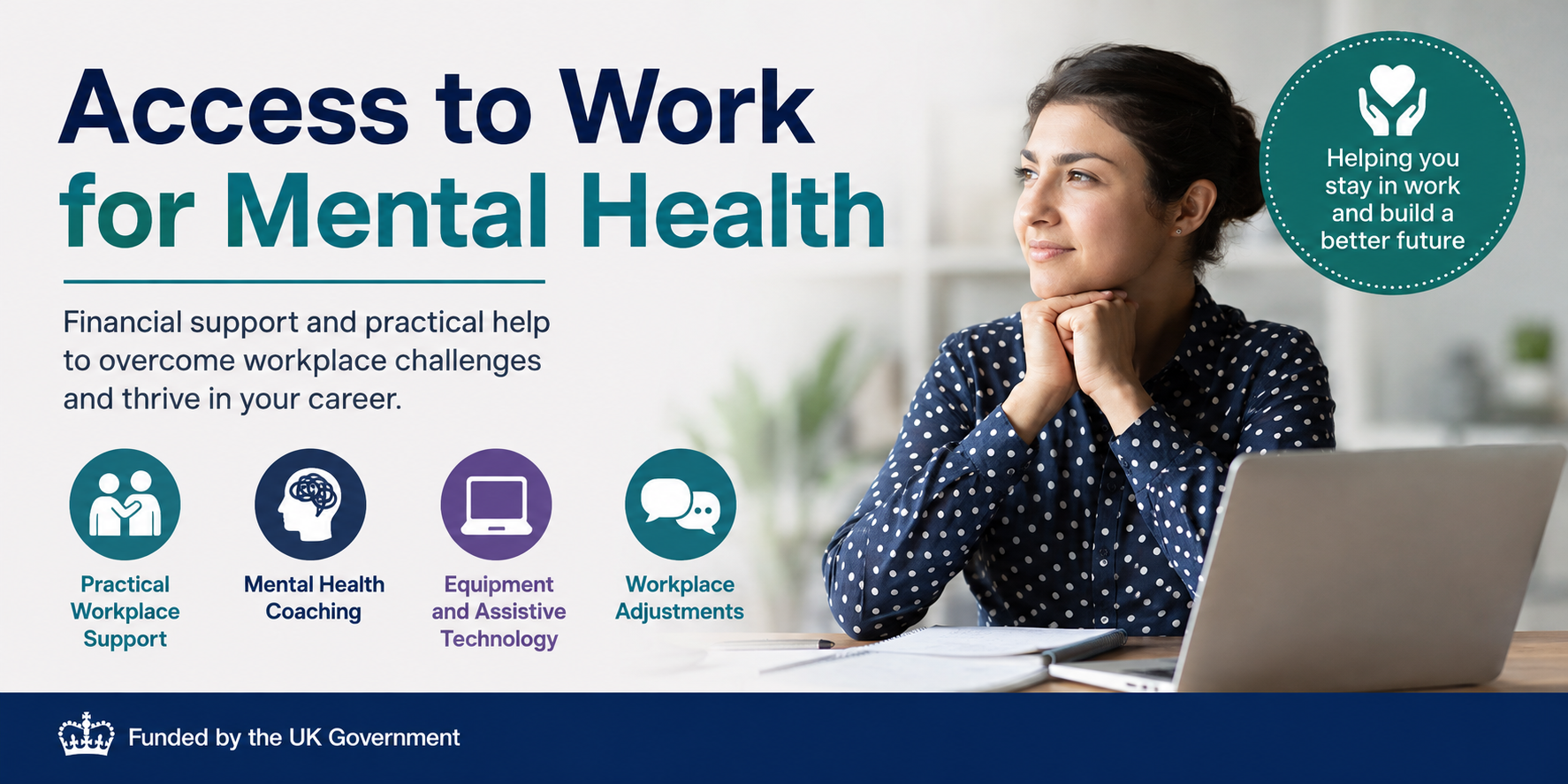
Access to Work for Mental Health Issues

Access to Work for Mental Health

Mental health conditions can affect every part of working life, from travelling to work and concentrating during the day to managing meetings, deadlines and communication. Fortunately, the United Kingdom Government offers practical support through the Access to Work scheme.

If your mental health condition makes work more difficult, Access to Work may help pay for specialist equipment, workplace adjustments, coaching, support workers and other assistance that helps you stay in work or start a new job.

This guide explains everything you need to know in clear, straightforward language.

Quick Answer

Can you get Access to Work for Mental Health?

Yes. Access to Work for Mental Health is available to many people with a disability or long term physical or mental health condition that affects their ability to work. It is not means tested, so your income and savings do not affect eligibility. The support offered depends on your individual circumstances and workplace needs rather than your medical diagnosis alone.


What Is Access to Work for Mental Health?

Access to Work for Mental Health is a Government funded scheme that helps remove barriers preventing people with mental health conditions from working successfully.

Rather than paying benefits directly to you, the scheme provides financial support for practical workplace adjustments that help you perform your job.

Mental health conditions covered may include:

  • Anxiety disorders
  • Depression
  • Bipolar disorder
  • Obsessive compulsive disorder
  • Post traumatic stress disorder
  • Schizophrenia
  • Personality disorders
  • Eating disorders
  • Autism where mental health support is also required
  • Attention Deficit Hyperactivity Disorder where workplace support is needed

The condition does not have to be visible or severe enough to stop you working entirely.

The focus is whether your condition creates barriers at work.

Mental health challenge Possible Access to Work support
Anxiety Job coaching and coping strategies
Depression Flexible workplace adjustments
Autism with anxiety Specialist workplace support
PTSD Mental health support service
ADHD Organisation coaching and assistive software
Stress triggered by work environment Practical workplace changes

Who Can Claim Access to Work for Mental Health?

Who qualifies?

You may qualify if your mental health condition affects your ability to do your job and you meet the general Access to Work eligibility rules.

You may qualify if you are:

  • Employed
  • Self employed
  • Starting a new job
  • Apprentices
  • Supported interns
  • Work trial participants
  • Some people attending interviews
  • Certain people beginning work after receiving benefits

Generally, you must:

  • Be aged 16 or over
  • Live and work in England, Scotland or Wales
  • Have the right to work in the United Kingdom
  • Have a disability or long term health condition that affects work

Your employer does not decide whether you qualify.

The Department for Work and Pensions makes the decision following an assessment.


What Are the Eligibility Requirements?

What are the eligibility rules?

Eligibility depends on how your condition affects your work rather than the name of your diagnosis.

The assessor considers factors such as:

  • Concentration
  • Memory
  • Communication
  • Organisation
  • Stress management
  • Attendance difficulties
  • Travelling to work
  • Social interaction
  • Fatigue
  • Panic attacks

You do not necessarily need to receive disability benefits to qualify.

Many people receive Access to Work even though they do not claim:

  • Personal Independence Payment
  • Employment and Support Allowance
  • Universal Credit health element

Are There Income Rules?

Does your income affect Access to Work?

No.

Access to Work is not means tested.

Your:

  • Salary
  • Household income
  • Partner’s earnings
  • Pension income
  • Other benefits

do not usually affect your eligibility.

The assessment looks at your support needs rather than your financial circumstances.

Income Effect on Access to Work
High salary No effect
Low salary No effect
Partner works No effect
Self employed income No effect

Are There Savings Rules?

Do savings affect Access to Work?

No.

Savings are not considered.

Whether you have:

  • No savings
  • £500
  • £10000
  • £50000

your savings alone do not affect eligibility.

This makes Access to Work different from many other Government support schemes.


How Much Could You Receive?

How much does Access to Work pay?

There is no standard payment amount.

The amount depends entirely on the support you need.

Support may include funding for:

  • Specialist mental health coaching
  • Workplace strategy sessions
  • Job support workers
  • British Sign Language interpreters where applicable
  • Assistive technology
  • Specialist software
  • Noise reducing equipment
  • Workplace adaptations
  • Taxi costs in some situations
  • Disability awareness training for colleagues

The Government pays approved costs within the scheme’s rules.

Sometimes employers contribute towards certain adjustments depending on the circumstances, although many applicants receive substantial Government funding.

Type of support Possible funding
Mental health coaching Yes
Workplace support worker Yes
Assistive software Yes
Specialist equipment Yes
Travel support Yes where appropriate
Communication support Yes

How Do You Apply?

How do you apply for Access to Work for Mental Health?

Applications are made directly to the Department for Work and Pensions.

The process usually involves:

Step One

Complete an Access to Work application online or by telephone.

Step Two

Provide details about:

  • Your job
  • Employer
  • Mental health condition
  • Difficulties experienced at work

Step Three

An adviser may contact you to discuss your circumstances.

Step Four

A workplace assessment may be arranged.

Step Five

The Department decides what support should be funded.

Step Six

Support is arranged with your employer where appropriate.


What Documents Will You Need?

What evidence should you provide?

Providing clear information helps your application progress more smoothly.

Useful documents include:

  • National Insurance number
  • Employer details
  • Job description
  • Medical letters
  • Occupational health reports
  • Mental health care plans
  • Details from your GP
  • Details from your psychiatrist if applicable
  • Evidence explaining workplace difficulties

You do not always need extensive medical evidence.

The assessment mainly focuses on how your condition affects work.


What Support Can Access to Work Provide?

What practical help is available?

Support varies according to individual needs.

Examples include:

Mental Health Support Service

A specialist adviser can work with you to develop practical coping strategies.

Workplace Coaching

Professional coaching can help improve:

  • Confidence
  • Time management
  • Prioritisation
  • Organisation
  • Stress management

Specialist Technology

Examples include:

  • Speech recognition software
  • Planning software
  • Reminder systems
  • Digital organisation tools

Workplace Adjustments

Examples include:

  • Quiet working areas
  • Flexible working arrangements
  • Modified duties
  • Extra supervision during difficult periods

What Happens if Your Circumstances Change?

Can your support change?

Yes.

You should tell Access to Work if:

  • You change employer
  • You change role
  • Your condition improves
  • Your condition worsens
  • You move workplace
  • Your working hours change

Your support package can be reviewed and updated where necessary.


What Common Mistakes Should You Avoid?

What mistakes delay applications?

Avoid these common problems.

  • Assuming mental health conditions do not qualify
  • Waiting until problems become severe
  • Providing very little information
  • Forgetting to explain workplace difficulties
  • Missing telephone calls from advisers
  • Not informing the scheme about changes
  • Thinking your employer must apply instead of you
  • Believing only physical disabilities qualify
Mistake Better approach
Applying with little information Explain workplace barriers clearly
Focusing only on diagnosis Explain how work is affected
Delaying application Apply as soon as difficulties arise
Ignoring review requests Respond promptly

Examples and Real Life Scenarios

How does Access to Work help in practice?

Example One

Sarah experiences severe anxiety during meetings.

Following an assessment, she receives workplace coaching and strategies to manage anxiety during presentations. Her confidence improves and she remains in employment.

Example Two

Michael has depression which affects concentration.

Access to Work funds specialist planning software and coaching sessions to improve organisation and workload management.

Example Three

Emma has PTSD following a traumatic event.

Her employer introduces quieter working arrangements alongside specialist mental health support funded through Access to Work.

These examples illustrate how support is tailored to individual needs.


Frequently Asked Questions

Can I get Access to Work for anxiety?

Yes. Anxiety can qualify if it creates substantial difficulties at work.

Can depression qualify?

Yes. Depression is one of the conditions commonly supported.

Do I need Personal Independence Payment?

No. You do not have to receive Personal Independence Payment to qualify.

Is Access to Work a benefit?

No. It is a Government support scheme that funds workplace adjustments rather than paying regular income.

Does my employer decide?

No. The Department for Work and Pensions makes the decision.

Can self employed people apply?

Yes. Many self employed workers are eligible.

Is there an income limit?

No. The scheme is not means tested.

Can I apply before starting work?

In many cases, yes. People with a confirmed job offer can often apply before their employment begins.

Will my employer know?

Usually yes, because workplace adjustments often involve your employer, although discussions are handled sensitively.

Can support continue if I change jobs?

Sometimes. You should notify Access to Work as soon as your circumstances change so your support can be reviewed.


What Related Benefits and Support Are Available?

What other support might help?

Depending on your circumstances, you may also qualify for:

  • Personal Independence Payment
  • Universal Credit
  • Employment and Support Allowance where applicable
  • Carers Allowance
  • Council Tax Reduction
  • Disabled Persons Railcard
  • Blue Badge in appropriate circumstances
  • NHS Talking Therapies
  • Local authority wellbeing services

Access to Work can often complement these schemes because it focuses specifically on employment support.


Useful Government Resources

Where can you find official information?

Information reviewed against current UK Government guidance and official sources.

Useful resources include:

  • GOV.UK Access to Work guidance
  • Department for Work and Pensions
  • NHS mental health services
  • ACAS workplace advice
  • Advisory organisations supporting disabled workers

Always refer to the latest official guidance before making decisions, as eligibility rules and funding arrangements may change.


Summary Table

Question Answer
What is Access to Work for Mental Health? Government funded workplace support
Is it means tested? No
Are savings considered? No
Can anxiety qualify? Yes if it affects work
Can depression qualify? Yes
Is Personal Independence Payment required? No
Who decides eligibility? Department for Work and Pensions
Can self employed people apply? Yes in many cases
Does it pay cash benefits? No
What does it fund? Workplace support and adjustments

Conclusion

Access to Work for Mental Health can make a significant difference for people whose mental health affects their ability to work. Rather than replacing your income, it provides practical support that helps you overcome barriers, remain in employment and build a successful career.

Because every person’s circumstances are different, the support available is tailored to your individual needs. The scheme is not means tested, meaning your income and savings do not affect whether you can qualify. If your mental health condition creates challenges in the workplace, applying early can help you receive support before difficulties become more serious.

Whether you are employed, self employed or about to start a new job, Access to Work could provide valuable assistance that enables you to work with greater confidence and independence.

Benefits Advice UK provides free information to help people better understand the UK benefits system. Always check the latest Government guidance before making financial decisions.

imporatant_image

Important

Information on this site is based on official UK guidance.

About our information and sources
Inbox Background
Newsletter Image

Get the latest updates to your inbox

Sign up for our newsletter to receive updates when there are changes to Universal Credit.