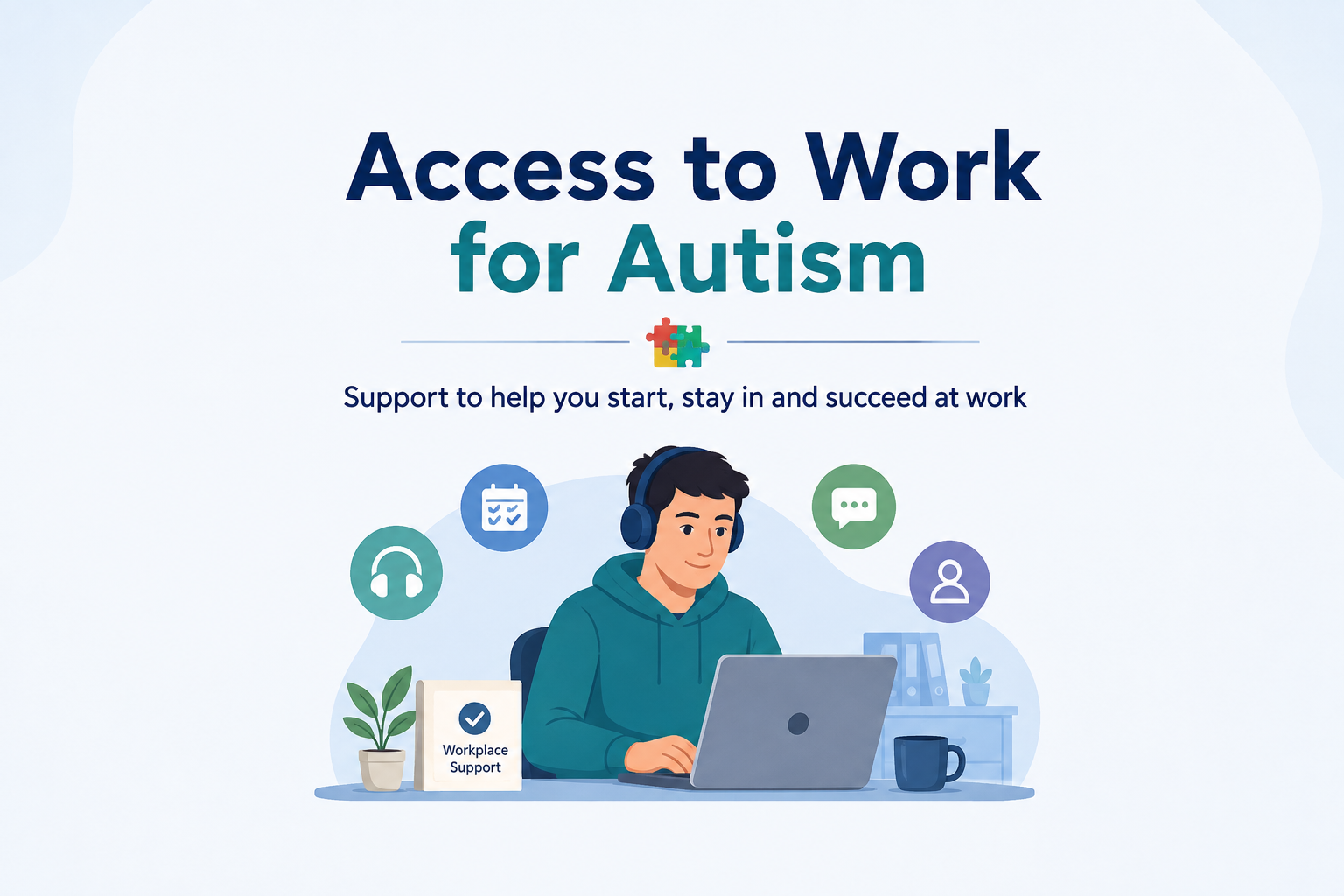
Access to Work for Autism

Access to Work for Autism

Finding and keeping a job can sometimes be challenging for autistic people, particularly when workplaces are not designed with neurodiversity in mind. Many autistic employees and job seekers have exceptional skills, attention to detail, creativity and problem solving abilities, yet barriers in the workplace can prevent them from reaching their full potential.

Access to Work for Autism is a Government funded scheme designed to remove many of these barriers. Rather than providing direct cash payments to individuals, it can fund practical workplace support that helps autistic people start work, remain employed, become self employed or progress in their careers.

Support can include specialist equipment, autism coaching, workplace assessments, communication support, travel assistance and funding for adjustments that go beyond an employer’s legal responsibilities.

This guide explains everything you need to know about Access to Work for Autism, including who can apply, what support is available, how the application process works and common mistakes to avoid.


Quick Answer

What is Access to Work for Autism?

Access to Work for Autism is a Government funded programme that helps autistic people overcome workplace barriers by paying towards practical support that enables them to work successfully.

Support is based on individual needs rather than a diagnosis alone. Funding may cover workplace assessments, specialist coaching, assistive technology, travel support and other adjustments that help someone perform their job effectively.


What Is Access to Work for Autism?

What does Access to Work for Autism provide?

Access to Work for Autism provides personalised workplace support to help autistic people obtain, stay in or progress within employment.

Unlike disability benefits, Access to Work is not a regular payment.

Instead, it helps pay for additional workplace support that would otherwise be difficult or expensive to provide.

Support is tailored to each person’s circumstances.

Examples include:

  • Autism workplace coaching
  • Job coaching
  • Specialist mentoring
  • Workplace needs assessments
  • Communication support
  • Noise reducing equipment
  • Software that assists organisation and planning
  • Specialist furniture
  • Travel support where public transport creates significant barriers
  • Mental health support where appropriate

The aim is to remove practical barriers so autistic people can work with confidence.


Who Can Claim Access to Work for Autism?

Who qualifies for Access to Work for Autism?

You may qualify if you have autism, are aged 16 or over, live in England, Scotland or Wales and have a job or are about to start work.

You may be eligible if you are:

  • Employed
  • Self employed
  • Starting a new job
  • Beginning an apprenticeship
  • Going to a work interview
  • Taking part in a work trial
  • Working part time or full time

You do not need to receive Personal Independence Payment or any other disability benefit.

Many successful applicants have never claimed disability benefits.


Eligibility Requirements

Do you need a formal autism diagnosis?

A formal diagnosis can strengthen your application, but Access to Work considers how your condition affects your ability to work rather than focusing only on the diagnosis itself.

Applicants should explain:

  • Difficulties experienced at work
  • Challenges during recruitment
  • Sensory issues
  • Communication difficulties
  • Executive functioning challenges
  • Anxiety linked to the workplace
  • Organisation and planning needs

Every application is assessed individually.

Basic eligibility checklist

Requirement Usually Required
Age 16 or over Yes
Live in Great Britain Yes
Have autism affecting work Yes
Employed or starting work Yes
Self employed Yes
Looking for work interview Yes in some situations

Income Rules

Does your income affect Access to Work for Autism?

No. Your income does not normally affect your eligibility.

Unlike many benefits, Access to Work is not means tested.

Whether you earn a modest salary or a high income, you may still qualify if you need additional workplace support because of autism.


Savings Rules

Do savings affect Access to Work?

No. Personal savings are not normally considered.

There is no capital limit similar to Universal Credit or Pension Credit.

The assessment focuses on your workplace needs.


How Much Could You Receive?

How much funding is available?

There is no fixed payment because support is tailored to individual needs.

Funding depends on:

  • Your job
  • Your workplace
  • The support recommended
  • The cost of equipment or services

Examples of funded support include:

Type of Support May Be Funded
Workplace assessment Yes
Autism coach Yes
Specialist mentor Yes
Noise cancelling equipment Yes where appropriate
Assistive software Yes
Specialist desk equipment Yes
Taxi fares in some circumstances Yes
Communication support Yes

Awards vary significantly between individuals.


How To Apply

How do you apply for Access to Work for Autism?

Applications can usually be made online or by telephone before or shortly after starting work.

The typical process includes:

Step 1

Complete an Access to Work application.

Step 2

Explain:

  • Your autism
  • Workplace challenges
  • Support you believe would help

Step 3

An adviser may contact you.

Step 4

A workplace assessment may be arranged.

Step 5

Recommendations are produced.

Step 6

Funding is agreed where appropriate.

Step 7

Support begins.


What Documents Will You Need?

What information should you prepare?

Although requirements vary, it helps to have:

  • National Insurance number
  • Employer details
  • Job description
  • Workplace address
  • Contact details
  • Medical evidence if available
  • Autism diagnostic report if available
  • Details of workplace difficulties
  • Quotes for specialist equipment if requested

Providing clear information can speed up the assessment.


What Support Can Access to Work Fund?

What practical help is available?

Support depends on individual circumstances.

Examples include:

Workplace Challenge Possible Support
Sensory overload Noise reducing equipment
Difficulty organising tasks Specialist software
Managing workplace communication Autism coach
Understanding workplace expectations Workplace mentor
Anxiety during travel Travel support
Concentration difficulties Specialist equipment
Complex office environments Workplace assessment

The scheme focuses on practical solutions that improve workplace success.


Can Employers Also Benefit?

Does Access to Work help employers?

Yes.

Many employers welcome Access to Work because it helps fund specialist support they might otherwise struggle to provide.

Benefits include:

  • Better staff retention
  • Improved productivity
  • Reduced sickness absence
  • More inclusive workplaces
  • Greater employee confidence
  • Higher job satisfaction

Common Mistakes To Avoid

What mistakes delay Access to Work applications?

Avoid these common problems.

Not explaining workplace difficulties

Simply stating you have autism is not enough.

Explain exactly how autism affects your work.

Focusing only on diagnosis

Describe the practical support you need.

Waiting too long

Apply as early as possible.

Providing limited information

The clearer your application, the easier it is to assess.

Assuming employers must arrange everything

Access to Work often provides additional support beyond reasonable workplace adjustments.


Examples And Real Life Scenarios

Example One

Situation

Emily works in a busy open plan office.

Background conversations make concentration difficult.

Outcome

Following an Access to Work assessment she receives noise reducing equipment, autism coaching and adjustments to her workspace.

Her productivity improves significantly.


Example Two

Situation

David starts his first graduate job.

He struggles with planning complex workloads.

Outcome

Access to Work funds executive functioning coaching and specialist planning software.

He successfully completes his probation.


Example Three

Situation

Sarah is self employed.

Travelling by public transport causes overwhelming anxiety.

Outcome

Following assessment she receives support towards travel costs where appropriate, allowing her business to continue growing.


What Happens If Your Circumstances Change?

Do you need to report changes?

Yes.

You should tell Access to Work if:

  • You change employer
  • You move workplace
  • Your role changes significantly
  • Your support needs change
  • You become self employed
  • You stop working

A review may be carried out to ensure support remains appropriate.


Related Benefits And Support Available

What other help may autistic people qualify for?

Depending on individual circumstances you may also qualify for:

Benefit or Support Purpose
Personal Independence Payment Daily living and mobility support
Universal Credit Help with living costs
Employment and Support Allowance Support for people with limited capability for work
Carers Allowance Support for eligible carers
Disabled Students Allowance Support in higher education
Reasonable workplace adjustments Employer responsibilities under equality law

Each scheme has separate eligibility rules.


Information Reviewed Against Current UK Government Guidance And Official Sources

This article has been reviewed against current UK Government guidance and official information relating to Access to Work.

While every effort has been made to ensure accuracy, eligibility rules, funding arrangements and application processes can change over time. Individual awards are always based on personal circumstances and the assessment carried out by Access to Work advisers.

Applicants should always refer to the latest official Government guidance before making an application or financial decision.


Useful Government Resources

Where can you find official information?

Useful sources include:

Resource Purpose
GOV.UK Access to Work guidance Official eligibility and application information
Department for Work and Pensions Access to Work administration
ACAS Workplace rights and reasonable adjustments
Equality Advisory Support Service Equality Act advice
National Autistic Society Guidance on employment and autism

Frequently Asked Questions

Can I receive Access to Work if I already receive Personal Independence Payment?

Yes. Receiving Personal Independence Payment does not prevent you from receiving Access to Work.


Is Access to Work only for full time employees?

No. Part time workers, apprentices and self employed people may also qualify.


Can I apply before starting a new job?

Yes. Applications can often be made before your employment begins.


Do I need a formal autism diagnosis?

A diagnosis is helpful, but Access to Work primarily considers how your condition affects your ability to work.


Does Access to Work pay money directly to me?

Usually, funding is used to pay for approved workplace support rather than being paid as a regular benefit.


Can self employed autistic people apply?

Yes. Self employed people may qualify if they meet the eligibility requirements.


Does Access to Work replace employer responsibilities?

No. Employers are still expected to make reasonable adjustments under equality law. Access to Work can provide additional support beyond those duties.


How long does the application process take?

Times vary depending on demand, the complexity of the application and whether a workplace assessment is required.


Can support be reviewed later?

Yes. Support may be reviewed if your job or needs change.


What if my application is refused?

You can ask for the decision to be reconsidered if you believe important information was overlooked. Providing additional evidence may help during a review.


Conclusion

Access to Work for Autism can make a significant difference by helping autistic people overcome practical barriers in the workplace. Rather than providing a cash benefit, the scheme funds tailored support that enables people to secure employment, succeed in their role and develop their careers.

Because every person’s needs are different, support is personalised following an assessment of the challenges they face at work. Applying early, providing clear information and explaining how autism affects day to day working can improve the likelihood of receiving appropriate assistance.

Whether you are starting your first job, returning to work after a break or running your own business, Access to Work may provide valuable support that helps you thrive in the workplace.

Benefits Advice UK provides free information to help people better understand the UK benefits system. Always check the latest Government guidance before making financial decisions.

imporatant_image

Important

Information on this site is based on official UK guidance.

About our information and sources
Inbox Background
Newsletter Image

Get the latest updates to your inbox

Sign up for our newsletter to receive updates when there are changes to Universal Credit.