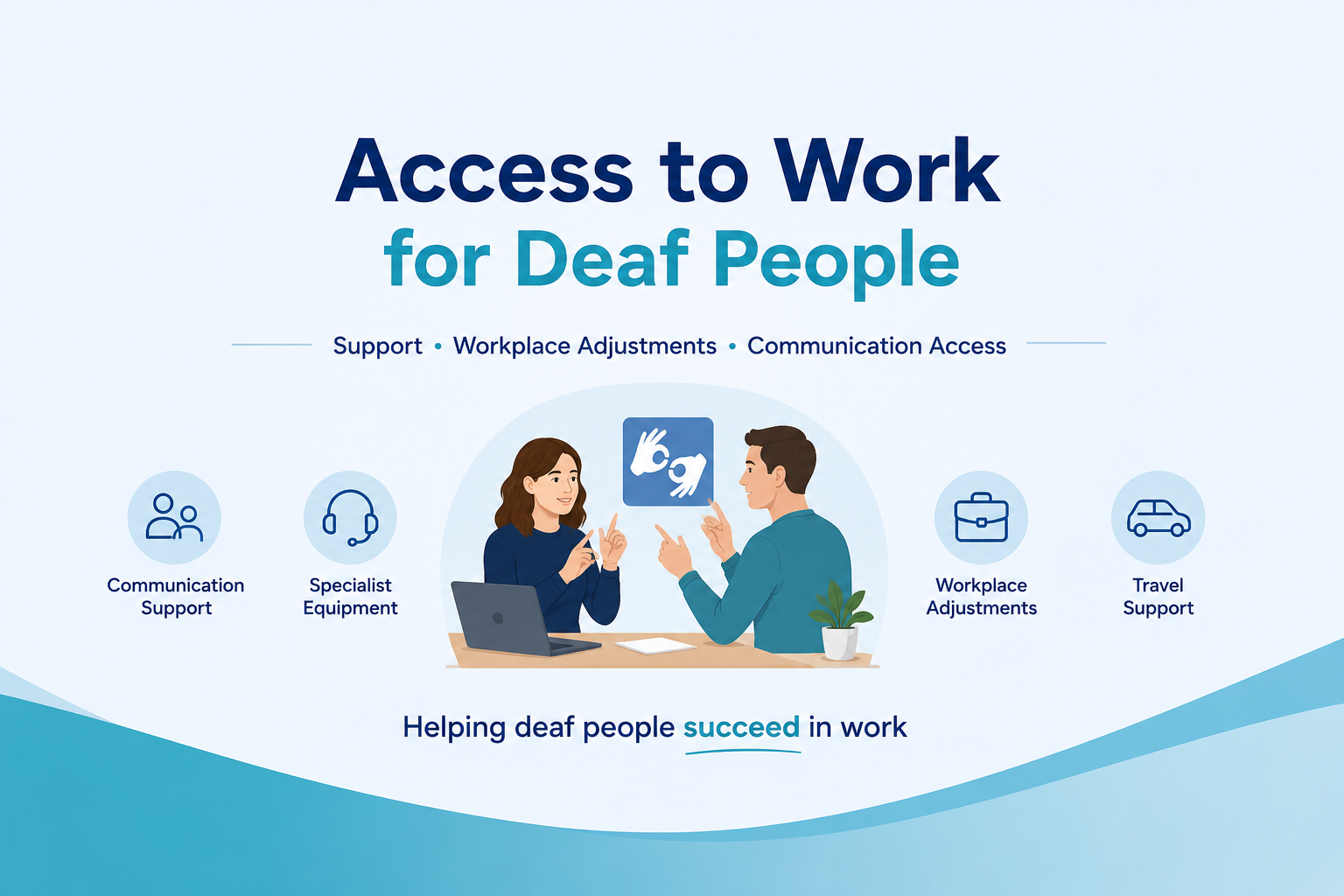
Finding and keeping a job should be possible for everyone, regardless of disability or health condition. For many deaf people across the United Kingdom, communication barriers can make work more challenging. Fortunately, the Access to Work scheme exists to remove many of these barriers by providing practical and financial support that helps people succeed in employment.
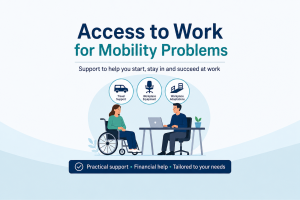
Whether you are looking for your first job, starting an apprenticeship, returning to work, or already employed, Access to Work may help fund specialist equipment, communication support, travel assistance and workplace adjustments that make it easier to do your job.
This guide explains everything you need to know about Access to Work for Deaf People, including who can apply, what support is available, how much funding you could receive and how to make a successful application.
Access to Work for Deaf People is a UK Government scheme that helps deaf employees, self employed workers, apprentices and some job seekers pay for practical workplace support that goes beyond what an employer is legally required to provide.
Support may include British Sign Language interpreters, lipspeakers, speech to text reporters, specialist communication equipment, hearing technology, travel support and workplace adaptations.
The support is not means tested, meaning your income and savings do not normally affect your eligibility.
Access to Work is designed to reduce or remove workplace barriers caused by disability or long term health conditions.
For deaf people, this often means funding communication support that allows them to carry out their role effectively and safely.
The scheme is administered by the Department for Work and Pensions.
Examples of support include:
The aim is to help people start work, remain in work and progress in their careers.
| Type of support | Example |
|---|---|
| Communication support | BSL interpreter during meetings |
| Technology | Specialist hearing devices and software |
| Workplace equipment | Amplified telephones and alert systems |
| Travel support | Taxi costs where necessary |
| Mental wellbeing | Workplace coaching where appropriate |
| Adaptations | Changes to working practices and communication methods |
You may qualify if:
The scheme is available whether your hearing loss developed from birth or later in life.
You generally need to:
Reasonable adjustments are the responsibility of your employer under equality legislation.
Access to Work provides additional support where those adjustments alone are not enough.
| Employment type | May qualify |
|---|---|
| Full time employee | Yes |
| Part time employee | Yes |
| Self employed | Yes |
| Apprentice | Yes |
| Internship | Sometimes |
| Paid work trial | Yes |
| Volunteer only | Usually no |
No.
Access to Work is not means tested.
Your:
do not normally affect whether you qualify.
The assessment focuses on your workplace needs rather than your financial circumstances.
No.
There is normally no savings limit.
Unlike many welfare benefits, your savings and investments are not used to decide whether you qualify.
There is no single payment amount because every award is based on individual workplace needs.
Funding can cover:
The level of support depends on:
Some awards can amount to many thousands of pounds each year where ongoing interpreter support is required.
| Workplace need | Possible support |
|---|---|
| Team meetings | BSL interpreter |
| Telephone calls | Relay service |
| Training course | Speech to text reporter |
| Office alarms | Visual alert system |
| Business travel | Taxi funding where eligible |
| Customer meetings | Communication professional |
Applications can usually be made online or by telephone.
The process generally includes:
An Access to Work adviser may contact both you and your employer.
Sometimes a workplace assessment is arranged to identify the most suitable support.
Having the right information ready can speed up your application.
You may need:
Medical evidence is not always required immediately, but it may sometimes be requested.
Many delays occur because important information is missing.
Avoid these common mistakes.
| Mistake | Better approach |
|---|---|
| Giving very little detail | Explain workplace challenges clearly |
| Waiting until problems become severe | Apply as soon as support is needed |
| Assuming employers arrange everything | Make your own application where appropriate |
| Forgetting supporting evidence | Keep documents organised |
| Not updating changes | Inform Access to Work if your circumstances change |
Also remember that workplace needs can change over time.
If your role changes significantly, you may be able to request a review.
Yes.
Tell Access to Work if:
Keeping your information up to date helps ensure your support continues correctly.
Sarah is profoundly deaf and communicates mainly using British Sign Language.
She starts work as a customer service adviser.
Access to Work funds:
This enables Sarah to participate fully alongside her colleagues.
James has significant hearing loss and relies on lip reading.
His employer already provides written meeting notes.
Access to Work funds:
James can now communicate more confidently with customers.
Priya is self employed.
She regularly meets clients.
Access to Work agrees funding for communication professionals during important meetings, allowing her business to continue growing.
Yes.
Access to Work is separate from most benefits.
You may also receive:
| Benefit | Can usually be claimed together |
|---|---|
| Personal Independence Payment | Yes |
| Universal Credit | Yes |
| Employment and Support Allowance | Sometimes depending on work circumstances |
| New Style Employment and Support Allowance | Possible |
| Attendance Allowance | Yes where applicable |
| Carer’s Allowance | Depends on individual circumstances |
Receiving Access to Work does not usually reduce these benefits.
Yes. Deaf people whose hearing loss affects their work may qualify for support.
No. Income and savings are not normally taken into account.
Yes. Self employed workers may qualify if they meet the eligibility requirements.
Yes. If you have accepted a job offer, you can often apply before your first day.
Generally, standard hearing aids supplied through normal healthcare are not covered. However, specialist workplace hearing technology may be funded where necessary.
Yes. Communication professionals such as BSL interpreters are one of the most common types of support provided.
Times vary depending on demand, the complexity of your support needs and whether further assessments are required.
Usually yes, as your employer may need to discuss workplace arrangements with the adviser.
Not automatically. You should inform Access to Work so your support can be reviewed for your new role.
You can ask for the decision to be reviewed if you believe relevant information was overlooked or your circumstances were not fully understood.
Depending on your circumstances, you may also wish to explore:
The most reliable information is available through official UK Government guidance.
Useful resources include:
This article has been prepared using current UK Government guidance relating to the Access to Work scheme together with established information about workplace support for disabled employees.
Eligibility, funding arrangements and application processes may change over time. Always check the latest official guidance before submitting an application or making employment decisions.
Access to Work for Deaf People plays an important role in helping deaf people enter employment, stay in work and build successful careers. By funding communication support, specialist equipment and workplace adjustments that go beyond an employer’s legal duties, the scheme helps remove barriers that might otherwise prevent someone from reaching their full potential.
Because the scheme is based on individual workplace needs rather than income or savings, it is accessible to many deaf employees, apprentices and self employed workers across the United Kingdom. Applying early, providing clear information about your communication needs and keeping your circumstances up to date can improve your experience and help you receive the most appropriate support.
Benefits Advice UK provides free information to help people better understand the UK benefits system. Always check the latest Government guidance before making financial decisions.
Information on this site is based on official UK guidance.
About our information and sources
Sign up for our newsletter to receive updates when there are changes to Universal Credit.