
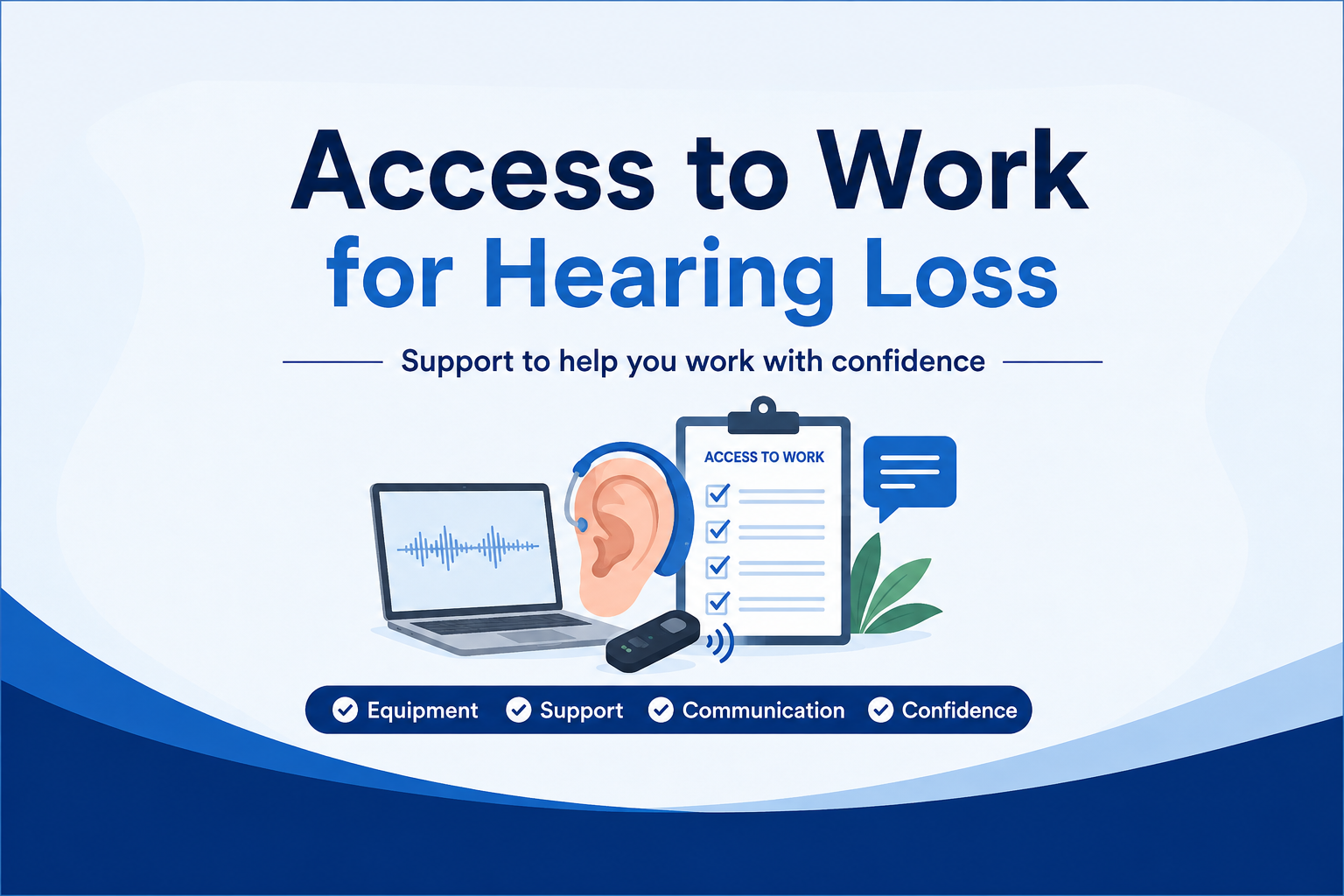
Living with hearing loss should never prevent someone from building a successful career. Many people across the United Kingdom work in offices, shops, hospitals, schools, factories, construction sites and countless other workplaces while managing hearing loss successfully.
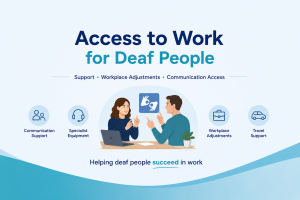
The UK Government’s Access to Work scheme exists to remove practical barriers that disabled people face in employment. If you have hearing loss, the scheme may provide financial support for specialist equipment, communication support, workplace adaptations and travel where required.
Many people never apply because they wrongly assume they are not eligible or believe the process is complicated. In reality, Access to Work can provide significant help that enables people with hearing loss to work more independently and confidently.
This guide explains everything you need to know about Access to Work for Hearing Loss, including eligibility, what support may be available, how to apply, what evidence you may need and common mistakes to avoid.
Yes. If your hearing loss affects your ability to do your job or travel to work and you are employed, self employed, about to start work, attending a work placement or running your own business, you may qualify for Access to Work. Support is not means tested and savings do not affect eligibility. The level of support depends on your individual needs rather than your income.
Access to Work for Hearing Loss is a Government funded grant that helps pay for practical workplace support if hearing loss makes it harder for someone to do their job.
Unlike benefits that replace income, Access to Work helps remove barriers in employment.
Support is tailored to each individual after an assessment of their needs.
The aim is to help disabled people:
The grant can cover specialist support that employers may not normally provide.
You may qualify if:
Both permanent and temporary hearing loss may be considered if the condition has a substantial impact on work.
People who may benefit include:
The most important requirement is that your hearing loss creates practical difficulties at work.
Examples include:
An Access to Work adviser will consider your individual circumstances rather than simply your diagnosis.
No.
Access to Work is not means tested.
This means:
Eligibility depends on your workplace support needs rather than your financial circumstances.
| Income Situation | Effect on Access to Work |
|---|---|
| Full time worker | No effect |
| Part time worker | No effect |
| High salary | No effect |
| Low salary | No effect |
| Self employed income | No effect |
No.
There are no savings limits.
Whether you have:
your savings do not affect eligibility.
The assessment focuses entirely on your disability related workplace needs.
There is no standard payment because every award is individually assessed.
Support may include funding for:
| Type of Support | Examples |
|---|---|
| Communication support | British Sign Language interpreters, speech to text support |
| Specialist equipment | Amplified telephones, hearing compatible headsets, microphones |
| Workplace technology | Live captioning software, communication devices |
| Workplace adaptations | Hearing loop systems, visual alert systems |
| Travel support | Alternative transport where public transport is unsuitable |
| Specialist training | Equipment training for employees |
Depending on your circumstances, Access to Work may fund:
The grant amount depends on:
Applications can normally be made online or by telephone.
The process usually involves:
Complete the application.
You will be asked for:
Explain how hearing loss affects your work.
Be specific.
For example:
Assessment
Some applicants receive a workplace assessment.
An assessor may recommend suitable support.
Decision
The Department for Work and Pensions decides what support can be funded.
Support begins
Approved equipment or services are arranged once the award has been accepted.
You may be asked for:
Medical evidence is not always required immediately, but providing relevant information can sometimes help explain your workplace needs.
Many applications are delayed because important information is missing.
Avoid these common mistakes.
Explain exactly how hearing loss affects your daily work.
Describe the practical barriers you face rather than simply naming the condition.
Applications are usually made by the employee or job applicant.
Apply as soon as workplace difficulties become clear.
If an assessment is arranged, take part and explain your needs fully.
If hearing loss affects safe travel to work, mention this during the application.
| Situation | Outcome |
|---|---|
| Office worker struggles during meetings | Captioning software and conference microphones funded |
| Situation | Outcome |
|---|---|
| Customer service adviser cannot hear telephone calls clearly | Specialist amplified telephone and headset provided |
| Situation | Outcome |
|---|---|
| Deaf employee attends weekly training | British Sign Language interpreter funded |
| Situation | Outcome |
|---|---|
| Self employed consultant struggles during client meetings | Portable communication technology funded |
| Situation | Outcome |
|---|---|
| Employee cannot hear emergency alarms | Visual alert systems installed |
Every case is assessed individually.
Yes. Wearing hearing aids does not prevent you from qualifying if hearing loss still affects your work.
Possibly. Eligibility depends on how your hearing loss affects your job rather than the medical description alone.
Yes. Self employed workers may qualify if they meet the eligibility requirements.
In many cases, no. However, employer contributions may apply in some circumstances depending on the size of the employer and the type of support.
Yes. People with a confirmed job offer may apply before their employment begins.
No. Access to Work is separate from Universal Credit and does not replace benefit payments.
Yes. Receiving Personal Independence Payment does not stop you applying for Access to Work.
You should inform Access to Work if your employment changes. A new assessment may be needed depending on your circumstances.
The scheme does not normally replace hearing aids that are provided through health services. Instead, it focuses on workplace support and specialist equipment needed specifically for employment.
Times vary depending on individual circumstances, the need for assessments and demand for the service.
Depending on your circumstances, you may also qualify for:
| Benefit or Support | Purpose |
|---|---|
| Personal Independence Payment | Help with extra disability related living costs |
| Universal Credit | Income related support |
| Employment and Support Allowance | Financial support for some people unable to work |
| Attendance Allowance | Support for older people with care needs |
| Disabled Persons Railcard | Discounted rail travel |
| Blue Badge | Parking concessions where eligible |
| Reasonable workplace adjustments | Support provided directly by employers under equality legislation |
Many people receive Access to Work alongside other forms of financial support.
Information reviewed against current UK Government guidance and official sources.
Useful official resources include:
Always use official Government guidance when checking eligibility, application processes and current rules, as these may change over time.
Access to Work for Hearing Loss is designed to ensure that hearing loss does not become an unnecessary barrier to employment. Whether you are looking for your first job, returning to work after time away, running your own business or progressing in your career, the scheme can provide practical support tailored to your individual workplace needs.
Because the grant is based on workplace barriers rather than your income or savings, many people who would never qualify for means tested benefits may still be eligible. Funding can help with specialist equipment, communication support, workplace adaptations and travel, making it easier to work safely, confidently and effectively.
If hearing loss is affecting your ability to carry out your job, it is worth exploring whether Access to Work could provide the additional support you need. Applying early and clearly explaining how your condition affects your work can improve the chances of receiving the right level of assistance.
Benefits Advice UK provides free information to help people better understand the UK benefits system. Always check the latest Government guidance before making financial decisions.

Information on this site is based on official UK guidance.
About our information and sources


Sign up for our newsletter to receive updates when there are changes to Universal Credit.