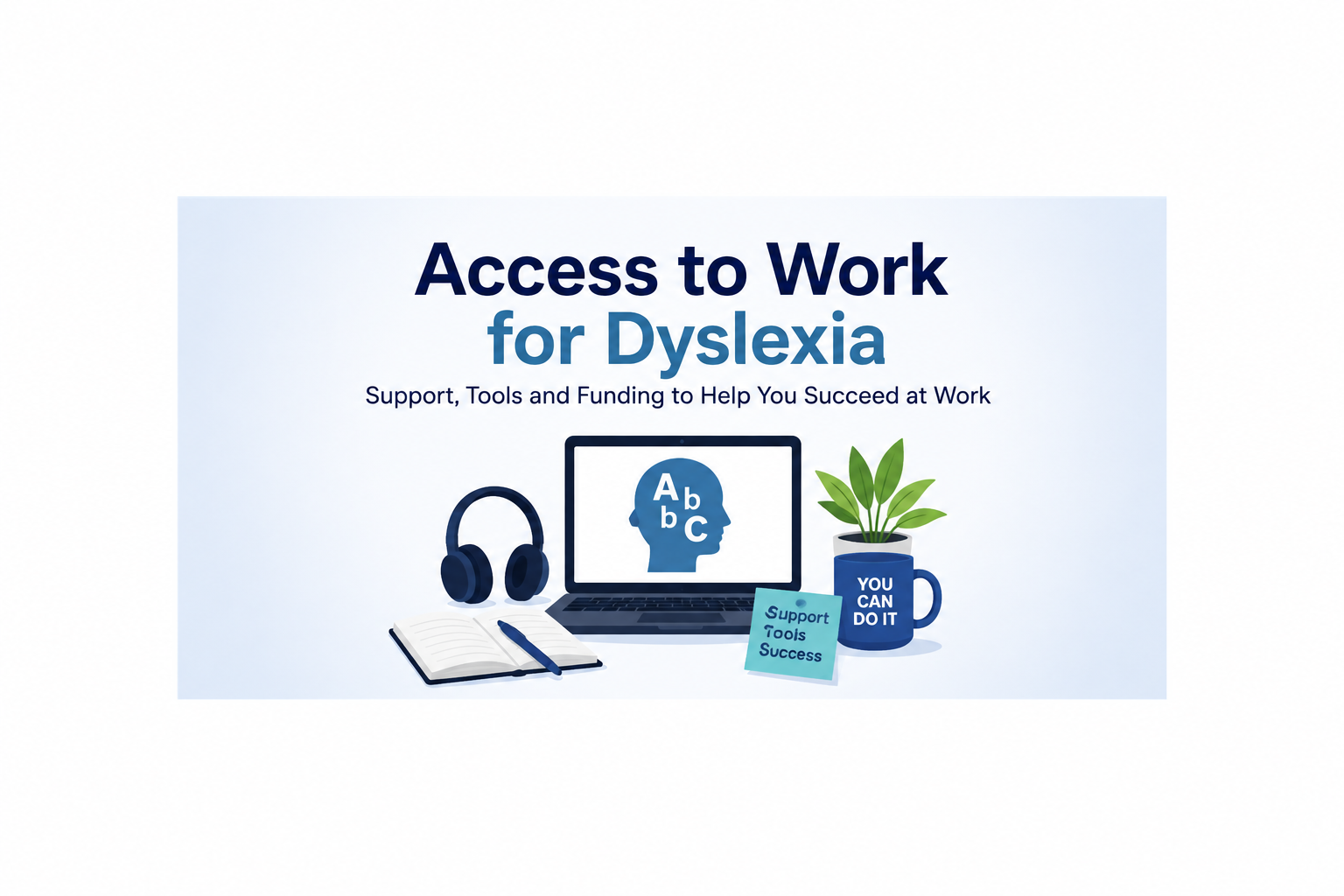
Access to Work for Dyslexia

Access to Work for Dyslexia

Many people with dyslexia thrive in the workplace, yet some still face challenges with reading, writing, organisation, memory or processing information. The UK Government’s Access to Work scheme exists to help remove practical barriers that could make work more difficult.

Whether you are employed, self employed, starting a new job or attending a job interview, Access to Work may be able to fund specialist equipment, software, coaching and workplace support that enables you to perform your role more effectively.

This guide explains everything you need to know about Access to Work for Dyslexia, including eligibility, what support is available, how to apply and common mistakes to avoid.


Quick Answer

Can you get Access to Work for Dyslexia?

Yes. People with dyslexia may qualify for Access to Work if their condition affects their ability to do their job or attend work. The scheme can help pay for specialist equipment, assistive technology, workplace coaching, assessments and practical support that goes beyond what an employer would normally be expected to provide.

The support is not means tested and is based on your individual workplace needs rather than the severity of your dyslexia alone.


What Is Access to Work for Dyslexia?

What is Access to Work for Dyslexia?

Access to Work for Dyslexia is a Government funded employment support scheme that helps disabled people and those with long term health conditions overcome barriers at work.

Dyslexia can be recognised as a disability under the Equality Act 2010 when it has a substantial and long term effect on normal day to day activities.

If dyslexia affects your work, Access to Work may provide funding for practical adjustments that allow you to perform your role successfully.

The support is designed to help people:

  • Stay in work
  • Start a new job
  • Become self employed
  • Progress within their career
  • Attend interviews
  • Return to work after illness or unemployment

The scheme does not replace an employer’s legal duty to make reasonable adjustments.


Who Can Claim Access to Work for Dyslexia?

Who qualifies?

You may qualify if you:

  • Live and work in England, Scotland or Wales
  • Have dyslexia that affects your work
  • Are aged 16 or over
  • Have the right to work in the UK
  • Are in paid employment, self employed, about to start work or attending a job interview

People can apply whether they work:

  • Full time
  • Part time
  • Permanently
  • On fixed term contracts
  • As apprentices
  • Through supported internships
  • As freelancers
  • As business owners

Typical occupations

Access to Work supports people across almost every profession, including:

Occupation Possible Support
Teacher Reading and writing software
Nurse Digital note taking tools
Office worker Speech recognition software
Engineer Memory aids and coaching
Retail worker Organisation support
Accountant Specialist proofreading software
Solicitor Dictation technology
University lecturer Workplace strategy coaching

What Are the Eligibility Requirements?

What are the rules?

Eligibility depends on whether dyslexia creates practical barriers in your workplace.

The Access to Work adviser will consider:

  • How dyslexia affects your job
  • Whether specialist support is required
  • Whether the employer could reasonably provide the adjustment
  • Which solutions would help you work more effectively

Support is always tailored to the individual rather than based on a diagnosis alone.

A workplace assessment may be arranged to identify suitable recommendations.


Are There Income Rules?

Does income affect Access to Work?

No.

There are no personal income limits for Access to Work.

Your salary, wages or self employed earnings do not affect your eligibility.

Support is awarded according to workplace need rather than financial circumstances.

Income Effect on Claim
Low income No impact
Average income No impact
High income No impact
Self employed income No impact

Are There Savings Rules?

Do savings affect Access to Work?

No.

Savings, investments and personal capital are ignored.

Unlike some benefits, Access to Work is not means tested.

Whether you have savings or none at all does not normally affect your application.


How Much Could You Receive?

How much funding is available?

There is no standard payment amount.

Instead, funding depends on what support you need to perform your role effectively.

Examples include:

Support Example
Workplace assessment Fully funded assessment
Speech recognition software Funding available where appropriate
Text to speech software Funding available
Digital organisation tools Funding available
Specialist keyboard Funding available
Noise reducing equipment Funding available where recommended
Dyslexia coaching Specialist workplace coaching
Training Individual software training
Specialist support worker Where appropriate

Funding is paid towards approved support rather than directly as a weekly benefit payment.

The amount awarded depends on the recommendations following assessment.


What Support Can Access to Work Provide?

What practical help is available?

Support varies according to your job and needs.

Examples include:

Assistive technology

Technology can make reading, writing and organisation much easier.

This may include:

  • Speech to text software
  • Text to speech software
  • Mind mapping software
  • Digital reading tools
  • Grammar support
  • Spell checking software
  • Screen reading software
  • Reading pens

Specialist workplace coaching

Many people benefit from one to one coaching covering:

  • Time management
  • Prioritisation
  • Organisation
  • Confidence
  • Memory strategies
  • Workplace planning
  • Managing workload

Workplace assessment

An assessor reviews:

  • Your role
  • Your working environment
  • Your daily tasks
  • Barriers you experience
  • Practical solutions

The recommendations help determine appropriate funding.

Training

You may receive training on using specialist software effectively.


How Do You Apply?

How do you apply for Access to Work for Dyslexia?

Applications are made directly to the Government.

The process usually involves:

Step One

Complete an online application or apply by telephone.

Step Two

Provide information about:

  • Your employer
  • Your job
  • Your working hours
  • Your dyslexia
  • The difficulties you experience

Step Three

An adviser reviews your application.

Step Four

You may be offered a workplace assessment.

Step Five

Recommendations are produced.

Step Six

Funding is agreed where appropriate.

Step Seven

Support is arranged.


What Documents Will You Need?

What evidence should you prepare?

Although every case is different, you may be asked for:

  • National Insurance number
  • Contact details
  • Employer information
  • Job description
  • Workplace address
  • Details about your dyslexia
  • Previous assessment reports if available
  • Diagnostic assessment where available
  • Quotes for specialist equipment if requested

You do not always need a formal diagnostic report before applying, but evidence explaining how dyslexia affects your work can help.


Can Your Employer Still Help?

Does Access to Work replace reasonable adjustments?

No.

Employers remain responsible for making reasonable adjustments under equality legislation.

Access to Work funds additional support beyond what an employer would normally provide.

Examples of reasonable adjustments include:

  • Extra time for tasks
  • Clear written instructions
  • Flexible working methods
  • Coloured paper where appropriate
  • Larger computer screens
  • Quiet workspaces

Access to Work can complement these adjustments by funding specialist support.


What Common Mistakes Should You Avoid?

What mistakes delay applications?

Common mistakes include:

  • Waiting until work becomes unmanageable
  • Under describing workplace difficulties
  • Assuming dyslexia is not covered
  • Not explaining how your role is affected
  • Forgetting to provide employer details
  • Ignoring workplace assessments
  • Delaying responses to requests for information
  • Assuming employers pay for everything

Being open about your challenges allows advisers to recommend the most appropriate support.


Examples And Real Life Scenarios

What does Access to Work look like in practice?

Scenario One

Sarah works in administration.

She struggles with lengthy reports and proofreading.

Following assessment she receives:

  • Speech recognition software
  • Reading software
  • Dyslexia coaching

She completes documents more accurately and with greater confidence.


Scenario Two

James is a self employed graphic designer.

Organisation and planning projects are difficult.

He receives:

  • Coaching
  • Digital planning software
  • Productivity tools

His workload becomes easier to manage.


Scenario Three

Emily starts her first graduate job.

She worries about reading lengthy policies.

Following assessment she receives:

  • Text to speech software
  • Specialist training
  • Workplace coaching

Her confidence grows and she settles into work successfully.


Comparison Table

Situation Possible Outcome
Starting a new job Workplace assessment arranged
Already employed Specialist support funded
Self employed Equipment and coaching may be funded
Job interview Interview support may be available
Changing jobs New application may be appropriate

Frequently Asked Questions

Can dyslexia qualify for Access to Work?

Yes. If dyslexia creates barriers in the workplace, you may qualify for support.

Do I need to receive Personal Independence Payment?

No. Access to Work is separate from disability benefits.

Is Access to Work taxable?

No. It is support provided to help you remain in employment rather than taxable income.

Can self employed people apply?

Yes. Eligible self employed workers can receive support.

Does Access to Work pay cash directly?

Usually funding is used to pay for approved support, equipment or services rather than providing a regular cash payment.

Will my employer know I applied?

Your employer will usually be involved if workplace adjustments or funding arrangements are required.

Can I apply before starting work?

Yes. People with a confirmed job offer can often apply before beginning employment.

How long does an application take?

Times vary depending on demand, assessments and the complexity of your support needs.

What if my job changes?

Tell Access to Work if your role changes significantly, as your support package may need to be reviewed.

Can Access to Work pay for dyslexia coaching?

Yes. Specialist workplace coaching is one of the most common forms of support where it is recommended following assessment.

Do I need a formal dyslexia diagnosis?

Not always. However, evidence showing how dyslexia affects your work can strengthen your application, and a diagnostic assessment may be useful where available.


Related Benefits And Support Available

What other support could you receive?

Depending on your circumstances, you may also be eligible for:

  • Personal Independence Payment
  • Universal Credit
  • Employment and Support Allowance
  • New Style Employment and Support Allowance
  • Disabled Students Allowance
  • Carers Allowance
  • Council Tax Reduction
  • Blue Badge Scheme where separate eligibility rules are met
  • Reasonable adjustments under the Equality Act 2010

Each scheme has its own qualifying conditions and should be considered separately.


Useful Government Resources

Where can you find official guidance?

Information reviewed against current UK Government guidance and official sources.

Useful resources include:

  • GOV.UK Access to Work guidance
  • Department for Work and Pensions
  • Equality Act 2010 guidance
  • Advisory, Conciliation and Arbitration Service guidance on reasonable adjustments
  • NHS information about dyslexia
  • National Careers Service

Always check the latest Government guidance before submitting an application, as eligibility rules, processes and funding arrangements may change.


Conclusion

Access to Work for Dyslexia provides valuable practical support that can make a significant difference to working life. Rather than offering a cash benefit, the scheme focuses on removing workplace barriers by funding specialist assessments, assistive technology, coaching and other tailored solutions that help people succeed in employment.

One of the biggest advantages of the scheme is that it is based on need rather than income or savings. Whether you are starting your first job, changing careers, running your own business or looking to remain in employment, Access to Work may provide the additional support needed to work with confidence and reach your full potential.

Applying as early as possible, clearly explaining how dyslexia affects your role and engaging with any workplace assessment can improve the likelihood of receiving the most appropriate support package.

Benefits Advice UK provides free information to help people better understand the UK benefits system. Always check the latest Government guidance before making financial decisions.

imporatant_image

Important

Information on this site is based on official UK guidance.

About our information and sources
Inbox Background
Newsletter Image

Get the latest updates to your inbox

Sign up for our newsletter to receive updates when there are changes to Universal Credit.