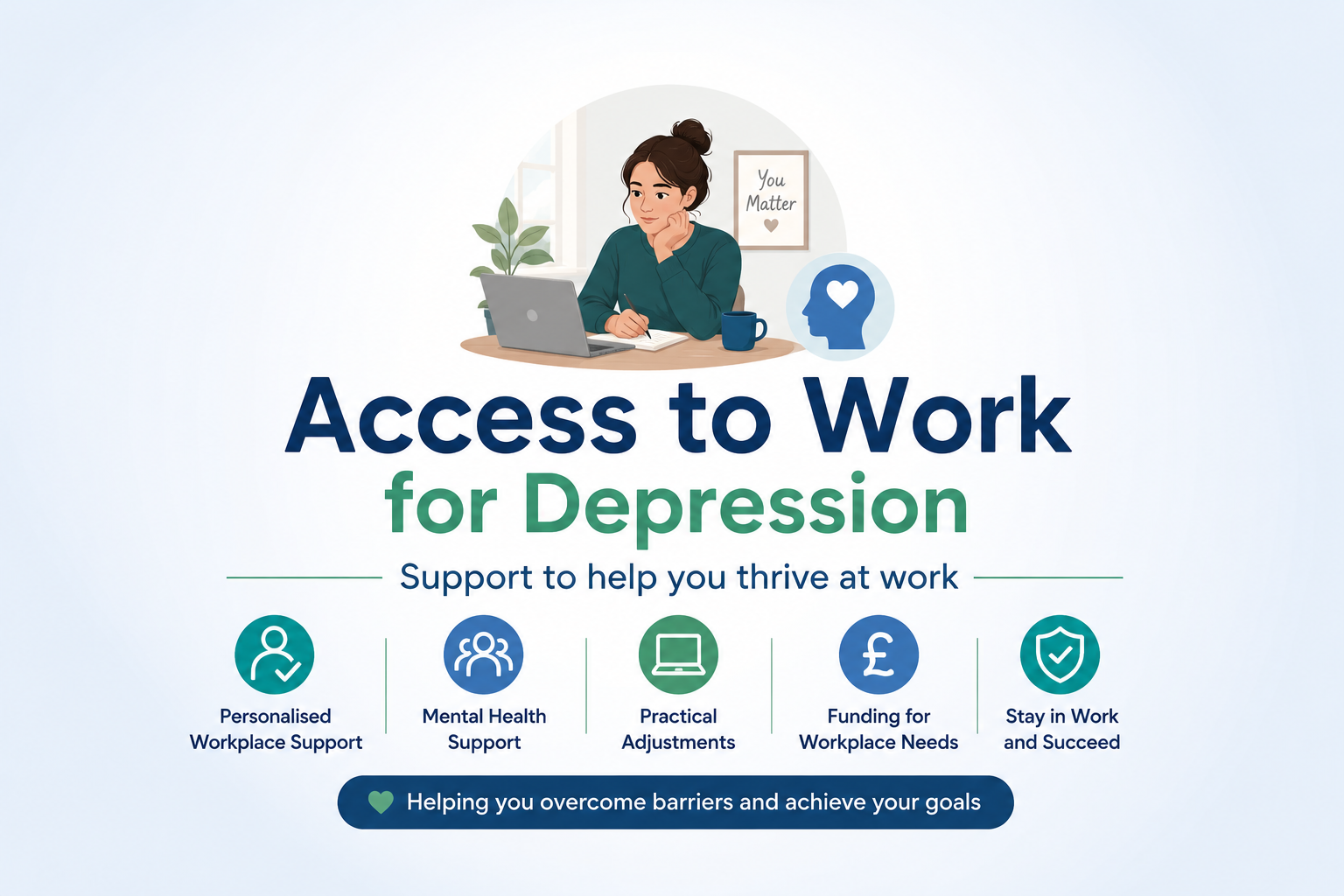
Living with depression can make work more challenging, but it does not automatically mean you have to leave your job or stop pursuing a career. Many people continue to work successfully with the right understanding, support and reasonable adjustments.
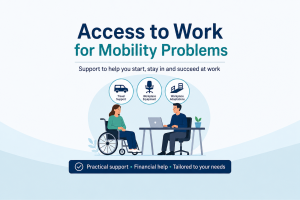
The UK Government’s Access to Work scheme exists to help disabled people and those with long term physical or mental health conditions overcome barriers at work. Depression is recognised as a mental health condition that may qualify for support if it has a substantial and long term effect on your ability to carry out normal day to day activities.
Whether you are employed, self employed, starting a new job or attending a work placement, Access to Work may provide funding for practical workplace support that is not normally provided by your employer.
This guide explains who can qualify, what help is available, how much support you could receive, how to apply and the common mistakes to avoid.
Yes. You may qualify for Access to Work for Depression if your condition has a substantial and long term impact on your ability to do your job. The scheme does not pay wages or replace benefits. Instead, it provides grants towards workplace adjustments, specialist support, mental health assistance, coaching, equipment or travel costs where appropriate.
Access to Work for Depression is Government funded workplace support designed to remove barriers that prevent people with depression from working effectively.
Unlike many benefits, Access to Work is not a payment made directly to cover living costs. Instead, it is a grant that helps fund support needed because of your condition.
Support is personalised after an assessment of your circumstances and workplace.
The aim is to help you:
Depression affects everyone differently, so no two Access to Work awards are identical.
You may qualify if you:
You do not need to receive Personal Independence Payment or any other disability benefit to apply.
Many successful applicants receive no disability benefits at all.
| Situation | Could qualify |
|---|---|
| Office worker experiencing severe depression | Yes |
| Self employed graphic designer | Yes |
| Teacher returning after mental health leave | Yes |
| Apprentice with long term depression | Yes |
| Person starting a new job | Yes |
| Volunteer only | Usually no |
To qualify, depression should normally:
Examples include difficulties with:
Each application is assessed individually.
No.
There is no income limit for Access to Work.
Whether you earn minimum wage or have a high salary does not usually affect whether you qualify.
Eligibility is based on your disability or health condition and workplace needs rather than household income.
No.
Unlike some means tested benefits, your savings are not taken into account.
Whether you have:
your savings alone do not affect eligibility.
There is no standard payment because every award depends on your individual needs.
The grant pays towards approved workplace support.
Possible support includes:
| Support | What it may cover |
|---|---|
| Mental health support service | Workplace coping strategies |
| Specialist coaching | Confidence and organisation |
| Workplace adjustments | Practical changes to working arrangements |
| Travel support | Alternative transport where appropriate |
| Support workers | Practical workplace assistance |
| Specialist software | Productivity and organisation tools |
| Noise reducing equipment | Improved concentration |
| Flexible working recommendations | Agreed workplace adjustments |
The amount awarded depends on:
Yes.
Many people with depression receive specialist workplace mental health support.
This may include:
Support is designed to improve your ability to remain in employment rather than provide medical treatment.
Applications are usually made online or by telephone.
The process generally involves:
Complete an application.
Provide information about:
An adviser may contact you.
A workplace assessment may be arranged.
Recommendations are made.
A funding decision is issued.
If approved, arrangements are made for the agreed support.
Having information ready can make the application smoother.
Useful documents include:
Medical evidence is not always required immediately, but it may be requested during assessment.
The support recommended depends on your circumstances.
Examples include:
| Workplace challenge | Possible adjustment |
|---|---|
| Difficulty concentrating | Quiet working area |
| Fatday fatigue | Flexible hours |
| Anxiety in meetings | Alternative communication methods |
| Overwhelming workload | Structured planning support |
| Memory difficulties | Reminder software |
| Returning after absence | Phased return to work |
| Busy office environment | Noise reduction equipment |
| Stress triggers | Workplace coaching |
Reasonable adjustments may also be provided by your employer separately under equality legislation.
Avoid these common problems.
You do not.
Explain exactly how depression affects your work.
Apply before problems become severe.
Accurate information speeds up processing.
Awards are personalised.
Many mental health conditions vary from day to day.
Describe both good and bad days.
Sarah works in customer services.
Depression makes concentration difficult during busy periods.
Following an assessment she receives workplace coaching and organisational support, helping her remain in full time employment.
David is self employed.
His depression affects planning and time management.
Access to Work funds specialist coaching to improve organisation and productivity.
Emily returns to work after several months of sickness absence.
Access to Work recommends workplace support and phased adjustments, allowing a successful return.
Yes.
Tell Access to Work if:
Your support may be reviewed and adjusted where necessary.
Yes, if it substantially affects your ability to work and meets the eligibility requirements.
No. Access to Work is separate from Personal Independence Payment.
Yes. You can apply if you have a confirmed job offer.
No. It is a Government grant rather than taxable income.
Yes. Self employed workers may qualify.
Usually your employer becomes involved because workplace support may need to be arranged.
No. It is not an income replacement benefit.
Yes. Assessments consider how your overall health affects your work.
Awards vary depending on individual circumstances and may be reviewed periodically.
You should inform Access to Work. Some support may transfer while other elements may require reassessment.
Depending on your circumstances, you may also qualify for:
| Benefit or Support | Purpose |
|---|---|
| Personal Independence Payment | Help with extra disability costs |
| Universal Credit | Help with living costs |
| Employment and Support Allowance | Support if your ability to work is limited |
| Carer’s Allowance | Support for eligible carers |
| Council Tax Reduction | Help with Council Tax |
| Mental health services | NHS treatment and support |
| Occupational health support | Employer based workplace advice |
Receiving one form of support does not automatically guarantee entitlement to another.
Each scheme has its own eligibility criteria.
This article has been reviewed against current UK Government guidance and official information relating to:
Government rules and guidance can change. Always check the latest official guidance before making decisions about applications or financial support.
Useful official resources include information on:
These official resources provide the most up to date guidance on eligibility, application processes and workplace support.
Depression can have a significant impact on working life, but it should not prevent you from building or continuing a successful career. Access to Work provides valuable practical support to help remove barriers in the workplace and improve confidence, wellbeing and independence.
The scheme is based on your individual needs rather than your income or savings. Whether you are employed, self employed or about to start work, you may be eligible for funding that helps you manage the challenges depression creates in the workplace.
Applying early, providing detailed information about how your condition affects your work and cooperating fully with any assessment gives you the best chance of receiving the right level of support.
Benefits Advice UK provides free information to help people better understand the UK benefits system. Always check the latest Government guidance before making financial decisions.
Information on this site is based on official UK guidance.
About our information and sources
Sign up for our newsletter to receive updates when there are changes to Universal Credit.