Finding and keeping a job can sometimes be more challenging if you have a disability, long term health condition or mental health condition. The UK Government’s Access to Work scheme exists to remove many of these barriers by providing practical and financial support that helps disabled people start work, stay in work or become self employed.
Unlike many other forms of financial assistance, Access to Work is designed to pay for support that goes beyond the reasonable adjustments an employer is normally expected to provide. It can fund specialist equipment, travel, communication support and many other workplace adjustments that make employment more accessible.
Whether you are applying for your first job, returning to work after illness or looking to remain in your current role, understanding how Access to Work works could make a significant difference to your career.
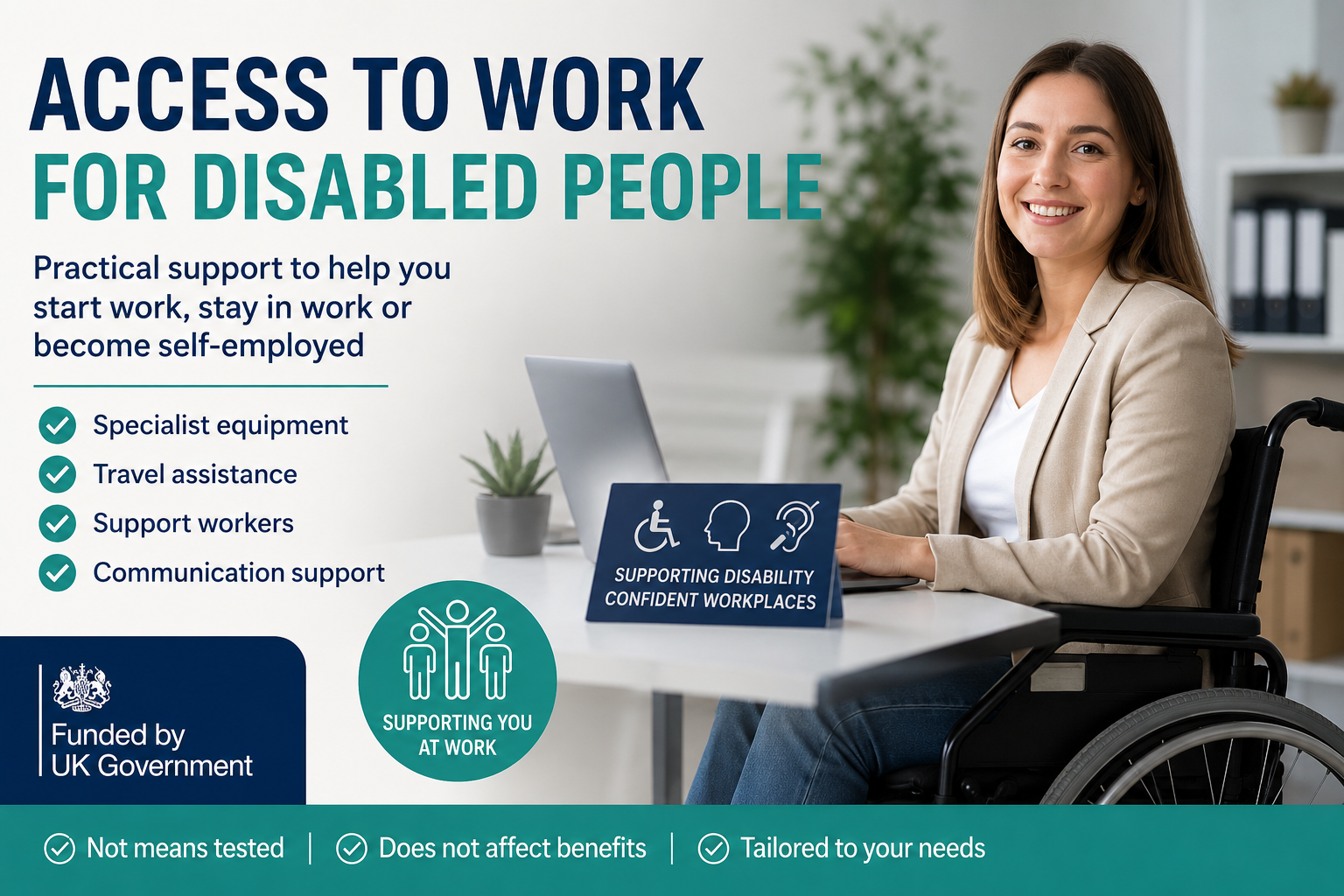
Access to Work for Disabled People is a UK Government grant that helps disabled people overcome workplace barriers by funding practical support, specialist equipment, travel costs, support workers, communication assistance and workplace adaptations. It is not means tested, does not affect your benefits and normally does not need to be repaid.
Access to Work is a Government funded grant administered through the Department for Work and Pensions.
Its purpose is simple.
To help disabled people enter employment, remain employed or become self employed by covering additional disability related costs that are not covered elsewhere.
The grant is flexible because every person’s circumstances are different.
Support may include:
The support is tailored following an individual assessment.
You may qualify if you:
Eligible conditions include:
Having a diagnosis alone does not automatically guarantee support.
The key question is whether your condition creates barriers to working.
You normally qualify if your disability affects your ability to perform your role safely or effectively.
Examples include:
| Situation | Possible Support |
|---|---|
| Wheelchair user | Adapted workstation and specialist desk |
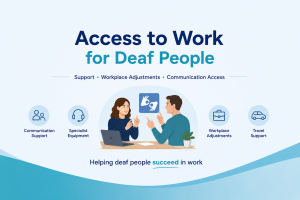
| Deaf employee | British Sign Language interpreter |
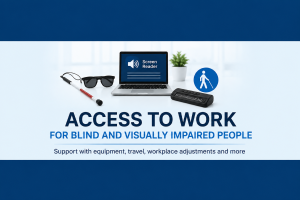
| Blind employee | Screen reading software |
| Anxiety disorder | Mental health support service |
| Autism | Job coaching and workplace support |
| Severe arthritis | Ergonomic equipment |
Most paid employment is covered, including:
Voluntary work alone is generally not covered.
No.
Access to Work is not means tested.
Your:
do not usually affect your eligibility.
The assessment focuses on your work related needs rather than your financial circumstances.
No.
There are no savings limits for Access to Work.
Whether you have no savings or substantial savings, this does not normally affect your entitlement.
The scheme looks at disability related workplace barriers rather than personal finances.
There is no standard payment because every award is based on individual needs.
The amount depends on factors such as:
Examples of funded support include:
| Support | Example |
|---|---|
| Specialist equipment | Adapted keyboards, desks, software |
| Communication support | British Sign Language interpreters |
| Mental health support | Workplace mental health service |
| Travel | Taxi costs where necessary |
| Job coaching | Workplace assistance |
| Support workers | Personal assistance during work |
Some awards may be relatively small, while others may provide many thousands of pounds of support where appropriate.
In some cases employers may be asked to contribute depending on the size of the business and the type of support required, although many applicants receive support without making any personal contribution.
Applications can be made online or by telephone.
The basic process is:
Complete the application.
Provide details about:
An adviser may contact you for further information.
A workplace assessment may be arranged.
A decision is made outlining the support available.
Support is arranged with you and your employer.
Applying before you start work can help ensure support is available from your first day.
Having information ready can speed up your application.
You may need:
Not every applicant will need every document.
Avoid these common problems.
Apply as early as possible, especially before starting a new role.
Many invisible disabilities qualify.
Describe exactly how your condition affects your work.
Mental health conditions are equally important.
Funding is usually agreed before purchases are made.
The more accurately you describe your needs, the easier it is for assessors to recommend suitable support.
| Situation | Outcome |
|---|---|
| Employee with hearing loss | Interpreter funded for meetings |
| Office worker with chronic back pain | Ergonomic workstation funded |
| Self employed graphic designer with visual impairment | Specialist screen reader purchased |
| Employee with anxiety | Workplace mental health support provided |
| Apprentice with dyslexia | Specialist software funded |
| Employee unable to use buses due to disability | Taxi travel assistance approved |
Every case is assessed individually.
Yes. Receiving Personal Independence Payment does not prevent you claiming Access to Work.
Yes. Access to Work does not stop you receiving Universal Credit.
No. It is separate from most benefits.
Yes. Eligible self employed people can receive support.
Yes. In many cases this is encouraged.
Sometimes. It depends on your circumstances and the information already available.
Sometimes employers may contribute towards certain costs depending on their size and the support required.
Yes, where your disability makes public transport unsuitable and other conditions are met.
Yes. ADHD can qualify where it creates workplace barriers.
Yes. Many autistic employees receive workplace support through the scheme.
If you disagree with a decision, you can ask for it to be looked at again and provide any additional information that may support your case.
Depending on your circumstances you may also qualify for:
| Benefit or Support | Purpose |
|---|---|
| Personal Independence Payment | Daily living and mobility support |
| Universal Credit | Help with living costs |
| Employment and Support Allowance | Support if your ability to work is limited |
| Carers Allowance | Support for eligible carers |
| Disabled Students Allowance | Support for higher education |
| Industrial Injuries Disablement Benefit | Help after workplace injuries |
| Blue Badge Scheme | Parking concessions |
| Motability Scheme | Accessible vehicle leasing for eligible claimants |
Receiving one form of support does not automatically prevent you receiving another.
Information reviewed against current UK Government guidance and official sources.
Useful official resources include:
These organisations provide the latest eligibility rules, application guidance and updates to the scheme.
This article has been prepared using current UK Government guidance and recognised public information available at the time of writing. Benefits rules, eligibility criteria and grant arrangements can change over time, so applicants should always check the latest official guidance before submitting an application or making financial decisions.
Access to Work for Disabled People is one of the UK’s most valuable employment support schemes. It helps remove workplace barriers by funding practical adjustments that enable disabled people to find work, remain in employment and progress in their careers.
Because the scheme is not means tested and does not usually affect other benefits, it can provide significant additional support without reducing existing financial assistance. Whether you need specialist equipment, communication support, travel assistance or workplace coaching, applying early and providing clear information about your needs can improve the outcome of your application.
If you believe your disability or health condition makes work more difficult, it is worth exploring whether Access to Work could help you achieve your employment goals.
Benefits Advice UK provides free information to help people better understand the UK benefits system. Always check the latest Government guidance before making financial decisions.
Information on this site is based on official UK guidance.
About our information and sources
Sign up for our newsletter to receive updates when there are changes to Universal Credit.