Finding and keeping a job can sometimes be challenging if you have a disability, health condition or mental health condition. Fortunately, the UK Government offers practical financial support through the Access to Work scheme to help remove barriers in the workplace.
This guide explains everything you need to know about Access to Work, including who qualifies, what support is available, how much funding you could receive and how to apply.
Whether you are starting your first job, returning to work after illness, becoming self employed or already employed, this guide will help you understand how the scheme works.
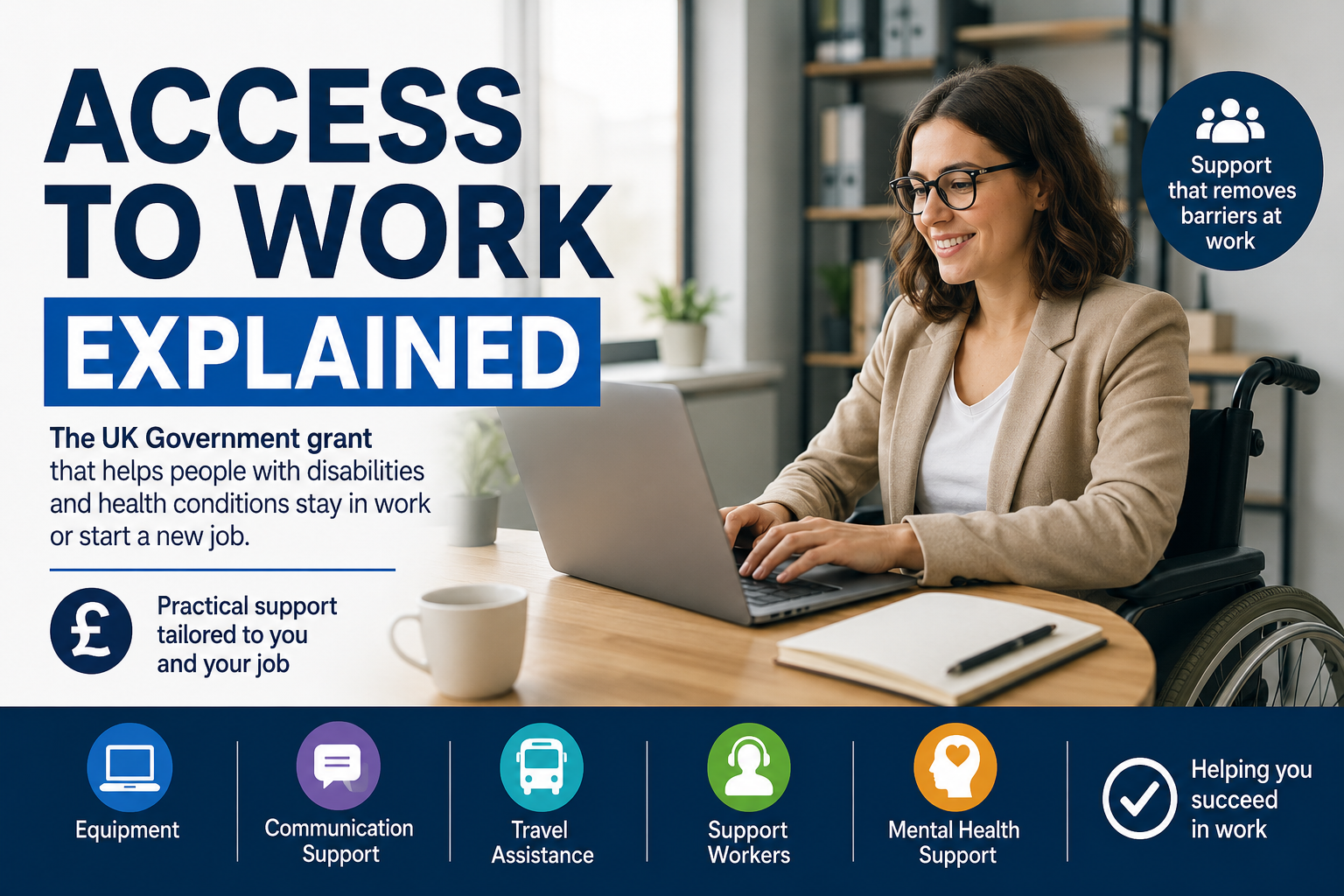
Access to Work is a UK Government grant that helps disabled people and people with physical or mental health conditions stay in work or start a new job by paying for practical workplace support that is not covered by an employer’s legal responsibilities.
The grant does not affect your benefits and normally does not need to be repaid. The amount awarded depends on your individual circumstances and the support you need.
Access to Work is a Government funded programme designed to remove workplace barriers for people whose disability or health condition affects their ability to work.
Rather than paying money directly as an income replacement benefit, the scheme funds equipment, services and practical support that help people perform their jobs effectively.
The support is tailored to each individual following an assessment of their needs.
Access to Work may fund:
The scheme aims to give disabled people equal opportunities to enter and remain in employment.
You may qualify if you:
You usually need to have paid work or a confirmed job offer before receiving support.
You are unlikely to qualify if you:
Eligibility depends on how your condition affects your ability to work rather than the diagnosis itself.
Conditions may include:
Each application is assessed individually.
| Requirement | Eligible? |
|---|---|
| Over 16 | Yes |
| Living in Great Britain | Yes |
| Employed | Yes |
| Self employed | Yes |
| Starting work | Yes |
| Apprentice | Yes |
| Supported internship | Yes |
| Unemployed without work | Usually No |
No.
There is no income limit for Access to Work.
Unlike many means tested benefits, your:
do not normally affect whether you qualify.
The scheme focuses on your workplace support needs rather than your financial circumstances.
No.
There are no savings limits.
Whether you have no savings or significant savings does not normally affect your eligibility.
This makes Access to Work different from many benefits that have strict capital limits.
There is no standard payment.
Instead, the Government funds the reasonable cost of approved workplace support.
Examples include:
| Type of Support | Possible Funding |
|---|---|
| Specialist computer equipment | Yes |
| Screen reading software | Yes |
| Voice recognition software | Yes |
| Wheelchair adaptations | Yes |
| Communication support | Yes |
| Mental health support | Yes |
| Travel assistance | Yes |
| Job coach | Yes |
| Specialist chair or desk | Yes |
| Workplace adaptations | Yes |
Awards depend entirely on your individual assessment.
Some employers may also contribute depending on business size and the type of support required.
Support can include:
Examples include:
Examples include:
Examples include:
This may include:
Where public transport is unsuitable because of disability, Access to Work may contribute towards travel costs.
Applications are usually made online or by telephone.
The process generally includes:
Complete an application.
Provide information about:
An adviser reviews your application.
A workplace assessment may be arranged.
You receive a decision outlining approved support.
Equipment or support services are arranged.
| Step | What Happens |
|---|---|
| Apply | Submit application |
| Assessment | Needs reviewed |
| Recommendation | Support identified |
| Decision | Grant approved |
| Delivery | Support provided |
Although requirements vary, you may need:
Not every applicant will need medical documentation.
Avoid these common problems.
Apply as soon as possible after accepting a job offer or identifying workplace difficulties.
Explain clearly how your condition affects your work.
Some support requires Access to Work approval.
Mental health support is available and should not be overlooked.
If your role changes or your condition changes, inform Access to Work promptly.
Sarah has severe hearing loss.
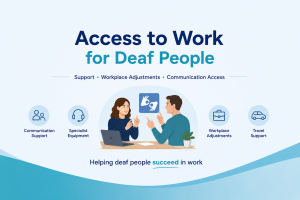
Access to Work funds a British Sign Language interpreter for important meetings and specialist communication equipment.
Result:
Sarah continues working successfully.
James has severe anxiety.
He receives workplace mental health support and tailored coaching.
Result:
His confidence improves and sickness absence reduces.
Priya has a visual impairment.
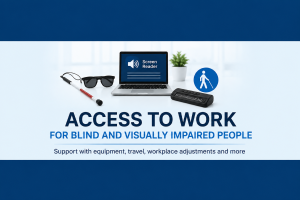
Access to Work funds specialist screen reading software and a larger monitor.
Result:
She performs her administrative role independently.
David has limited mobility.
Access to Work contributes towards suitable transport because public transport is inaccessible.
Result:
He is able to attend work safely.
Yes. Receiving Personal Independence Payment does not prevent you from qualifying.
Yes. Self employed people may qualify if they meet the eligibility rules.
No. Access to Work does not normally affect Universal Credit.
Students generally cannot receive Access to Work for studying alone, but those moving into employment, apprenticeships or supported internships may qualify.
No. Access to Work is generally not treated as taxable income.
Yes. You can usually apply once you have a confirmed job offer.
Sometimes payments are made directly to suppliers or employers depending on the type of support provided.
Yes. Your support can be reviewed if your needs change.
Times vary depending on the complexity of the application and assessment.
Not always. However, Access to Work may request supporting evidence if required.
In some cases, if the condition has a significant impact on your ability to work and meets the scheme requirements.
Depending on your circumstances you may also qualify for:
| Benefit or Support | Purpose |
|---|---|
| Universal Credit | Help with living costs |
| Personal Independence Payment | Extra costs of disability |
| Employment and Support Allowance | Financial support if your ability to work is limited |
| Carers Allowance | Support for carers |
| Attendance Allowance | Help for older disabled people |
| Disability Living Allowance for children | Support for disabled children |
| Industrial Injuries Disablement Benefit | Workplace injury support |
| Motability Scheme | Accessible vehicle leasing through qualifying mobility benefits |
This article has been reviewed against current UK Government guidance and official information available at the time of writing.
The guidance reflects:
As Government policies can change, always check the latest official guidance before submitting an application.
Useful official resources include information on:
Official Government guidance should always be used alongside independent advice where necessary.
Access to Work is one of the most valuable employment support schemes available in the United Kingdom. Unlike many benefits, it is not based on your income or savings. Instead, it focuses on providing the practical help you need to overcome barriers caused by a disability, long term health condition or mental health condition.
Whether you need specialist equipment, travel support, workplace adaptations, communication assistance or tailored mental health support, the scheme is designed to help you start work, remain in employment and progress in your career.
If you believe your condition affects your ability to work, applying for Access to Work could make a significant difference to your confidence, independence and long term employment prospects. Preparing a clear application and explaining your workplace needs fully will give you the best chance of receiving the support that matches your circumstances.
Benefits Advice UK provides free information to help people better understand the UK benefits system. Always check the latest Government guidance before making financial decisions.
Information on this site is based on official UK guidance.
About our information and sources
Sign up for our newsletter to receive updates when there are changes to Universal Credit.