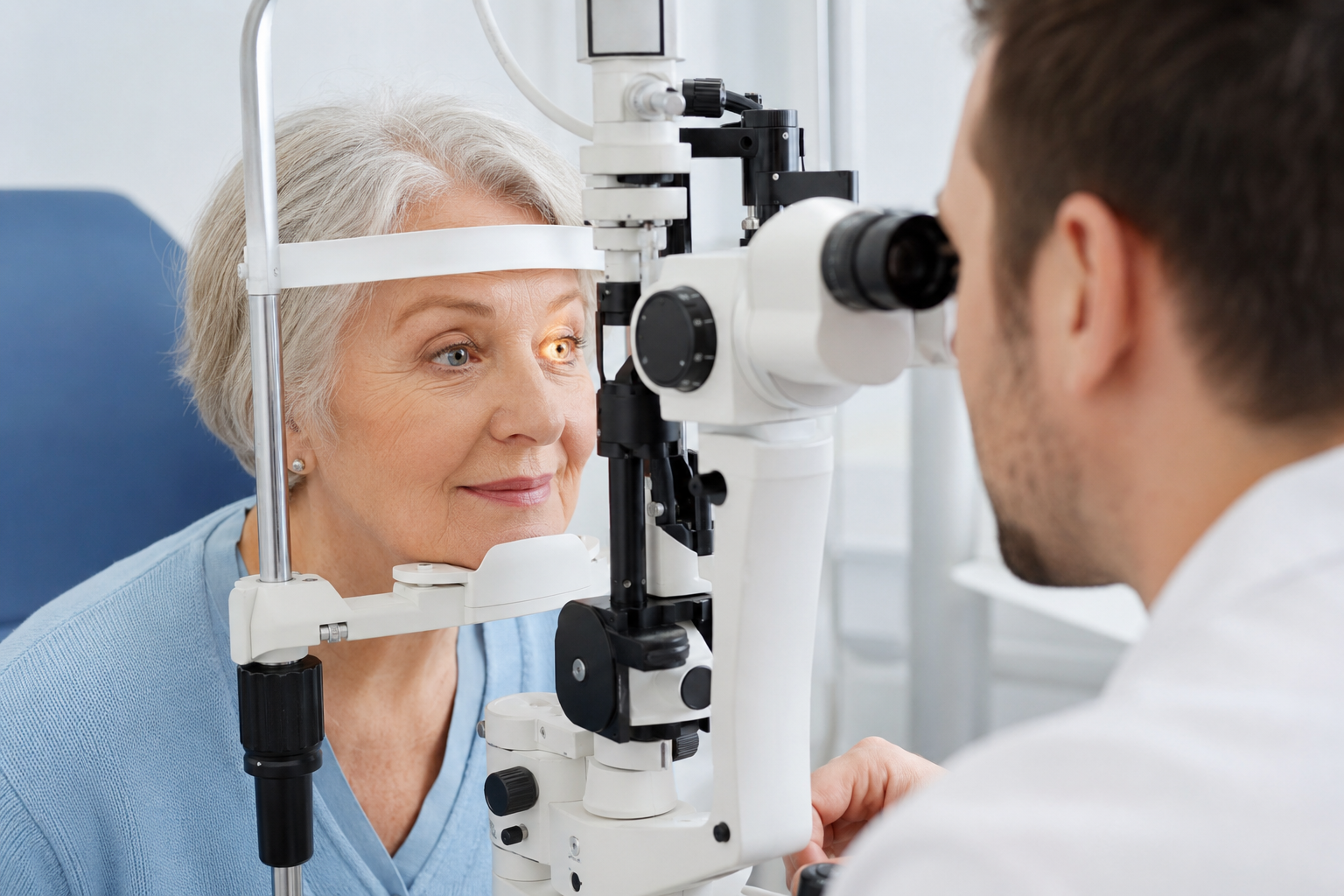
If you receive Personal Independence Payment (PIP), you may be wondering whether you can get a free NHS eye test or help towards the cost of glasses or contact lenses. This is a common question because many people assume that receiving PIP automatically gives them access to free eye care. In reality, the rules are slightly more complicated.
Understanding how to get free eye tests on PIP can help you avoid paying for healthcare that you may already be entitled to receive. In some situations, PIP itself does not provide automatic entitlement, but your wider financial circumstances or other benefits you receive alongside PIP could make you eligible for free NHS eye tests and help with optical costs.
This guide explains exactly who qualifies, how the NHS eligibility rules work, what documents you need, and what financial support may be available.
Yes, but not automatically.
Receiving Personal Independence Payment does not by itself guarantee a free NHS eye test.
However, many people who receive PIP also qualify because they:
If you receive PIP alongside one of these qualifying benefits, you may also receive help towards the cost of glasses or contact lenses.
Getting free eye tests on PIP means understanding whether you qualify for NHS funded sight tests and optical support while receiving Personal Independence Payment.
PIP is designed to help with the extra costs of living with a disability or long term health condition. It is not an income related benefit, so receiving it alone does not automatically unlock free NHS eye care.
Instead, eligibility depends on separate NHS rules covering income, age, medical conditions and other qualifying benefits.
You may qualify if you receive PIP and one of the following applies.
| Your Situation | Free NHS Eye Test |
|---|---|
| Receive Pension Credit Guarantee Credit | Yes |
| Hold an NHS HC2 Certificate | Yes |
| Receive qualifying income related benefits | Yes |
| Have certain qualifying eye conditions | Yes |
| Are aged 60 or over | Yes |
| Are under 16 | Yes |
| Are aged 16 to 18 in full time education | Yes |
| Receive PIP only | Usually No |
Many PIP claimants qualify because of another benefit rather than PIP itself.
You may receive a free NHS eye test if you are receiving PIP and you also meet one of the NHS eligibility conditions.
These include:
Meeting one of these conditions normally allows you to receive a free NHS sight test.
Yes.
Many NHS optical benefits are means tested.
If you receive PIP but have a relatively high household income, you may not qualify unless you meet another NHS exemption.
If you have a low income, even if you do not receive a qualifying benefit, you may still receive help through the NHS Low Income Scheme.
The scheme can provide:
Savings can affect eligibility under the NHS Low Income Scheme.
When assessing an application, the NHS considers:
Having savings does not always prevent you qualifying, but larger amounts could reduce or remove entitlement depending on your circumstances.
The amount depends on why you qualify.
You could receive:
| Support Available | What You Could Receive |
|---|---|
| NHS sight test | Free eye examination |
| Optical voucher | Help towards glasses |
| Contact lens voucher | Contribution towards costs |
| Repair or replacement voucher | Help replacing damaged glasses in certain circumstances |
| NHS Low Income Scheme | Full or partial help with optical costs |
The value of NHS optical vouchers depends on the prescription needed.
Higher prescription lenses usually qualify for higher voucher values.
If you choose glasses costing more than your voucher value, you simply pay the difference.
The process depends on why you qualify.
Book an NHS eye test with a participating optician.
Take evidence of your qualifying benefit.
The optician will check your eligibility before carrying out the test.
Complete an HC1 application.
The NHS will assess your circumstances.
If successful, you may receive:
You can then present your certificate at your eye appointment.
It is useful to bring:
Having your paperwork ready helps make the appointment straightforward.
Many people miss out on help because they misunderstand the rules.
Common mistakes include:
PIP alone usually does not provide free NHS eye tests.
Thousands of eligible people never apply for an HC2 certificate.
Receiving Pension Credit or Universal Credit could make you eligible.
Always ask whether an NHS voucher is available before paying.
Routine eye tests can identify serious health conditions before symptoms develop.
| Situation | Outcome |
|---|---|
| Sarah receives PIP and Pension Credit Guarantee Credit | Free NHS eye test and optical help |
| David receives only PIP and works full time | Usually pays for eye test unless another exemption applies |
| Karen receives PIP and holds an HC2 certificate | Free eye test and help with glasses |
| Michael receives PIP because of diabetes | May qualify through NHS medical eligibility |
| Jean receives PIP and is aged over 60 | Qualifies for a free NHS eye test because of age |
These examples show why it is important to consider your entire situation rather than PIP alone.
No. PIP alone does not normally provide automatic entitlement.
Possibly. You may qualify if you also receive another qualifying benefit or hold an HC2 certificate.
You may receive help through an NHS optical voucher if you qualify.
Only if they meet another NHS eligibility rule.
Yes. Tell them about all benefits you receive so they can assess eligibility.
Generally, eligibility should be confirmed before treatment. Ask your optician about any reimbursement rules.
Most people qualify every two years, although some medical conditions allow more frequent testing.
Your entitlement may change. Always report changes where required and check your NHS eligibility again.
NHS vouchers contribute towards eligible prescriptions. You pay any additional cost above the voucher value.
Yes. Many PIP recipients successfully qualify through the scheme.
Receiving PIP may increase entitlement to other forms of assistance depending on your circumstances.
These include:
Checking all available support can significantly reduce household expenses.
Information reviewed against current UK Government guidance and official sources.
The most reliable sources include:
| Organisation | Information Available |
|---|---|
| GOV.UK | Personal Independence Payment guidance |
| NHS | Free NHS eye tests and optical vouchers |
| NHS Low Income Scheme | HC1 application and HC2 certificates |
| Department for Work and Pensions | PIP information |
| NHS Business Services Authority | Optical cost support |
Always rely on official guidance if your circumstances change, as eligibility rules can be updated.
Understanding how to get free eye tests on PIP can save you money and help you protect your eyesight. Although Personal Independence Payment does not automatically provide free NHS eye tests, many people who receive PIP qualify through other benefits, medical conditions, age, or the NHS Low Income Scheme.
Before paying for an eye test or new glasses, check whether you meet the NHS eligibility rules. If your income is low, applying through the NHS Low Income Scheme could provide valuable financial support not only for eye care but also for dental treatment, prescriptions and travel costs.
Regular eye examinations are an important part of maintaining your health, especially if you have a long term condition or disability. Taking a few minutes to check your entitlement could help you access the support you deserve.
Benefits Advice UK provides free information to help people better understand the UK benefits system. Always check the latest Government guidance before making financial decisions.
Information on this site is based on official UK guidance.
About our information and sources
Sign up for our newsletter to receive updates when there are changes to Universal Credit.