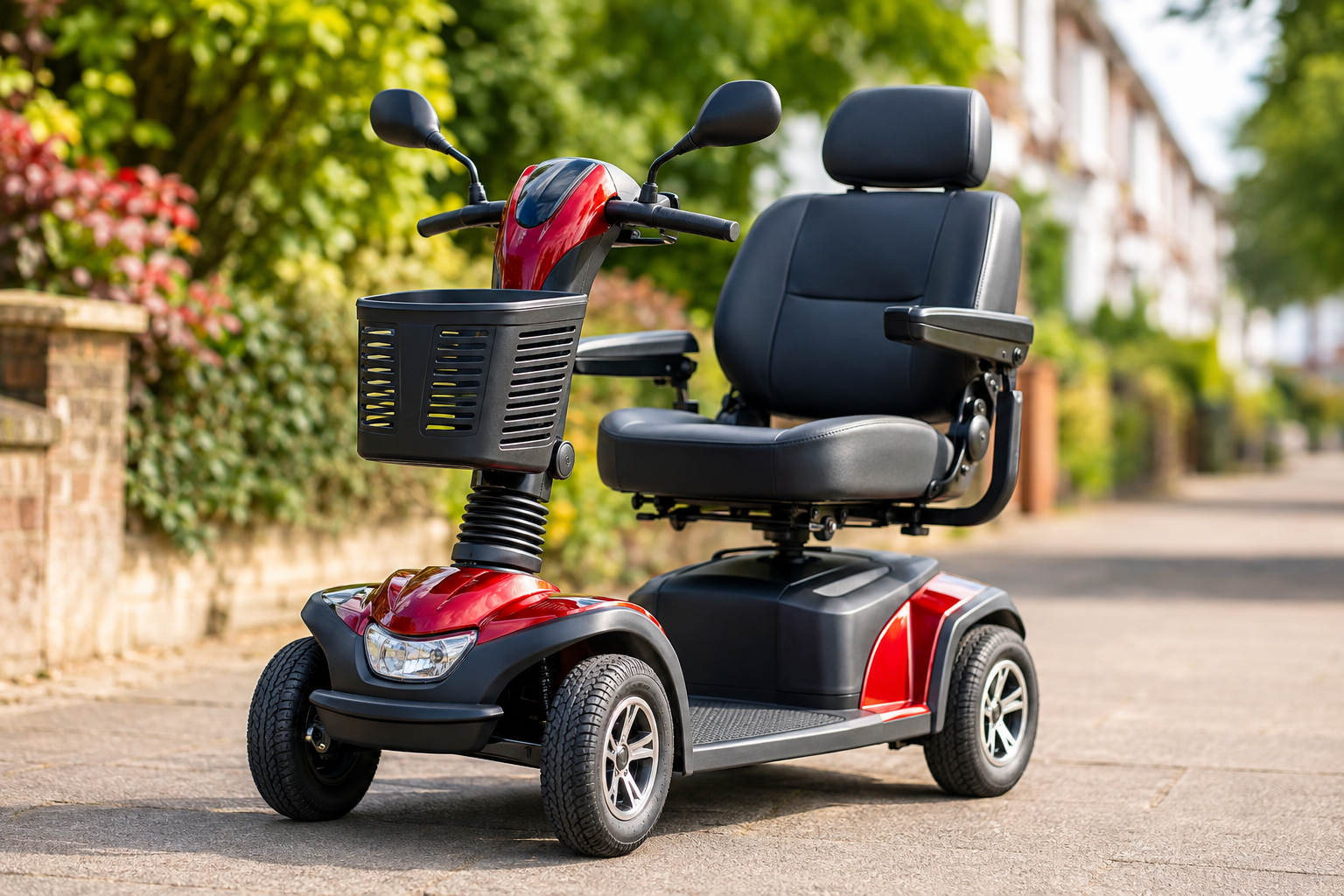
Many people receiving Personal Independence Payment (PIP) wonder whether they can get help paying for a mobility scooter. While PIP does not directly provide a free mobility scooter, the mobility component of PIP can help you lease one through the Motability Scheme or pay towards purchasing one yourself.
This guide explains exactly how the system works, who qualifies, what your options are and where to find additional financial support if you are not eligible for Motability.
Yes. If you receive the Enhanced Rate Mobility Component of Personal Independence Payment (PIP), you may be eligible to lease a mobility scooter through the Motability Scheme.
If you receive the Standard Rate Mobility Component, you cannot join the Motability Scheme, but you may still use your PIP payments towards buying a scooter yourself or apply for charitable grants and local support.
Getting a mobility scooter on PIP usually means using your mobility benefit to improve your independence.
There are two main ways this happens.
| Option | How it works |
|---|---|
| Motability Scheme | Lease a scooter using your Enhanced Rate Mobility Component |
| Buy privately | Use your PIP payments towards purchasing a scooter |
The Motability Scheme is generally the most affordable option for people who qualify because it includes many ongoing costs within the lease.
You normally qualify for a mobility scooter through the Motability Scheme if you receive:
You do not need to pass another medical assessment for Motability if you already receive the qualifying mobility component.
To lease a scooter through Motability you generally need:
You can also nominate someone else to help manage your lease if needed.
| Your situation | Eligible for Motability? |
|---|---|
| Enhanced Mobility PIP | Yes |
| Standard Mobility PIP | No |
| Daily Living only | No |
| Attendance Allowance | No |
| Universal Credit only | No |
No.
Your earnings, pension or other income do not affect eligibility for the Motability Scheme.
Eligibility depends on receiving the qualifying disability benefit rather than household income.
However, income may be considered when applying for charitable grants or financial assistance outside Motability.
No.
Savings do not affect whether you can join the Motability Scheme if you receive the qualifying PIP award.
If you apply for charitable funding or local authority grants, some organisations may assess your financial circumstances.
The amount depends on how you obtain the scooter.
You exchange your Enhanced Mobility Component each payment period to lease a scooter.
The lease commonly includes:
Some higher specification scooters may require an Advance Payment.
If you purchase your own scooter you can use your PIP mobility payments however you choose.
Typical costs include:
| Scooter type | Typical price |
|---|---|
| Small portable scooter | £700 to £1,800 |
| Medium pavement scooter | £1,500 to £3,000 |
| Large road legal scooter | £3,000 to £6,000 or more |
Prices vary depending on manufacturer, features and battery range.
The application process depends on which option you choose.
Step 1
Receive the Enhanced Rate Mobility Component of PIP.
Step 2
Choose a Motability approved scooter supplier.
Step 3
Compare available scooter models.
Step 4
Arrange an assessment if required.
Step 5
Complete your lease agreement.
Step 6
Your mobility payments are paid directly towards the lease.
Your scooter is then supplied and maintained throughout the lease period.
If you are not eligible for Motability you can:
You may be asked for:
Keeping these documents ready can make the process much quicker.
Many organisations provide funding for mobility equipment.
Possible sources include:
Some charities will consider:
Many applicants delay receiving help because of avoidable errors.
Common mistakes include:
Sarah receives Enhanced Rate Mobility PIP because walking causes severe pain.
She joins the Motability Scheme and leases a pavement scooter. Her weekly mobility payments cover the lease, servicing and maintenance, allowing her to shop independently.
Outcome:
Sarah avoids a large upfront purchase and benefits from ongoing support.
David receives Standard Rate Mobility PIP.
He cannot join Motability, but saves part of his PIP payments over several months and receives a charitable grant towards purchasing a lightweight folding scooter.
Outcome:
Although he is not eligible for Motability, he still secures suitable mobility equipment.
Margaret receives Daily Living PIP only.
She is not eligible for Motability but receives support through a local disability charity and purchases a second hand scooter at a reduced cost.
Outcome:
Alternative funding enables her to remain active within her community.
Not directly. PIP itself does not provide free scooters. Eligible claimants can lease one through the Motability Scheme or use their payments towards buying one.
Yes, for the Motability Scheme you must usually receive the Enhanced Rate Mobility Component.
Yes. Your PIP payments are yours to spend as you choose.
Yes. Many mobility retailers and charities sell refurbished scooters at lower prices.
Some larger Class 3 scooters can be used on roads where permitted. Smaller scooters are intended for pavements.
No. Universal Credit does not specifically fund mobility scooters.
Yes, if they meet the qualifying benefit requirements or obtain funding through other schemes.
Your Motability lease may end if you no longer receive the qualifying mobility component. Support is available to help customers understand their options if their award changes.
Depending on the circumstances, someone else can often assist with managing the lease or transporting the scooter.
Insurance arrangements vary depending on the type of scooter and lease. Check the terms of your agreement before signing.
If you need a mobility scooter, you may also qualify for other forms of financial support.
These include:
| Benefit or Support | Purpose |
|---|---|
| Personal Independence Payment | Helps with extra disability costs |
| Attendance Allowance | Support for older people with care needs |
| Universal Credit | Income related financial support |
| Carer’s Allowance | Support for eligible carers |
| Disabled Facilities Grant | Home adaptations |
| Blue Badge Scheme | Parking concessions |
| NHS Wheelchair Services | Assessment for wheelchairs where appropriate |
| Local Welfare Assistance | Emergency local support in some areas |
This article has been reviewed against current UK Government guidance and official information relating to:
Benefit rules can change over time. Individual circumstances may also affect entitlement. Always check the latest official guidance before making decisions.
Useful official sources include:
Understanding How to Get a Mobility Scooter on PIP is much easier once you know the difference between receiving PIP and qualifying for the Motability Scheme.
If you receive the Enhanced Rate Mobility Component, leasing through Motability can provide an affordable and convenient way to access a mobility scooter, with servicing and maintenance often included. If you do not qualify, there are still other options available, including using your PIP payments to buy a scooter, applying for charitable grants or seeking support from local organisations.
Before making any decision, compare all available options, consider your long term mobility needs and check the latest eligibility criteria to ensure you choose the most suitable solution.
Benefits Advice UK provides free information to help people better understand the UK benefits system. Always check the latest Government guidance before making financial decisions.
Information on this site is based on official UK guidance.
About our information and sources
Sign up for our newsletter to receive updates when there are changes to Universal Credit.