
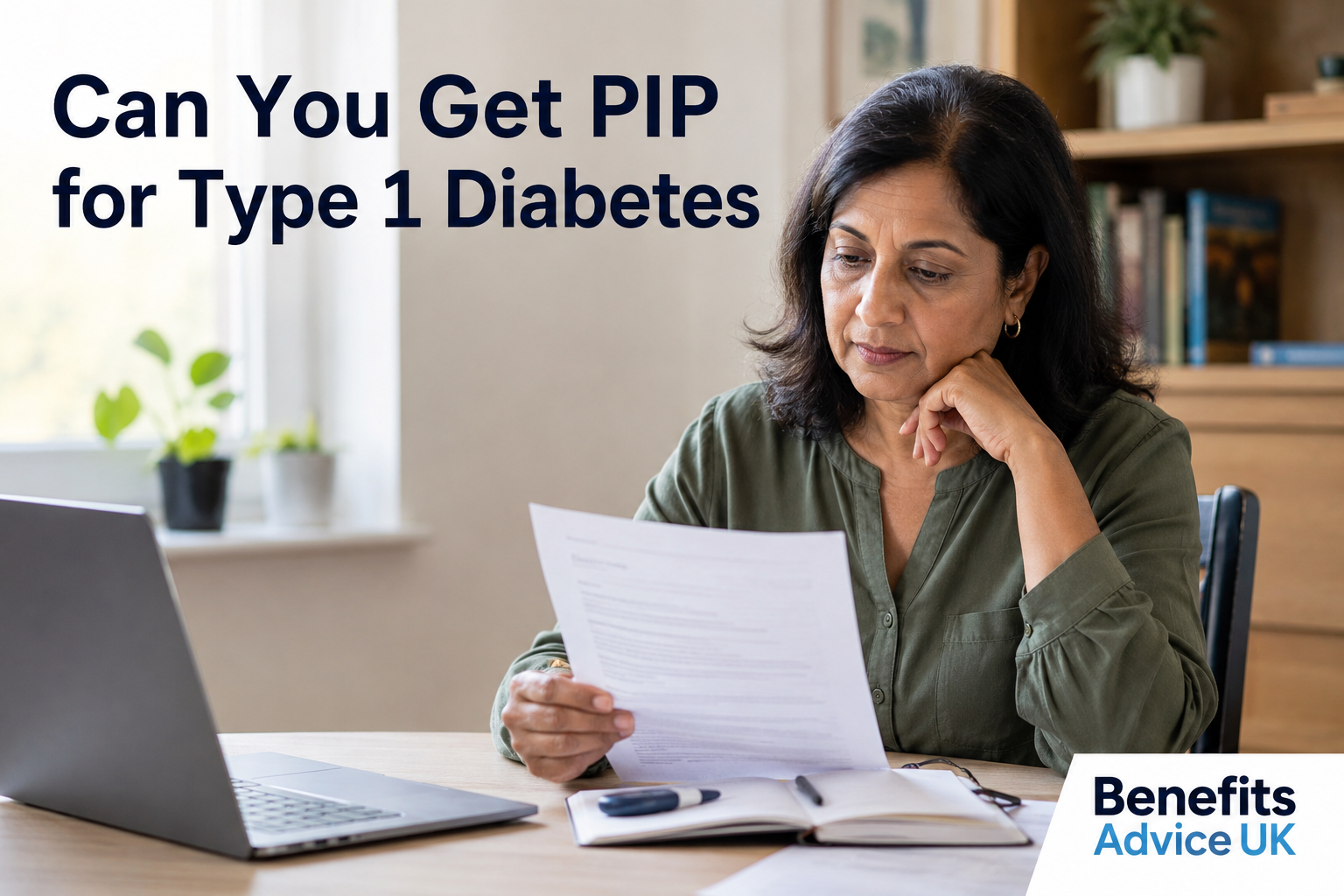
Living with Type 1 Diabetes involves much more than taking insulin. Many people manage blood sugar levels around the clock, monitor glucose readings, count carbohydrates, deal with unexpected hypoglycaemic episodes and make constant decisions that affect their health and safety.
A common question is, “Can You Get PIP for Type 1 Diabetes?”
The simple answer is yes, but receiving Personal Independence Payment depends on how your condition affects your everyday life rather than the diagnosis itself.
Many people mistakenly believe that having Type 1 Diabetes automatically qualifies them for PIP. Others wrongly assume they cannot claim because they work or because they successfully manage their condition. Neither assumption is correct.
This guide explains who may qualify, how the Department for Work and Pensions assesses claims, what evidence is helpful and how to avoid common mistakes when applying.
Yes. You can get Personal Independence Payment if Type 1 Diabetes causes significant difficulties with daily living or mobility activities.
PIP is not awarded simply because you have diabetes. Instead, your entitlement depends on how your symptoms, treatment and related complications affect your ability to carry out everyday tasks safely, repeatedly, to an acceptable standard and within a reasonable time.
People with Type 1 Diabetes who experience severe hypoglycaemia, reduced awareness of low blood sugar, diabetic neuropathy, visual impairment or other complications may qualify if they score enough points during the assessment.
| Question | Answer |
|---|---|
| Is Type 1 Diabetes automatically eligible for PIP? | No |
| Can someone with Type 1 Diabetes receive PIP? | Yes, if daily living or mobility are significantly affected |
| Does employment stop a PIP claim? | No |
| Is PIP means tested? | No |
Personal Independence Payment, commonly known as PIP, is a benefit that helps people with the additional costs of living with a long term health condition or disability.
It is available to eligible people aged 16 and over who have difficulties with everyday activities or moving around.
Unlike many benefits, PIP is based on how your condition affects your daily life rather than your income or employment.
PIP consists of two separate parts.
You may qualify for one component or both.
Anyone whose Type 1 Diabetes has caused long term difficulties with everyday activities or mobility may be able to claim.
Your condition must usually have affected you for at least three months and be expected to continue for at least another nine months.
You do not need to stop working before making a claim.
Examples include people who experience:
The Department for Work and Pensions uses a points based assessment.
Assessors consider how well you can complete specific activities.
They also consider whether you can perform them:
Daily Living activities include:
Mobility activities include:
Many people with Type 1 Diabetes score points under managing therapy if insulin treatment, glucose monitoring and diabetes management require substantial support.
Others may receive points because complications affect mobility or personal care.
No.
PIP is not affected by:
Someone earning a high income can still receive PIP if they meet the qualifying criteria.
No.
Unlike Universal Credit and some other benefits, there is no savings limit for Personal Independence Payment.
Whether you have no savings or substantial savings, your eligibility depends entirely on how your health condition affects daily living and mobility.
PIP has two payment components.
Each has a Standard Rate and an Enhanced Rate.
Current payment levels are reviewed annually by the Government.
| Component | Standard Rate | Enhanced Rate |
| Daily Living | Paid if enough points are awarded | Higher payment for greater needs |
| Mobility | Paid if enough points are awarded | Higher payment for greater mobility difficulties |
You may receive:
The amount awarded depends entirely on the points scored during your assessment.
Applying involves several stages.
Start your claim with the Department for Work and Pensions.
Complete the “How your disability affects you” form.
Take time to explain:
Provide supporting medical evidence.
Attend an assessment if required.
This may take place:
Receive your decision letter.
If you disagree with the decision you can request a Mandatory Reconsideration and later appeal if necessary.
Strong evidence often improves the quality of an application.
Useful documents include:
Evidence should explain how your condition affects your everyday life rather than simply confirming the diagnosis.
Many unsuccessful claims result from incomplete information rather than lack of eligibility.
Common mistakes include:
Remember that PIP assesses functional impact rather than the medical condition itself.
Sarah experiences severe overnight hypoglycaemia several times each month.
Her partner regularly wakes to help treat dangerous low blood sugar episodes.
She also struggles with preparing meals during unstable glucose periods.
Outcome:
Sarah may score points under managing therapy and preparing food.
Michael has diabetic neuropathy affecting both feet.
Walking causes pain after short distances.
Outcome:
Michael may qualify for the Mobility component because his walking ability is significantly limited.
Emma has excellent glucose control with an insulin pump.
She experiences very few complications and manages daily activities independently.
Outcome:
Emma may not qualify because her condition does not significantly affect the assessed activities.
| Situation | Possible Outcome |
| Frequent severe hypos requiring supervision | Higher Daily Living score possible |
| Diabetic neuropathy limiting walking | Mobility points may apply |
| Significant vision loss | Daily Living and Mobility may both apply |
| Well controlled diabetes without functional limitations | May not qualify |
No. PIP is based on how diabetes affects your daily life rather than the diagnosis itself.
No. Children may instead qualify for Disability Living Allowance. PIP generally applies from age 16.
Yes. Employment does not prevent you claiming PIP.
No. Using an insulin pump alone does not guarantee entitlement.
Yes. Frequent severe episodes that affect daily living may support a claim.
Yes. Neuropathy affecting walking, balance or daily activities may increase your score.
It can be if it affects your ability to complete the assessed activities.
Many applicants do, although some decisions are made using paper evidence alone.
Yes. You can request a Mandatory Reconsideration and appeal if necessary.
Awards vary depending on your circumstances and may be reviewed periodically.
Depending on your circumstances you may also qualify for:
Each benefit has its own eligibility rules.
This article has been reviewed against current UK Government guidance relating to Personal Independence Payment.
The information reflects how PIP is assessed using functional limitations rather than medical diagnoses alone.
Because benefit rules can change, readers should always check the latest official guidance before making a claim or relying on payment information.
Useful official sources include:
These organisations provide up to date information about eligibility, assessments and support.
Can You Get PIP for Type 1 Diabetes?
Yes, but entitlement depends on how your condition affects your daily life rather than simply having the diagnosis.
Many people with Type 1 Diabetes successfully claim PIP because severe hypoglycaemia, neuropathy, visual impairment or other complications create significant challenges with everyday activities or mobility. Others may not qualify if their diabetes is well managed and does not lead to substantial functional limitations.
The strongest applications clearly explain how diabetes affects everyday life, include detailed medical evidence and focus on the activities assessed by the Department for Work and Pensions rather than the diagnosis alone.
Benefits Advice UK provides free information to help people better understand the UK benefits system. Always check the latest Government guidance before making financial decisions.

Information on this site is based on official UK guidance.
About our information and sources


Sign up for our newsletter to receive updates when there are changes to Universal Credit.