
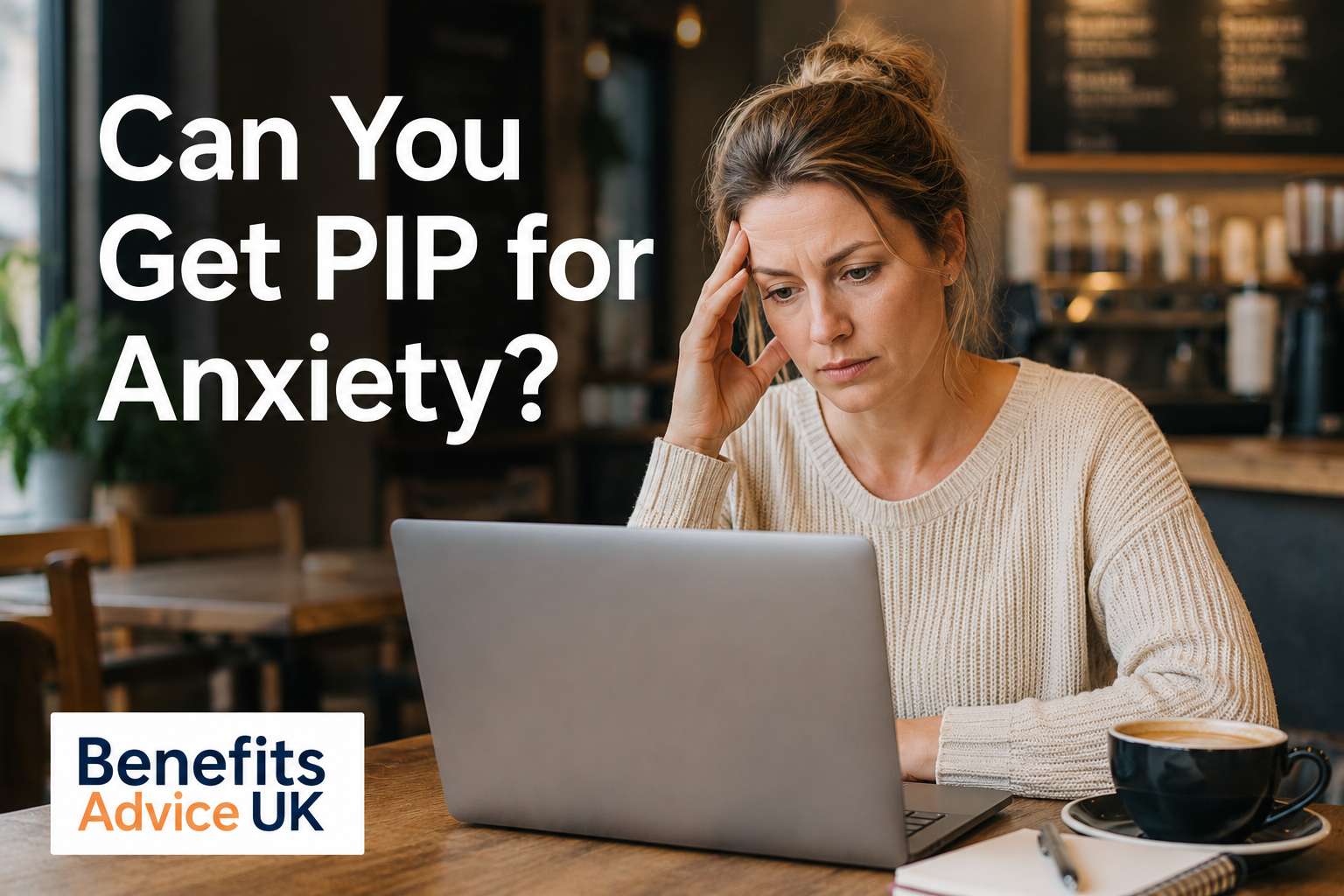
Living with anxiety can affect every part of daily life, from leaving the house and attending appointments to managing finances, cooking meals and maintaining relationships. Many people assume that Personal Independence Payment, commonly known as PIP, is only available for physical disabilities. In reality, that is not the case.
If anxiety has a significant and long term impact on your ability to carry out everyday activities or move around safely, you may qualify for PIP, regardless of whether you are working or receiving treatment.
This guide explains who may qualify, how the assessment works, what evidence is needed, how much you could receive and how to improve your chances of making a successful claim.
Yes. You can receive PIP for anxiety if your condition causes substantial difficulties with everyday living or getting around. PIP is awarded based on how your condition affects your daily life rather than the name of your diagnosis.
Your entitlement depends on meeting the assessment criteria and scoring enough points across the Daily Living and Mobility activities.
PIP is a benefit designed to help people who have a long term physical or mental health condition that affects their ability to complete everyday tasks.
Anxiety disorders can qualify where they cause ongoing difficulties such as:
The Department for Work and Pensions assesses how your symptoms affect your ability to function most of the time.
You may qualify if:
Your employment status does not affect eligibility.
Many people receive PIP while:
PIP is based on a points system.
You receive points depending on how much help you need with specific activities.
The assessment looks at areas such as:
| Activity | Examples of anxiety related difficulties |
|---|---|
| Preparing food | Panic attacks around using kitchen equipment |
| Eating and drinking | Anxiety causing inability to eat regularly |
| Managing medication | Forgetting medication because of overwhelming anxiety |
| Washing and bathing | Needing encouragement due to severe anxiety |
| Dressing | Anxiety preventing appropriate clothing choices |
| Communicating | Difficulty speaking during panic attacks |
| Reading | Poor concentration caused by anxiety |
| Mixing with other people | Severe social anxiety preventing interaction |
| Managing money | Anxiety affecting financial decisions |
Mobility is not only about physical walking ability.
It also includes:
Someone with severe anxiety or agoraphobia may struggle to:
These difficulties may qualify for Mobility points.
No.
PIP is not means tested.
Your entitlement is not affected by:
This means someone earning a good salary could still qualify if their anxiety significantly affects daily life.
No.
Unlike some benefits, there is no savings limit for PIP.
Whether you have:
your savings alone will not prevent you receiving PIP.
PIP has two separate components.
Each component has a Standard Rate and an Enhanced Rate.
| Component | Standard Rate | Enhanced Rate |
|---|---|---|
| Daily Living | Paid if enough points are awarded | Higher payment for greater needs |
| Mobility | Paid if mobility criteria are met | Higher payment where mobility needs are greater |
The amount you receive depends on your assessment score rather than your diagnosis.
Some people receive:
| Component | Points Required |
|---|---|
| Standard Daily Living | 8 to 11 points |
| Enhanced Daily Living | 12 or more points |
| Standard Mobility | 8 to 11 points |
| Enhanced Mobility | 12 or more points |
The assessment considers whether you can complete activities:
Even if you can perform a task occasionally, you may still qualify if you cannot do it reliably most days.
Applying involves several stages.
Start your claim by contacting the Department for Work and Pensions.
Complete the “How your disability affects you” form.
This is one of the most important parts of your claim.
Describe:
Avoid simply writing your diagnosis.
Instead explain exactly how anxiety affects daily life.
Submit supporting evidence.
Attend an assessment if required.
Many assessments are carried out by telephone, video or in person depending on individual circumstances.
Receive the decision.
Good evidence can significantly strengthen your application.
Useful evidence includes:
The strongest evidence explains how anxiety affects everyday functioning.
The assessor may ask about:
Always answer honestly.
Explain what happens on most days rather than describing your very best day.
Many claims fail because important information is left out.
Avoid these common mistakes.
| Situation | Possible Outcome |
|---|---|
| Severe social anxiety preventing contact with others | May score Daily Living points |
| Panic attacks when travelling alone | May qualify for Mobility points |
| Agoraphobia preventing leaving home | Could receive Enhanced Mobility depending on assessment |
| Anxiety causing inability to cook safely | May score Daily Living points |
| Needs prompting to take medication due to overwhelming anxiety | Could receive Daily Living points |
Every claim is assessed individually.
No.
Many people work while receiving PIP.
The assessment focuses on your daily difficulties rather than whether you have employment.
However, your work activities may be considered alongside the evidence provided, so it is important to explain any adjustments, support or limitations you experience at work.
Yes.
You should report significant changes such as:
Reporting changes promptly helps ensure your award remains accurate.
Depending on your circumstances, you could also be entitled to:
| Benefit or Support | Purpose |
|---|---|
| Universal Credit | Income related financial support |
| Employment and Support Allowance | Support if illness limits your ability to work |
| Carers Allowance | For eligible carers providing regular care |
| Council Tax Reduction | Help with council tax bills |
| Housing Benefit | Available in limited situations |
| Disabled Facilities Grants | Adaptations for eligible homes |
| NHS Low Income Scheme | Help with healthcare costs where eligible |
Receiving PIP can sometimes increase entitlement to other benefits.
Yes. Anxiety by itself can qualify if it significantly affects your daily living or mobility.
Yes. Employment does not automatically prevent you receiving PIP.
A diagnosis is helpful but the assessment mainly considers how your condition affects your daily life.
No. Medication alone does not determine entitlement.
Yes. Frequent panic attacks affecting everyday functioning may contribute towards qualifying.
Yes. Severe social anxiety affecting communication or mixing with people may score points.
Many applicants do, although some claims are decided using paper evidence alone.
Processing times vary depending on individual circumstances and assessment availability.
Yes. You can request a Mandatory Reconsideration and, if necessary, appeal to an independent tribunal.
No. PIP is tax free.
The most reliable information is available from official UK Government guidance, including:
This article has been prepared using current UK Government guidance relating to Personal Independence Payment, together with established welfare rights principles and recognised sources of benefits advice. Eligibility depends on individual circumstances, and claims are assessed on the evidence provided and the impact of a person’s condition on daily living and mobility.
As benefit rules and payment rates can change, always refer to the latest official Government information before making a claim or financial decision.
Yes, many people with anxiety successfully receive Personal Independence Payment each year. The key factor is not the diagnosis itself but how your condition affects your ability to complete everyday activities and travel safely, reliably and independently.
Providing detailed information, giving real examples of how anxiety affects your life and submitting strong supporting evidence can make a significant difference to your claim.
Remember that PIP is designed to recognise the impact of both physical and mental health conditions. If anxiety substantially limits your daily life, it is worth checking whether you meet the assessment criteria.
Benefits Advice UK provides free information to help people better understand the UK benefits system. Always check the latest Government guidance before making financial decisions.

Information on this site is based on official UK guidance.
About our information and sources


Sign up for our newsletter to receive updates when there are changes to Universal Credit.