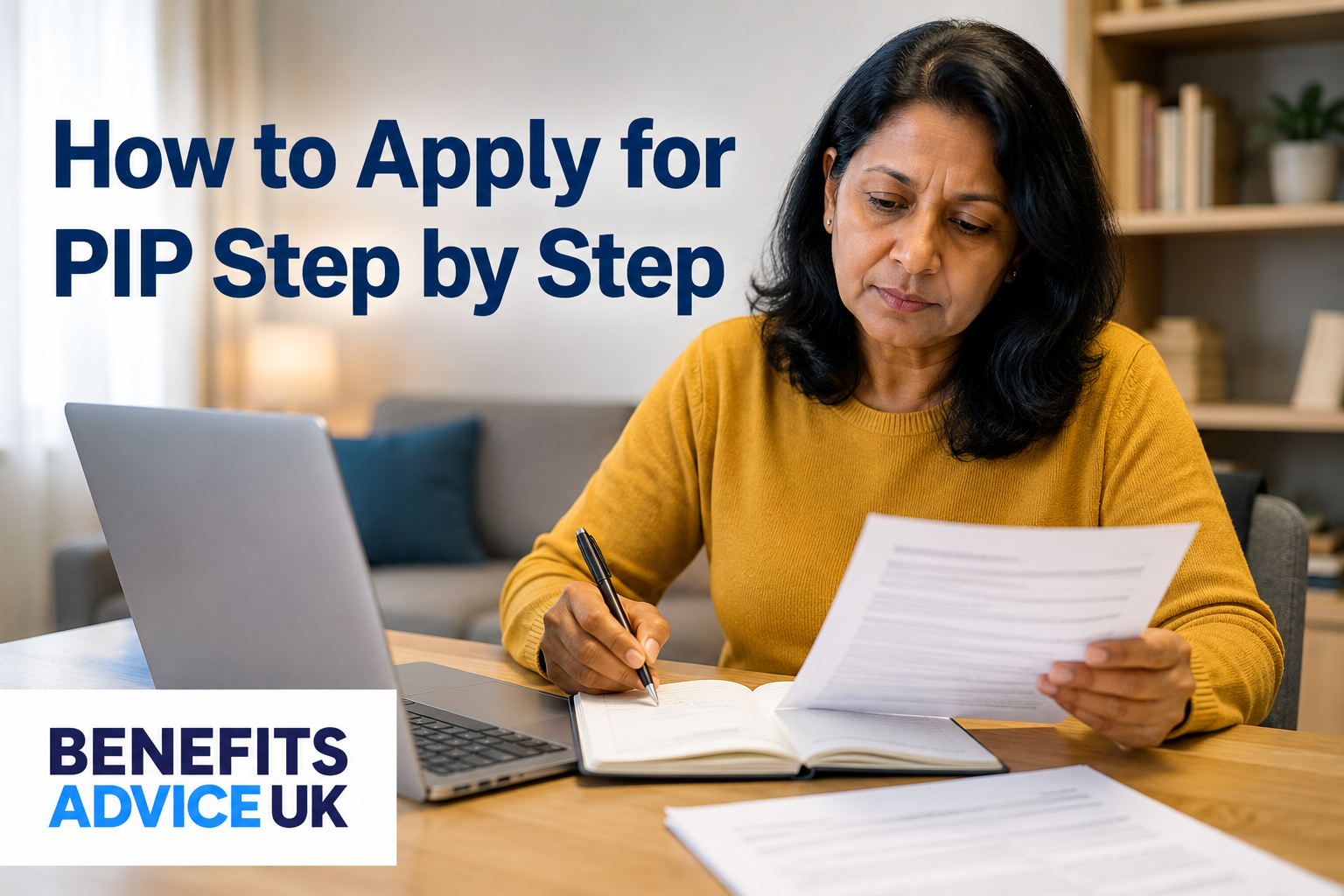
Applying for Personal Independence Payment, commonly known as PIP, can feel overwhelming if you have never claimed a disability benefit before. Knowing exactly what to expect at each stage makes the process much easier.
This guide explains how to apply for PIP step by step, who can qualify, how much you could receive, what evidence to provide, how the assessment works and what happens after you submit your claim. Everything has been written in plain English to help you understand the process with confidence.
To apply for Personal Independence Payment, you usually begin by contacting the Department for Work and Pensions to start your claim. You will then complete the “How your disability affects you” form, submit supporting medical evidence, attend an assessment if required, and wait for a decision. If your claim is successful, payments are normally backdated to the date your claim started.
How to Apply for PIP Step by Step refers to the complete process of claiming Personal Independence Payment, a UK benefit designed to help people who have a long term illness, disability or mental health condition with the extra costs of daily living and mobility.
PIP is not based on your income, employment status or savings. Instead, it looks at how your condition affects your ability to carry out everyday activities safely, repeatedly and independently.
Many people mistakenly believe PIP is only available to people who cannot work. This is not true. Thousands of people receive PIP while working full time or part time.
You may qualify for PIP if you:
Eligibility depends on how your condition affects you rather than the diagnosis itself.
Examples include:
To receive PIP you are assessed against a number of daily living and mobility activities.
Daily Living activities include:
Mobility activities include:
Each activity carries points.
Your total points determine whether you receive the Standard or Enhanced rate.
| Points Awarded | Outcome |
|---|---|
| 7 or fewer | Usually no award |
| 8 to 11 | Standard rate |
| 12 or more | Enhanced rate |
No.
PIP is a non means tested benefit.
This means your:
do not normally affect your entitlement.
You can receive PIP whether you:
No.
Unlike Universal Credit, PIP has no savings limit.
Whether you have:
your savings alone will not prevent you from claiming.
PIP has two separate components.
Each can be paid at either:
You could receive one component or both depending on your assessment.
| Component | Standard Rate | Enhanced Rate |
|---|---|---|
| Daily Living | Paid if enough points are scored | Higher payment for greater support needs |
| Mobility | Paid if enough mobility points are scored | Higher payment for greater mobility needs |
If awarded both Enhanced components you will receive significantly more support than someone receiving one Standard component.
Annual payment increases are normally reviewed by the Government.
The application process is straightforward once you understand each stage.
Start your claim.
Most people begin by contacting the Department for Work and Pensions.
You will be asked for:
Receive the PIP form.
You will receive the form called:
How your disability affects you
This is the most important stage of your application.
Take your time completing it.
Describe how your condition affects daily life.
Focus on:
Explain what happens in real life rather than simply naming your medical condition.
Gather supporting evidence.
Useful evidence includes:
Strong evidence often improves the quality of your application.
Return your completed form.
Ensure:
Attend an assessment if required.
Many applicants are invited to an assessment.
This may be:
The assessor will ask about:
Always answer honestly.
Do not exaggerate or underestimate your difficulties.
Wait for a decision.
The DWP considers:
You will receive a decision letter explaining:
If successful, payments are usually backdated to the beginning of your claim.
Having evidence ready before applying can reduce delays.
Useful documents include:
| Document | Why It Helps |
|---|---|
| National Insurance number | Identifies your claim |
| GP information | Confirms medical history |
| Hospital letters | Explains treatment |
| Specialist reports | Supports diagnosis |
| Medication list | Shows ongoing treatment |
| Care plans | Demonstrates support needs |
| Occupational therapy reports | Explains functional difficulties |
| Physiotherapy reports | Supports mobility issues |
| Mental health assessments | Explains psychological impact |
| Letters from carers | Confirms everyday difficulties |
Many claims are weakened because applicants unintentionally leave out important information.
Avoid these common mistakes.
Remember that PIP is based on how your condition affects your daily life rather than the medical name of your illness.
| Situation | Outcome |
|---|---|
| Sarah has rheumatoid arthritis and struggles to prepare meals safely because of severe hand pain. | She scores points for daily living activities and receives Daily Living support. |
| Situation | Outcome |
|---|---|
| David experiences severe anxiety and cannot travel alone without overwhelming distress. | He receives Mobility support after demonstrating the impact on planning and following journeys. |
| Situation | Outcome |
|---|---|
| Louise has multiple sclerosis causing fatigue, falls and mobility difficulties. | She qualifies for both Daily Living and Mobility components following assessment. |
Yes. Employment does not stop you claiming PIP if you meet the qualifying conditions.
Yes. Anxiety and other mental health conditions can qualify if they significantly affect daily living or mobility.
Times vary depending on individual circumstances, evidence and assessment availability.
No. Some claims are decided using the evidence provided, although many people are invited to an assessment.
Yes, provided your condition affects everyday activities or mobility sufficiently under the assessment criteria.
No. Savings do not affect Personal Independence Payment.
Yes. Many people receive both benefits.
You can request a Mandatory Reconsideration. If you still disagree after that decision, you can usually appeal to an independent tribunal.
In many cases yes, although some benefits cannot be received alongside PIP and transitional rules may apply.
No. Payments depend on how many points you score during the assessment process.
Depending on your circumstances, you may also qualify for:
Receiving PIP may also increase entitlement to some other benefits or financial support.
Information reviewed against current UK Government guidance and official sources.
Useful resources include:
Always check the latest Government guidance before making important financial decisions, as eligibility rules and payment rates can change.
Applying for Personal Independence Payment may appear complicated at first, but understanding the process step by step can make it much more manageable. The most important part of your application is clearly explaining how your condition affects your everyday life, supported by strong medical and practical evidence wherever possible.
Remember that PIP is not based on your income, savings or whether you work. Instead, it focuses on the additional challenges you face because of a long term physical or mental health condition. Taking time to complete the application carefully, providing detailed examples and submitting relevant supporting documents can greatly improve the quality of your claim.
Whether you are applying for the first time or helping a family member through the process, staying organised and understanding each stage will help you approach your application with greater confidence.
Benefits Advice UK provides free information to help people better understand the UK benefits system. Always check the latest Government guidance before making financial decisions.
Information on this site is based on official UK guidance.
About our information and sources
Sign up for our newsletter to receive updates when there are changes to Universal Credit.