
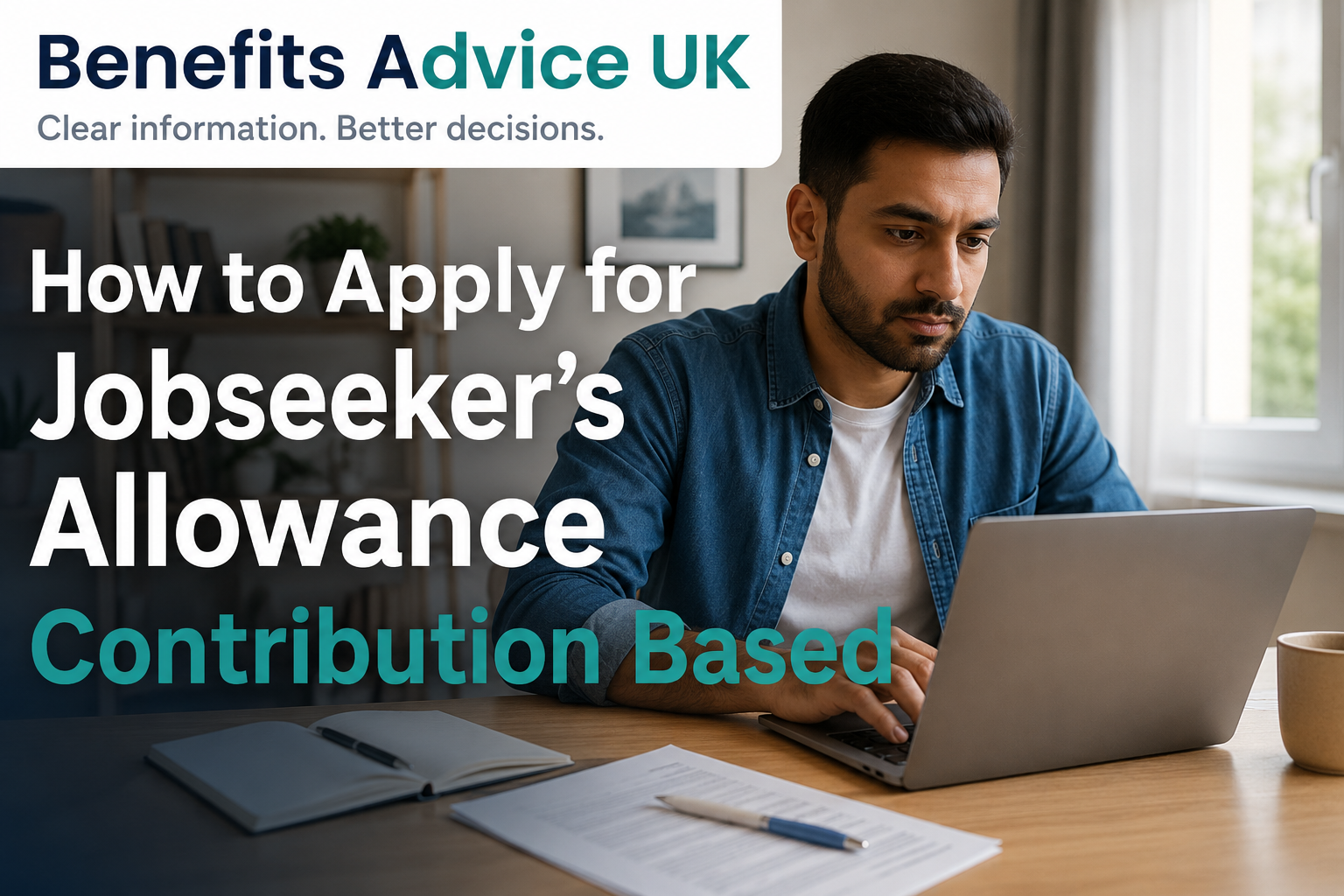
Losing your job or experiencing a reduction in work can be stressful, especially when you are worried about paying your bills while searching for new employment. Contribution Based Jobseeker’s Allowance, officially known as New Style Jobseeker’s Allowance, provides financial support for people who have paid enough National Insurance contributions and are actively looking for work.
Understanding how the scheme works can help you avoid delays, improve your chances of a successful claim and ensure you receive the financial support you are entitled to.
This guide explains everything you need to know in clear, simple language.
You can apply online through the UK Government website by completing the New Style Jobseeker’s Allowance application. To qualify, you normally need to have paid enough Class 1 National Insurance contributions during the relevant tax years, be under State Pension age, work fewer than 16 hours a week and actively look for work. After applying, you may be asked to attend an interview with your local Jobcentre Plus and agree to a Claimant Commitment.
Contribution Based Jobseeker’s Allowance is a benefit for people who are unemployed or working less than 16 hours each week and are actively seeking employment.
Although many people still refer to it as Contribution Based Jobseeker’s Allowance, the benefit is now officially called New Style Jobseeker’s Allowance.
Unlike income related benefits, entitlement is based primarily on your National Insurance contribution record rather than your household income or your partner’s earnings.
It can provide temporary financial support while you search for your next job.
| Feature | Details |
|---|---|
| Benefit name | New Style Jobseeker’s Allowance |
| Based on | National Insurance contributions |
| Means tested | No |
| Partner’s income considered | No |
| Savings limit | No savings limit |
| Maximum payment period | Up to 182 days |
| Application | Online or by contacting Jobcentre Plus |
You may qualify if you:
If you receive redundancy pay, this does not automatically prevent you from claiming.
The Department for Work and Pensions looks at several factors before awarding New Style Jobseeker’s Allowance.
These include:
Most applicants must have paid sufficient Class 1 National Insurance contributions during the relevant tax years before claiming.
This is one of the most important qualifying conditions.
You must be ready and willing to start suitable employment.
You must regularly search for work and provide evidence of your job search activities if requested.
Examples include:
Most applicants agree to a personalised Claimant Commitment.
This explains:
Contribution Based Jobseeker’s Allowance is not means tested.
That means:
However, certain types of income, including some occupational pensions, may reduce the amount you receive.
If you also receive Universal Credit, the New Style Jobseeker’s Allowance may affect the amount of Universal Credit you are paid.
No.
Unlike many means tested benefits, there is no upper savings limit for New Style Jobseeker’s Allowance.
Whether you have:
your savings alone do not prevent you from claiming.
This is one of the major advantages of Contribution Based Jobseeker’s Allowance.
The amount depends mainly on your age.
Typical weekly rates include:
| Age | Weekly payment |
| Under 25 | Lower standard weekly rate |
| 25 and over | Higher standard weekly rate |
Payment rates are reviewed by the Government each year.
Payments are normally made every two weeks into your bank account.
New Style Jobseeker’s Allowance is generally payable for up to 182 days, provided you continue meeting the conditions of your claim.
Applying is straightforward if you have the necessary information ready.
Complete the online application through the Government website.
Provide your:
Attend a Jobcentre appointment if requested.
Agree your Claimant Commitment.
Continue searching for work while your application is processed.
| Step | Complete |
| Submit online application | ✓ |
| Provide supporting information | ✓ |
| Attend interview | ✓ |
| Accept Claimant Commitment | ✓ |
| Continue job search | ✓ |
Having everything ready can make the application much smoother.
You may need:
Providing accurate information helps reduce delays.
After submitting your claim:
You must continue meeting all job search requirements throughout your claim.
Yes.
You should tell the Department for Work and Pensions if:
Reporting changes promptly helps prevent overpayments or interruptions to your claim.
Many claims are delayed because of avoidable mistakes.
Common examples include:
Keeping records of your job search can help if you are asked to provide evidence.
Sarah loses her administrative job after company restructuring.
She has worked continuously for several years and has sufficient National Insurance contributions.
She applies for New Style Jobseeker’s Allowance, attends her Jobcentre appointment, continues applying for jobs and receives support while looking for new employment.
David has savings of £40,000.
Although he has substantial savings, he still qualifies because New Style Jobseeker’s Allowance does not have a savings limit.
Emma works eight hours each week while searching for a full time role.
Because she works fewer than 16 hours and meets the other conditions, she may still qualify.
| Situation | Outcome |
| Recently made redundant | May qualify if National Insurance conditions are met |
| High savings | Savings do not prevent a claim |
| Partner earns a good salary | Partner’s earnings usually do not affect entitlement |
| Working under 16 hours | May still qualify |
| Not actively seeking work | Claim may be refused or sanctioned |
Yes. There is no savings limit for New Style Jobseeker’s Allowance.
Yes. Many people receive both, although your Universal Credit payment may be adjusted.
Usually no, because the benefit is based on your own National Insurance contributions.
Normally for up to 182 days if you continue meeting the conditions.
Yes, provided you satisfy the eligibility rules.
Usually yes. Attendance forms part of your Claimant Commitment.
Your payments could be affected unless you have a good reason.
You may still qualify if you work fewer than 16 hours each week and meet the remaining conditions.
Usually no, because entitlement depends on National Insurance contributions.
You should report your change in circumstances immediately so your claim can be updated or closed.
Depending on your circumstances, you may also qualify for:
Some benefits can be claimed alongside New Style Jobseeker’s Allowance, while others cannot. Always check the latest eligibility rules before applying.
The best source of up to date information is the official UK Government website.
Useful resources include:
This article has been written using current UK Government guidance relating to New Style Jobseeker’s Allowance, National Insurance contribution requirements and Department for Work and Pensions application procedures.
Benefit rules, eligibility criteria and payment rates may change over time. Always refer to official Government guidance before submitting a claim or making financial decisions.
Knowing how to apply for Jobseeker’s Allowance Contribution Based can make the process much less daunting during an already challenging time.
If you have paid sufficient National Insurance contributions, are available for work and actively looking for employment, New Style Jobseeker’s Allowance can provide valuable short term financial support while you search for your next opportunity.
Preparing your documents, understanding your responsibilities and keeping your job search records up to date can help your application progress smoothly and reduce the likelihood of delays.
Benefits Advice UK provides free information to help people better understand the UK benefits system. Always check the latest Government guidance before making financial decisions.

Information on this site is based on official UK guidance.
About our information and sources



Sign up for our newsletter to receive updates when there are changes to Universal Credit.