
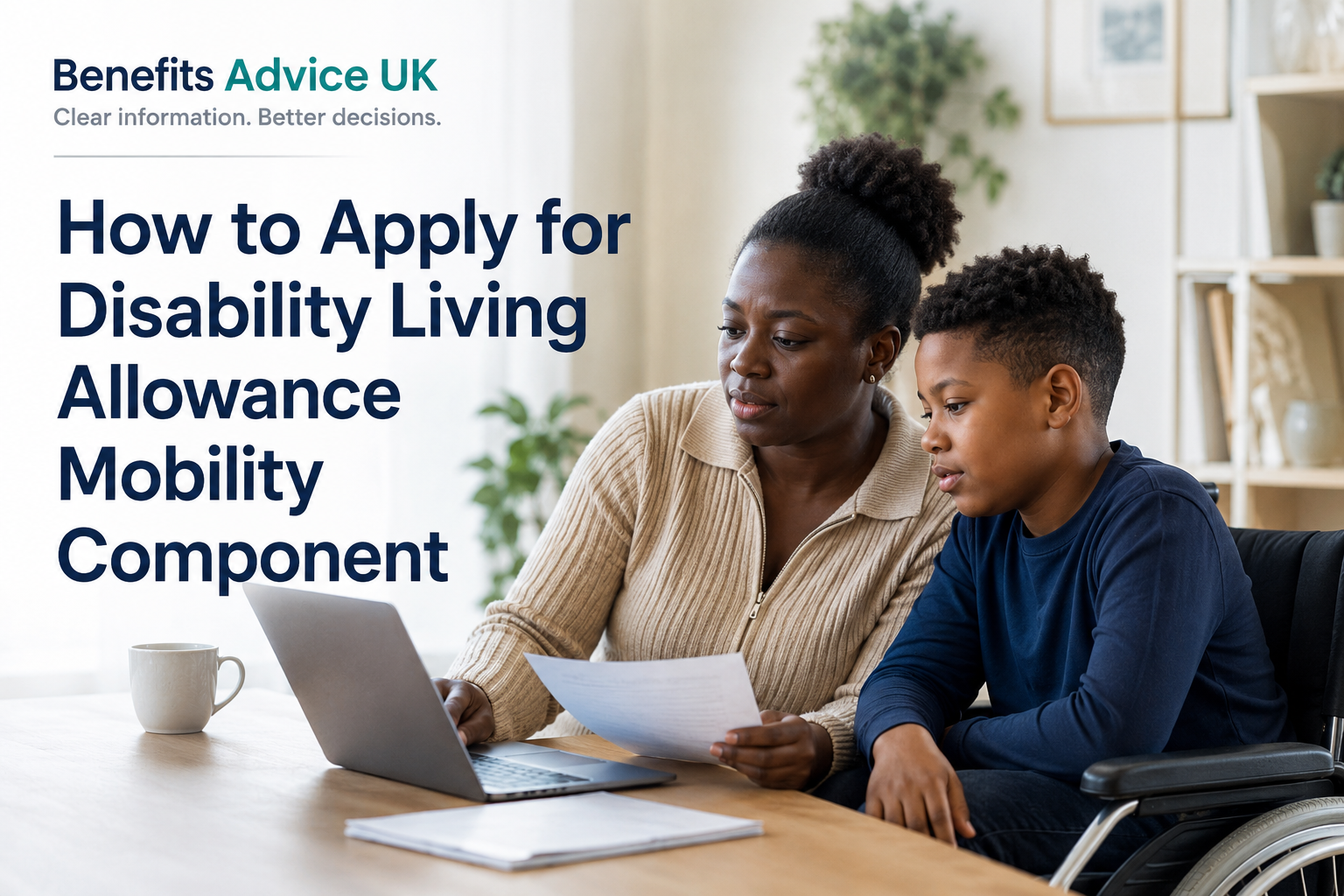
If you are wondering how to apply for Disability Living Allowance Mobility Component, you are not alone. Many people are unsure whether they qualify, how much they could receive or even whether they can still make a new claim.
The Disability Living Allowance Mobility Component provides financial support for people who have substantial difficulties with walking or need guidance or supervision when outdoors because of a disability or health condition. Although Disability Living Allowance, often shortened to DLA, has largely been replaced for adults by Personal Independence Payment, many children can still claim DLA and many adults continue receiving existing awards.
This guide explains everything you need to know in clear and simple language. You will learn who can claim, how the Mobility Component works, payment rates, how to complete an application, what evidence you should include and the common mistakes that can delay or reduce your award.
To apply for the Disability Living Allowance Mobility Component, you must first check that you are eligible. New Disability Living Allowance claims are generally only available for children under the age of 16. Parents or guardians can complete a Disability Living Allowance for Children claim form either online or by requesting a paper application. You should provide detailed information about how your child’s disability affects their mobility and include supporting medical evidence wherever possible.
Adults who already receive Disability Living Allowance may continue receiving the Mobility Component until they are invited to move to Personal Independence Payment if applicable.
The Disability Living Allowance Mobility Component is a payment that helps people who have significant mobility needs because of a physical or mental condition.
It is intended to help with the extra costs associated with getting around safely.
The payment is separate from the Care Component of Disability Living Allowance and may be paid on its own or alongside it.
The Mobility Component considers how a person’s disability affects their ability to move around rather than their income or employment status.
Typical conditions may include:
New claims are normally only available for children under 16 years old.
Parents or legal guardians usually make the application on behalf of the child.
Adults generally cannot make a new Disability Living Allowance claim because Personal Independence Payment has replaced it for most working age adults.
You may qualify if the child:
Eligibility depends on how the disability affects everyday mobility rather than the diagnosis itself.
The Department for Work and Pensions considers:
There are two levels of Mobility Component.
| Mobility Rate | Who May Qualify |
|---|---|
| Lower Rate | Child needs guidance or supervision outdoors |
| Higher Rate | Child is unable or virtually unable to walk or has severe mobility restrictions |
Awards depend entirely on individual circumstances.
No.
Disability Living Allowance is not means tested.
This means your income does not affect your eligibility.
Whether you earn a salary, receive benefits or have no income at all, your claim is assessed solely on the effects of disability.
| Income Situation | Effect on Claim |
| Working full time | No effect |
| Receiving benefits | No effect |
| Pension income | No effect |
| Self employed | No effect |
No.
There are no savings limits for Disability Living Allowance.
Whether you have no savings or substantial savings, your entitlement is based on disability rather than financial circumstances.
| Savings Amount | Effect |
| Under £6000 | No effect |
| £16000 | No effect |
| Over £50000 | No effect |
The amount depends on whether the claimant qualifies for the lower or higher Mobility Component.
Payments are normally made every four weeks directly into a bank account.
Government payment rates are reviewed each year.
| Mobility Level | Payment |
| Lower Rate | Standard weekly amount set by Government |
| Higher Rate | Higher weekly amount for greater mobility needs |
Always check the latest Government rates before budgeting because payment amounts are updated annually.
Applying is straightforward when you prepare properly.
Confirm that the claimant is eligible for Disability Living Allowance rather than Personal Independence Payment.
Obtain the Disability Living Allowance for Children application form.
You can:
Describe exactly how the disability affects mobility.
Include:
Avoid answering with simple yes or no responses.
Instead, explain what happens on both good and bad days.
Attach supporting evidence.
Useful evidence includes:
Check every page before submitting.
Missing information is one of the biggest causes of delays.
Providing good evidence improves the chances of a correct decision.
Helpful documents include:
| Document | Helpful? |
| GP letter | Yes |
| Hospital consultant report | Yes |
| Physiotherapy assessment | Yes |
| Occupational therapy report | Yes |
| School reports | Yes |
| Care plans | Yes |
| Prescription list | Helpful |
| Hospital appointment letters | Helpful |
You do not always need every document listed, but detailed supporting evidence strengthens your application.
Many claims are delayed because applicants underestimate how much detail is needed.
Avoid these common mistakes.
Many parents naturally focus on what their child can do.
Instead explain what they cannot do without help.
Describe the typical situation rather than only the best days.
Complete every section unless instructed otherwise.
Supporting medical evidence often helps decision makers understand the full picture.
Read through every answer before sending it.
| Situation | Outcome |
| Nine year old with severe autism needs constant supervision outdoors because of road awareness difficulties | Lower or higher Mobility Component may be awarded depending on overall circumstances |
| Situation | Outcome |
| Child with cerebral palsy cannot walk without significant assistance | May qualify for the Higher Mobility Component |
| Situation | Outcome |
| Child experiences severe visual impairment requiring continuous guidance outdoors | May qualify for the appropriate Mobility Component following assessment |
Every application is assessed individually using the available evidence.
No. Most adults must claim Personal Independence Payment instead.
Yes. Eligible children under 16 can still claim Disability Living Allowance.
No. It is paid tax free.
No. Employment does not automatically affect entitlement.
No. Savings are ignored.
Yes. Disability Living Allowance can be paid alongside Universal Credit if eligibility conditions are met.
Yes. You can request a Mandatory Reconsideration if you believe the decision is wrong.
Times vary depending on demand and whether further evidence is required.
Yes. Some people receive only the Mobility Component.
You should report significant changes because they may affect entitlement.
Depending on your circumstances, you may also qualify for additional help.
| Benefit or Support | Purpose |
| Personal Independence Payment | Disability benefit for most adults |
| Attendance Allowance | Support for older people with care needs |
| Universal Credit | Help with living costs |
| Carer’s Allowance | Support for eligible carers |
| Blue Badge Scheme | Parking concessions |
| Motability Scheme | Lease of accessible vehicles for eligible higher rate recipients |
| Disabled Facilities Grant | Home adaptations |
| Council Tax Reduction | Help with council tax in some circumstances |
Receiving one benefit may increase entitlement to another, so it is worth checking your full eligibility.
The most reliable source of information is the UK Government.
Useful resources include information on:
Always use official Government guidance when making or managing a claim.
This article has been reviewed against current UK Government guidance relating to Disability Living Allowance for Children, disability benefits, eligibility requirements and application procedures.
Government guidance can change following legislation, annual payment reviews or policy updates. Before making financial decisions or submitting a claim, always check the latest official information.
Understanding how to apply for Disability Living Allowance Mobility Component can feel overwhelming at first, but the process becomes much easier when you know what information is needed and prepare your evidence carefully.
Remember that Disability Living Allowance is based on how a disability affects mobility rather than income or savings. The quality of your application is important, so provide clear examples of daily challenges, include supporting evidence wherever possible and answer every question honestly and thoroughly.
If your circumstances change after you have made a claim, notify the relevant authorities promptly so your award remains accurate.
Benefits Advice UK provides free information to help people better understand the UK benefits system. Always check the latest Government guidance before making financial decisions.

Information on this site is based on official UK guidance.
About our information and sources



Sign up for our newsletter to receive updates when there are changes to Universal Credit.