
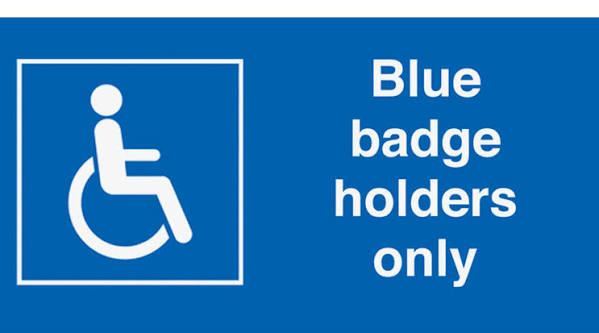
Millions of people across the UK live with disabilities or long term health conditions that make walking difficult or travelling independently more challenging. The Blue Badge scheme helps eligible people park closer to their destination, making everyday activities more accessible and reducing unnecessary physical strain.
This guide explains what the Blue Badge is, who can apply, how eligibility works, what rights it provides, how to apply successfully and the mistakes to avoid.
Whether you receive disability benefits or have recently developed a health condition, understanding the Blue Badge scheme can help you determine whether you qualify.
The Blue Badge is a national parking permit that allows eligible disabled people to park closer to their destination. It provides access to designated disabled parking bays and allows certain parking concessions across England, Scotland, Wales and Northern Ireland, although local rules may vary.
The scheme is designed to help people with severe mobility problems, hidden disabilities, or medical conditions that make travelling difficult. Eligibility is based on Government criteria rather than income.
The Blue Badge scheme is a UK Government programme that provides parking concessions for disabled people.
The badge belongs to the individual rather than a vehicle. This means it can be used in any car as long as the badge holder is travelling in that vehicle.
The scheme aims to:
The Blue Badge is recognised throughout the UK, although individual councils may operate different parking restrictions.
A Blue Badge may allow you to:
It does not guarantee free parking everywhere.
Private car parks, hospitals, airports and shopping centres may have their own rules.
Some people qualify automatically, while others are assessed individually.
Automatic eligibility often includes people receiving certain disability benefits or armed forces compensation.
Others may qualify because of their mobility difficulties or hidden disabilities even if they do not receive disability benefits.
You may automatically qualify if you receive certain benefits such as:
| Benefit or Circumstance | May Automatically Qualify |
|---|---|
| Higher rate mobility support under qualifying schemes | Yes |
| Enhanced mobility component of qualifying disability benefits | Usually |
| Registered severely sight impaired | Yes |
| Certain Armed Forces compensation awards | Yes |
| Certain War Pension mobility awards | Yes |
Automatic qualification depends on meeting the current Government rules.
Many applicants qualify through assessment rather than automatic entitlement.
Examples include people who:
Each application is assessed individually.
The main consideration is how your disability affects your ability to travel rather than your diagnosis alone.
Councils consider factors including:
Medical evidence is usually required.
The Blue Badge scheme has expanded to include certain non visible disabilities.
Examples include:
Applications are assessed on how the condition affects travel.
No.
Your earnings, salary or household income do not determine whether you qualify for a Blue Badge.
Eligibility depends entirely on disability and mobility needs.
| Income Level | Blue Badge Eligibility |
|---|---|
| Low income | No effect |
| Working full time | No effect |
| Pension income | No effect |
| High income | No effect |
No.
There are no savings or capital limits.
Whether you have no savings or substantial savings, eligibility is based solely on the impact of your disability.
No.
The Blue Badge is not a payment.
Instead, it provides valuable parking concessions that can save money and make everyday life easier.
Potential benefits include:
The badge itself usually has a small application fee depending on where you live.
Most Blue Badges are valid for up to three years.
You will normally need to renew before it expires.
Applications are generally made online through your local council using the Government Blue Badge application service.
The process usually includes:
Complete the application form.
Provide proof of identity.
Provide proof of address.
Upload medical evidence if required.
Submit a passport style photograph.
Pay the application fee if your application is approved.
Wait for your council’s decision.
Some applicants may be invited for a mobility assessment.
Providing complete evidence helps avoid delays.
Typical documents include:
| Document | Purpose |
|---|---|
| Proof of identity | Confirms who you are |
| Proof of address | Confirms residency |
| Passport style photo | Printed on badge |
| Benefit award letter | Confirms automatic eligibility if applicable |
| Medical evidence | Supports mobility difficulties |
| Hospital letters | Explains condition |
| GP or consultant evidence | Helps support application |
Not every applicant needs every document.
Many applications take longer because important information is missing.
Avoid these common mistakes.
Explain how your condition affects daily travel.
Do not simply list medical diagnoses.
Include all relevant documents where requested.
Explain your average day and your worst days if appropriate.
Having a disability does not automatically qualify someone.
The impact on mobility is what matters.
Provide truthful and accurate information throughout the application.
Sarah has severe rheumatoid arthritis.
Walking more than fifty metres causes intense pain and exhaustion.
She submits consultant letters explaining her mobility problems.
Her council approves a Blue Badge after reviewing her evidence.
David has autism.
Busy public places cause overwhelming psychological distress, making journeys unsafe without parking close to entrances.
Following assessment, he is awarded a Blue Badge.
Linda receives the enhanced mobility component of a qualifying disability benefit.
She provides her award letter.
Because she meets the automatic criteria, her application is processed more quickly.
| Situation | Outcome |
|---|---|
| Severe walking difficulty | May qualify |
| Hidden disability affecting journeys | May qualify |
| Temporary injury | Usually does not qualify unless criteria are met |
| Good mobility with no significant travel difficulties | Unlikely to qualify |
Yes.
The badge belongs to you, not the vehicle.
Only when they are transporting you.
Using someone else’s badge illegally can result in prosecution.
Generally yes, although local parking rules may differ.
No.
Private car parks and some council car parks may still charge.
Yes.
Eligible children with qualifying disabilities may receive one.
Processing times vary between councils.
Applications with complete evidence are generally processed more quickly.
Yes.
You can ask your council to review the decision and provide additional evidence where appropriate.
Not always.
Some awards qualify automatically, while others require assessment.
Yes.
You should renew before it expires to avoid losing your parking concessions.
Yes.
Badges can be withdrawn if they are misused or obtained fraudulently.
Depending on your circumstances, you may also qualify for:
| Support | Purpose |
|---|---|
| Personal Independence Payment | Helps with extra living and mobility costs |
| Attendance Allowance | Support for older people needing care |
| Disability Living Allowance for children | Helps with additional care and mobility needs |
| Carer’s Allowance | Financial support for carers |
| Vehicle tax reductions | Reduced vehicle tax for some disabled drivers |
| Motability Scheme | Lease a vehicle using qualifying mobility benefits |
| Disabled Facilities Grant | Home adaptations |
| Local council support | Additional travel assistance and concessionary schemes |
Eligibility for each scheme is separate.
The most reliable information comes from official Government and local council sources.
Useful resources include:
This article has been reviewed against current UK Government guidance relating to the Blue Badge scheme and reflects the general eligibility rules operating across the United Kingdom at the time of writing.
Because local councils administer Blue Badge applications, some procedures, evidence requirements and parking concessions may differ slightly depending on where you live. Applicants should always check the latest guidance from their own local authority before submitting an application.
The Blue Badge scheme is designed to make travel easier and more accessible for people whose disabilities significantly affect their ability to walk or undertake journeys safely. While it is not a financial benefit, it can have a substantial positive impact on daily life by allowing eligible people to park closer to essential services, workplaces, healthcare appointments and community facilities.
Remember that eligibility is based on how your disability affects your mobility or ability to travel rather than your income or savings. Providing detailed information about your condition and submitting strong supporting evidence can improve the chances of a successful application.
If your circumstances change or your badge is due to expire, be sure to contact your local council promptly to discuss renewal or any changes to your entitlement.
Benefits Advice UK provides free information to help people better understand the UK benefits system. Always check the latest Government guidance before making financial decisions.

Information on this site is based on official UK guidance.
About our information and sources


Sign up for our newsletter to receive updates when there are changes to Universal Credit.