
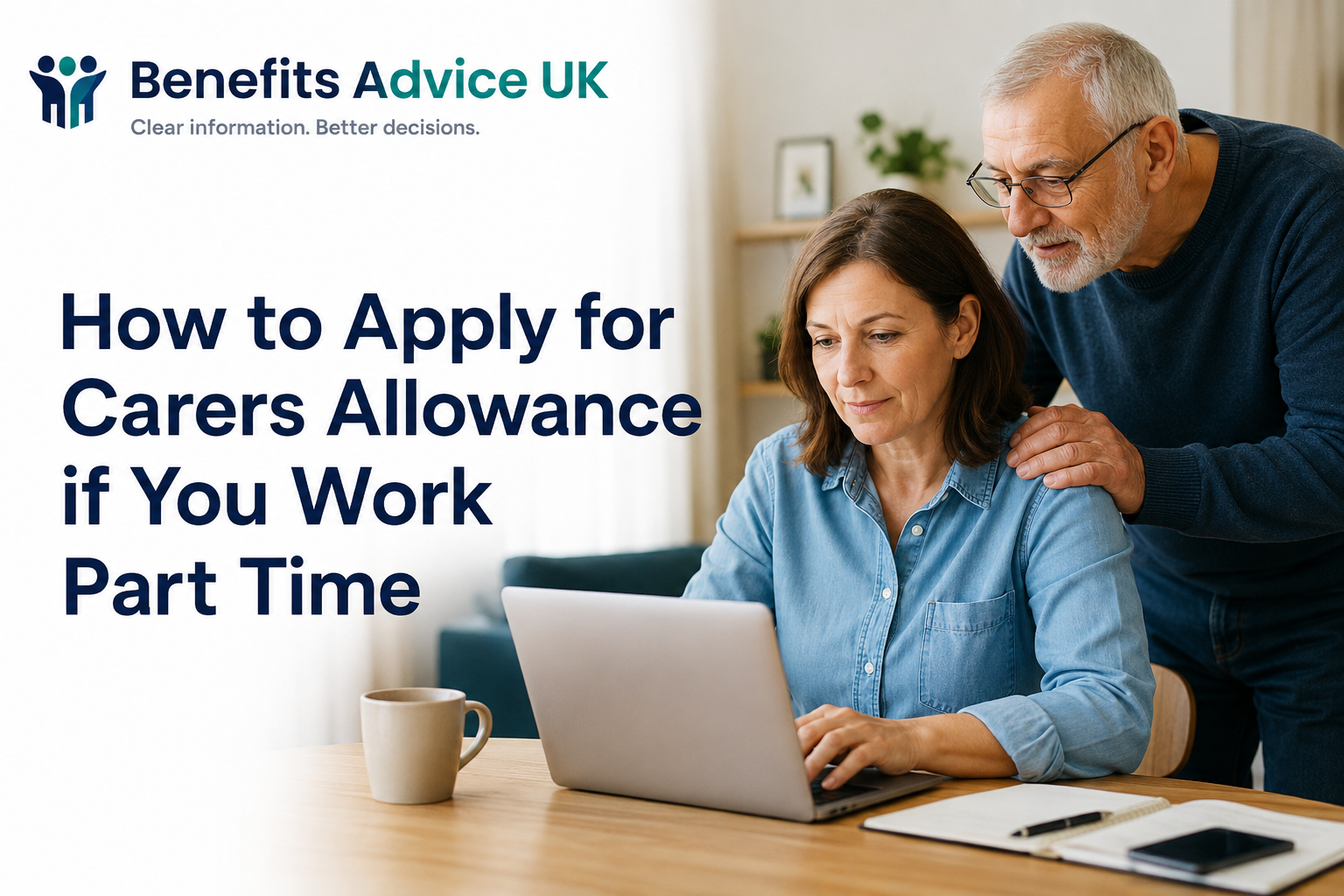
Caring for a family member or friend while working part time can be financially challenging. Many people assume they cannot receive Carers Allowance because they have a job, but that is not always true. Thousands of carers across the UK successfully combine part time employment with receiving Carers Allowance every year.
Understanding the earnings limits, qualifying conditions and application process can help you avoid costly mistakes and ensure you receive the support you are entitled to.
This guide explains everything you need to know about how to apply for Carers Allowance if you work part time, including who qualifies, how earnings are calculated, how much you could receive and what happens if your circumstances change.
Yes.
You can claim Carers Allowance while working part time provided your earnings remain below the weekly earnings limit after certain allowable deductions and you meet all the other eligibility conditions.
You must normally:
Working part time does not automatically prevent you from receiving Carers Allowance.
Carers Allowance is a taxable benefit paid by the UK Government to people who regularly care for someone with substantial care needs.
It recognises the valuable role unpaid carers play in supporting disabled people, older relatives and others with long term health conditions.
Many carers continue working part time while providing care. As long as your earnings remain within the permitted limits and you satisfy the other qualifying conditions, you may still receive Carers Allowance.
Unlike means tested benefits, your savings do not normally affect your entitlement.
You may qualify if you satisfy all of the following conditions.
| Requirement | Details |
|---|---|
| Age | Normally aged 16 or over |
| Care provided | At least 35 hours each week |
| Person cared for | Receives a qualifying disability benefit |
| Earnings | Within the weekly earnings limit after deductions |
| Residence | Usually living in the UK and meeting residence rules |
| Education | Not in full time education meeting certain study limits |
The person you care for does not have to be a relative and does not need to live with you.
To receive Carers Allowance, you must provide regular care amounting to at least 35 hours every week.
Care can include:
The person receiving care must usually receive one of the qualifying disability benefits, such as:
Yes.
The key rule concerns your weekly earnings.
The Government sets a maximum weekly earnings limit for Carers Allowance. Your earnings are assessed after certain allowable deductions have been applied.
Allowable deductions can include:
If your earnings exceed the permitted limit after deductions, you will normally lose entitlement for that period.
Usually included:
Usually not included:
Always report changes to your earnings promptly.
| Weekly earnings after deductions | Likely outcome |
|---|---|
| Below earnings limit | May qualify if all other conditions met |
| Equal to earnings limit | Usually eligible |
| Above earnings limit | Normally not eligible for that period |
No.
Carers Allowance is not based on how much money you have saved.
This means your:
do not usually affect entitlement.
However, savings may affect other means tested benefits you receive.
Carers Allowance is paid weekly at the Government’s current standard rate.
Payments are taxable income.
You may also become entitled to:
Receiving Carers Allowance may increase some benefits but reduce others, particularly where the person you care for receives certain additional disability payments.
Always check the overall financial impact before making a claim.
| Financial support | Available |
|---|---|
| Weekly Carers Allowance payment | Yes if eligible |
| National Insurance credits | Usually yes |
| Carer Element of Universal Credit | May apply |
| Savings assessment | No |
Applying is straightforward.
Check you meet all eligibility conditions.
Confirm the person you care for receives a qualifying disability benefit.
Calculate your weekly earnings after allowable deductions.
Gather supporting documents.
Complete the online or paper application.
Submit any requested evidence.
Wait for your decision.
Applications can normally be backdated for a limited period if you qualified earlier.
Having the correct information ready helps avoid delays.
You may need:
Self employed applicants may also need business income and expense records.
Many applications are delayed because of avoidable errors.
Common mistakes include:
Checking everything carefully before submitting your claim can reduce delays.
Sarah works sixteen hours each week in a local supermarket.
She spends over 35 hours each week caring for her mother, who receives Attendance Allowance.
Her weekly earnings remain below the permitted limit after deductions.
She qualifies for Carers Allowance.
Michael works twenty hours each week.
After a pay rise, his weekly earnings exceed the permitted earnings limit.
He informs the relevant department immediately.
His Carers Allowance stops while his earnings remain above the limit.
Aisha works flexible hours as a teaching assistant.
Her earnings fluctuate throughout the year.
She keeps detailed records of her payslips and informs the relevant department whenever her earnings change.
This helps avoid overpayments.
| Situation | Possible outcome |
|---|---|
| Working part time below earnings limit | May qualify |
| Working full time with high earnings | Usually not eligible |
| Savings over ten thousand pounds | No effect on Carers Allowance |
| Caring fewer than 35 hours | Normally not eligible |
| Person cared for loses qualifying benefit | Carers Allowance may end |
Yes, provided your earnings remain within the permitted weekly limit after allowable deductions.
There is no fixed limit on working hours. Your weekly earnings are usually more important than the number of hours worked.
Yes. Overtime may increase your weekly earnings above the permitted limit.
Yes, provided your earnings remain within the permitted rules after allowable deductions.
Many people receive both, although the payments interact and your Universal Credit calculation may change.
It can affect some additional benefits they receive, particularly severe disability related payments.
No. Savings do not usually affect Carers Allowance entitlement.
Yes. Most people apply online through the Government application service.
In some circumstances, yes. If you met the conditions earlier, your claim may be backdated for a limited period.
Report the change as soon as possible to avoid overpayments or underpayments.
Yes. You should notify the relevant department immediately if your caring responsibilities or earnings change.
Depending on your circumstances, you could also qualify for:
Every household is different, so entitlement varies.
The best sources of up to date information include:
Always rely on official Government information when making a claim or reporting changes.
This article has been reviewed against current UK Government guidance and official information available at the time of writing.
Benefit rules, earnings limits, qualifying conditions and payment rates can change. Always check the latest Government guidance before submitting a claim or making financial decisions.
Understanding how to apply for Carers Allowance if you work part time can help ensure you receive valuable financial support while continuing to earn an income. Working part time does not automatically prevent you from qualifying. The most important factors are meeting the caring requirement, ensuring the person you care for receives a qualifying disability benefit and keeping your earnings within the permitted weekly limit after allowable deductions.
Before applying, check your eligibility carefully, calculate your earnings accurately and gather the required documents. Reporting any changes to your work, income or caring responsibilities promptly will help avoid unnecessary delays or overpayments.
Providing unpaid care is an important contribution to families and communities across the UK, and understanding the benefits available can make a meaningful difference to your financial wellbeing.
Benefits Advice UK provides free information to help people better understand the UK benefits system. Always check the latest Government guidance before making financial decisions.

Information on this site is based on official UK guidance.
About our information and sources



Sign up for our newsletter to receive updates when there are changes to Universal Credit.